
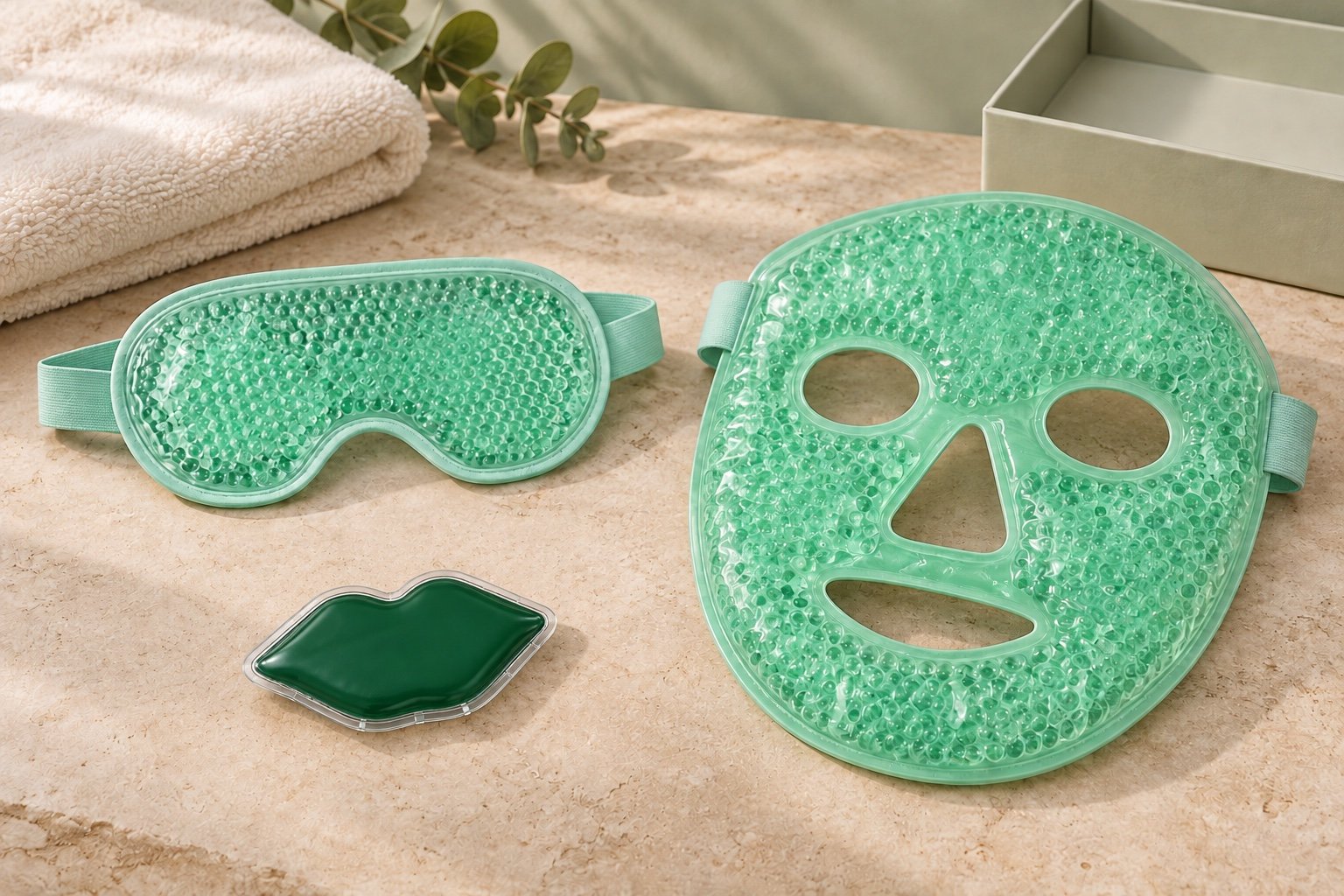
Choose an ice pack format for a personal-care brand by the coverage and handling routine the customer actually needs—not by which shape looks most impressive on the box. An eye-area mask, full-face mask and small flat pack solve different positioning problems. Shortlist the format first, then compare filling, surfaces, packaging and branding.
This guide helps retail brand and sourcing teams make that first decision. It does not establish cosmetic benefits, treatment outcomes or suitability for every user. Product-specific instructions and supporting evidence remain essential.
On this page
Which format belongs in the initial shortlist?
Begin with one sentence describing the intended customer activity. “A reusable cooling accessory for a seated personal-care routine” is a design starting point. A promised outcome such as treating a condition is a different statement requiring its own evidence and regulatory review.
| Format | Consider when | Question that may rule it out |
|---|---|---|
| Eye-area mask | The intended coverage is limited to the eye area and the positioning approach fits the routine | Can the intended user position and remove it as instructed, without assuming a universal fit? |
| Full-face mask | The brief genuinely needs broader facial coverage | Can the openings, edges and retention arrangement be evaluated for the intended user range? |
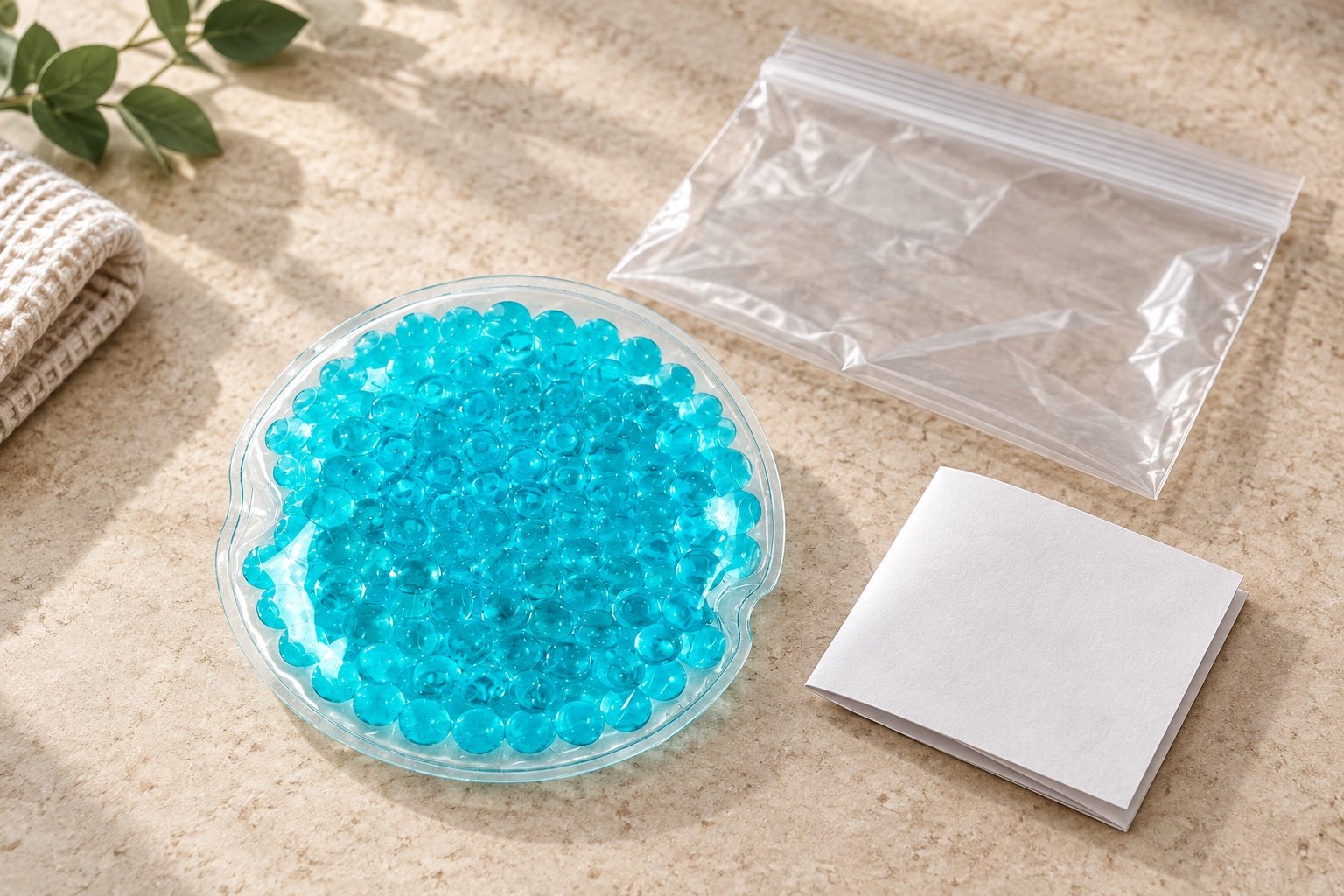
| Small flat pack or insert | The brief needs a local or repositionable format rather than a face-shaped accessory | Does holding or placing the pack fit the activity, and what contact barrier or cover do its instructions require? |
Do not choose a full-face format merely to make an eye-area brief look premium. More coverage is a different design requirement, not automatic added value. Equally, a rectangular pack is not interchangeable with a fitted mask just because both contain gel.
Browse the cooling eye-mask formats, rectangular and square pack formats, and character-shaped pack formats to identify examples worth discussing. Catalog presence shows a format; exact materials, instructions and compatibility still need confirmation.
The reusable gel-bead eye-mask example is a product reference for discussing an outline and retention approach. Review the configuration actually proposed for your project; the product’s format does not substantiate an advertised cosmetic or health result. Compare the finished gel-bead product formats when coverage, backing or fastening is still undecided.

Check the routine before choosing colors and packaging
Preparation and storage
What equipment and storage does the customer need before use? Ask for instructions applicable to the proposed product rather than inventing a freezer time or temperature. A design that depends on a routine the intended customer cannot follow should leave the shortlist, even if its appearance is attractive.
Keep cooling and heating requirements separate. A cooling-format photograph does not show that a pack is microwaveable or can be safely prepared by another heating method. If warmth is part of the brief, confirm an appropriate product and its supported instructions as a separate decision.
Positioning and removal
Identify whether the customer holds, places or secures the product. Compare adjustment steps, access to closures and removal against the intended activity. A strap should solve a stated retention problem; it is not proof of comfortable or suitable wear for everyone.
If the full-face option remains in the shortlist, move to the existing facial cooling mask design guide for opening geometry and format-specific sample checks. This selection stage should not repeat that detailed design review.
Contact surface and maintenance
Record the intended contact surface, any required barrier, and the cleaning, drying and storage instructions. Do not infer skin-contact suitability or disinfectant compatibility from a soft textile or wipe-clean appearance. A professionally shared-use proposal needs its own assessment; a personal retail-use sample does not answer that question automatically.
First opening and return to storage
Review the complete pack-out, not just the product on a table. Can the customer identify the correct side, find the instructions and return the item to storage as intended? Add a sleeve, tray or insert only when it solves a specific issue. The tray-versus-insert packaging guide helps separate a functional packaging requirement from decoration.
Request two samples that answer a real choice
Comparing five colors of the same format will not tell you whether the format is right. Select two candidates that differ in the variable you need to decide: eye area versus full face, for example, or a held flat pack versus a retained format.
Keep the other comparison inputs clear. Record each candidate’s dimensions, filling, surfaces, closures, included components and instructions. Different constructions can be compared as complete product options, but do not attribute a difference to shape alone when multiple variables changed.
- Name the decision. What should this comparison resolve, and what would make either option unsuitable?
- Identify the samples. Match the physical sample to its revision and configuration, not only its photograph.
- Review the intended handling steps. Evaluate positioning, adjustment, removal and pack-out using the supported instructions and an appropriately designed review.
- Record limitations. Separate a handling observation from a safety, comfort or efficacy conclusion.
- Select or hold. Choose the candidate with a reason, or leave the choice open until the missing information is obtained.
Consider a hypothetical brand brief for an eye-area accessory in a seated routine. A full-face option may add openings and positioning questions without adding necessary coverage. The decision might therefore favor an eye-area sample for further evaluation. That is a brief-to-format decision, not evidence that eye masks are universally better or produce a particular result.
Keep the product choice separate from the advertised promise
A brand can describe a verified shape or included component without promising a health outcome. Claims such as reducing dark circles, treating migraines or accelerating recovery introduce different evidence questions. Product names, images and demonstrations can also imply an outcome.
The FTC Health Products Compliance Guidance is a useful starting point for reviewing health-related advertising substantiation. Review the overall message, not only a disclaimer beneath it. These format comparisons do not substantiate efficacy claims.
For the U.S. market, use the FDA resource on determining whether a product is a medical device to begin the intended-use discussion with the responsible specialist. Neither the word “beauty” nor the cooling-pouch format settles classification. No device classification or approval is asserted here.
Copy this range decision record into your brief
Use a short record before commissioning artwork or requesting a full collection. It should explain why a particular format belongs in the range.
- Customer activity and channel: the intended routine, user group and where the product will be sold.
- Coverage and handling: eye area, full face or local placement; held, placed or secured; supported preparation requirements.
- Shortlisted candidates: sample IDs, configuration and the specific question being compared.
- Exclusion reasons: features or instruction requirements that do not fit the brief.
- Evidence still needed: construction, instructions, safety assessment and support for any proposed advertising claim.
- Chosen next step: select for further evaluation, request a revision or hold; name the reviewer and unresolved items.
This is an original planning tool, not a report of customer testing. Once a format is chosen, transfer the configuration into the ice pack specification template and the sample approval checklist. Those records handle detailed requirements and sign-off; this one preserves the reason for the range choice.
Frequently asked brand questions
Should we launch an eye mask and face mask together?
Only when the briefs serve distinct customer activities and each format has been reviewed. Two silhouettes alone do not establish two useful products. Start with the differences customers need, then decide whether both deserve a separate SKU.
Does a gel-bead filling determine the right format?
No. Coverage and handling decide the initial format. Then compare filling and construction within the chosen shortlist. Use the smooth-gel versus gel-bead comparison for that separate question.
Can the same item be offered for retail and professional shared use?
Do not assume so. Handling, cleaning, storage and intended use may differ. Obtain an assessment and instructions applicable to each proposed use setting before approving the offer.
Turn a shortlist into a focused project discussion
Start with the customer routine, eliminate formats that do not fit it, and document why the remaining candidate deserves sampling. Explore Cryozin’s personal-care project options, then send your format shortlist and range brief to discuss the proposed configuration. Branding and packaging follow the choice; they should not substitute for it.
Sources and further reading
- FTC: Health Products Compliance Guidance — support for express and implied health-related advertising claims.
- FDA: How to Determine if Your Product Is a Medical Device — a starting point for intended-use and classification review.
