

Sourcing facial cooling masks for beauty brands means specifying more than a face-shaped gel pack. Opening placement, strap adjustment, the skin-facing surface, cleaning instructions, and the retail message all affect whether the format suits the intended customer and channel.
This guide covers standalone, reusable full-face cooling masks—not magnetic attachments for an LED device or evidence of a treatment benefit. It helps private-label and sourcing teams prepare a specification that can be checked on a sample before ordering packaging or approving production.
On this page
Choose the format around the intended routine
Start with what the customer is expected to do. Will the mask be positioned while seated, held by hand, or secured with straps? Is it intended for personal home use or a professionally managed setting? A shared-use program introduces cleaning, handling, and storage questions that a personal-use retail pack does not automatically answer.
Then decide whether full-face coverage is necessary. If the brief is limited to the eye area, a smaller format may be simpler to position and package. If a full-face mask is selected, treat the eye, nose, and mouth openings as functional design features rather than decorative cutouts.
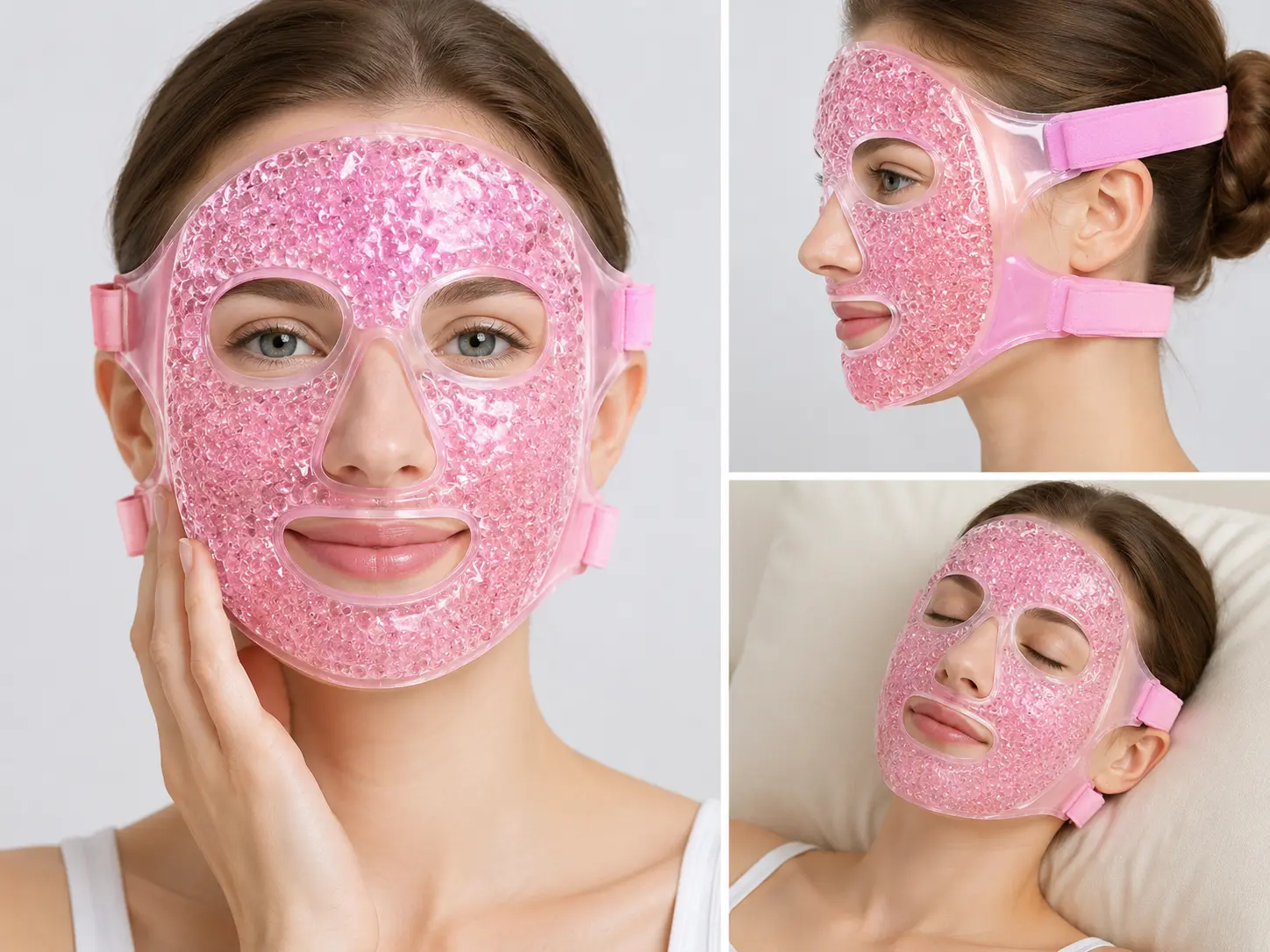
The full-face gel-bead mask with adjustable straps illustrates this product format. Confirm the exact filling, materials, dimensions, and instructions for the proposed sample; the format itself is not evidence of a cosmetic or therapeutic result.
Specify openings and fit before artwork
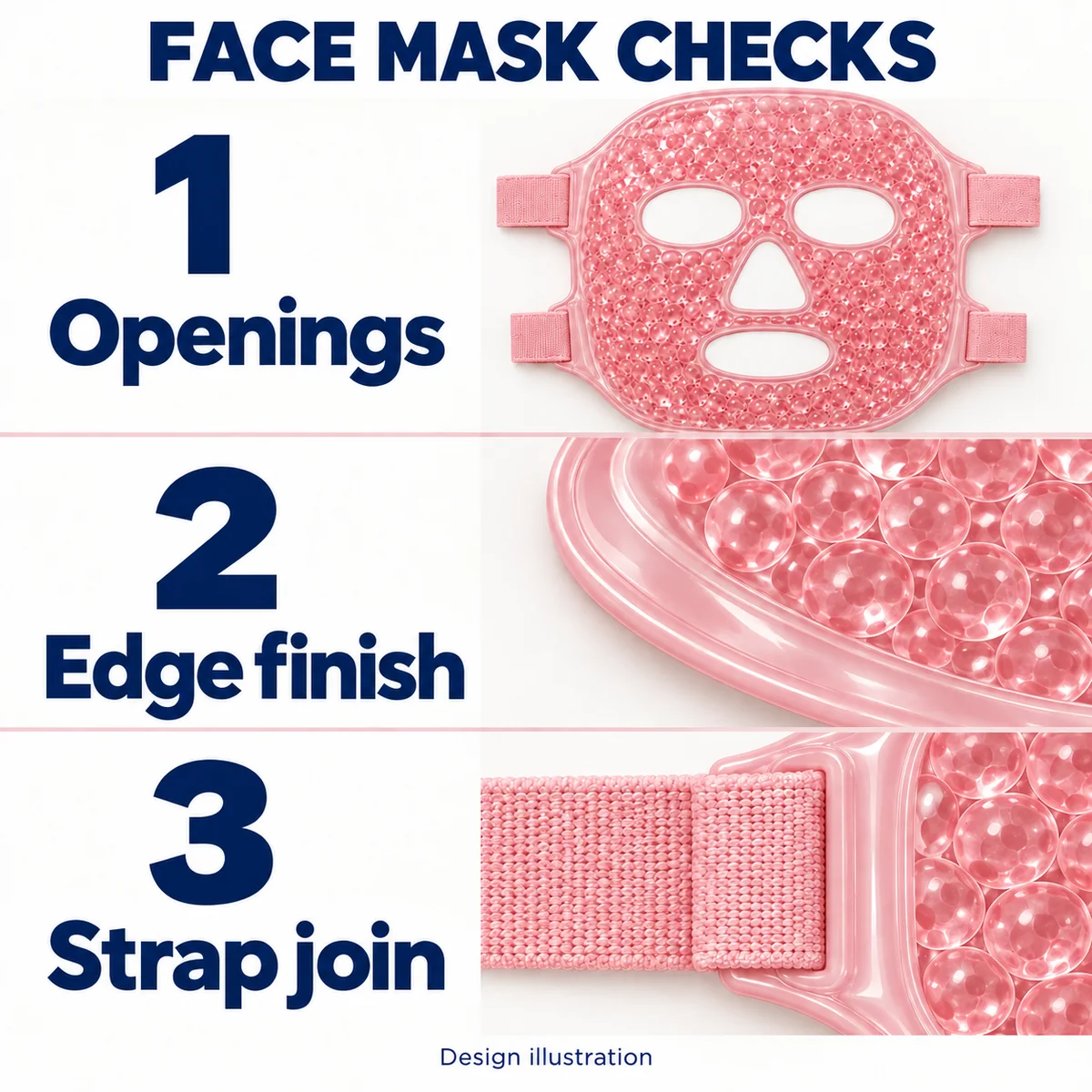
Record the overall outline, opening dimensions, spacing between openings, edge finish, and strap attachment locations. Agree on a consistent drawing reference so the supplier and buyer measure the same points.
A mask can match its overall width and still place an opening poorly. Review representative face shapes within the intended adult user group, and inspect clearance around the eyes, nose, and mouth without assuming that a marketing label such as “one size” proves suitability. If the intended audience includes children or another population with different risks, stop and obtain a separate product and safety assessment.
- Front view: opening alignment, coverage, edge position, and unintended folds.
- Side view: nose clearance, local gaps, and where the panel lifts from the face.
- Back view: strap path, reachable closures, excess strap, and hair interaction.
- Handling: positioning, adjustment, quick removal, and the need for assistance.
Separate the filling from the skin-facing material
“Gel mask” is not a complete material specification. Identify the filling, containment film, seams, any textile layer or removable cover, straps, closures, and printed areas separately. Ask which surface is intended to face the wearer and what barrier, if any, the approved instructions require.
Gel beads and a more continuous gel filling can produce different surface profiles and distribution. Compare the actual proposed samples rather than assuming one is always more comfortable or lasts longer. The relevant questions are whether the filling stays where needed, whether the mask can follow the intended contour, and whether the construction remains intact under the agreed conditions.
Use Cryozin’s material selection resources to frame material questions. Do not accept “medical grade,” “hypoallergenic,” or “non-toxic” as self-explanatory proof: ask for the exact claim, applicable test or assessment, configuration covered, and intended market.
Approve preparation and cleaning as part of the product
Ask the supplier for preparation, use, cleaning, drying, storage, inspection, and disposal instructions supported for the exact configuration. Do not borrow freezer times, heating methods, or wearing durations from another mask. A cooling mask should not be presented as microwaveable merely because some other hot-and-cold products can be heated.
The sample review should check whether the proposed cleaning instructions are practical and whether repeated cleaning under the agreed conditions changes the surface, printing, seams, or closures. Do not infer disinfectant compatibility from a wipe-clean appearance. If a buyer wants shared use, the relevant cleaning and hygiene approach requires its own documented assessment.
Keep a clear distinction between a buyer’s handling observation and safety evidence. “The closure was easy to reach in this check” is a useful observation. “Safe for everyone” is not a defensible conclusion from a few samples.
Review the claims before choosing the box headline
The proposed intended use and advertising claims matter more than the word “beauty” on the packaging. The FDA’s explanation of how to determine whether a product is a medical device is a starting point for a U.S. classification review. Do not assume every cooling mask has the same regulatory status.
Before approving a carton or product listing, collect all express and implied claims—including photographs, before-and-after comparisons, product names, and influencer instructions. The FTC Health Products Compliance Guidance explains the substantiation expected for health-related advertising. A disclaimer does not replace appropriate evidence for the overall message.
- Physical description: confirm shape, filling, closures, and included components against the approved sample.
- Preparation or use statement: require instructions applicable to that configuration.
- Cosmetic or health outcome: route the precise wording and supporting evidence to the responsible reviewer before use.
- Certification or compliance statement: verify issuer, scope, validity, product coverage, and the market concerned.
A useful claims register has four fields: proposed wording, where it will appear, supporting evidence, and approval status. If support is missing, leave the claim out rather than changing it into a softer-sounding promise with the same implication.
Use a sample approval record with separate decision gates
Keep the evidence and the decision together. A practical record can use the following gates; the actual methods, sample quantities, and acceptance criteria must be agreed for the project.
- Identity gate: sample revision, drawing, bill of materials, and packaging version match.
- Fit gate: opening alignment, coverage, strap access, and removal have been reviewed for the intended user range. Document limitations, not just successful fits.
- Construction gate: containment, edges, closures, fill distribution, and the applicable inspection evidence have been reviewed.
- Instruction gate: preparation, cleaning, storage, warnings, and stop-use criteria are supported and understandable.
- Commercial release gate: quantity, configuration, packaging, labeling, and claims have named approval owners.
For example, a hypothetical sample may pass an outline measurement but fold near an eye opening when the strap is adjusted. Record that as a geometry or attachment issue and request a revised sample. Do not compensate by writing “adjust as needed” on the box without checking whether users can achieve the intended fit.
The broader ice pack sample approval checklist can hold the project-level sign-off. This face-mask record adds the format-specific opening, fit, and handling checks.
Make packaging protect the approved configuration
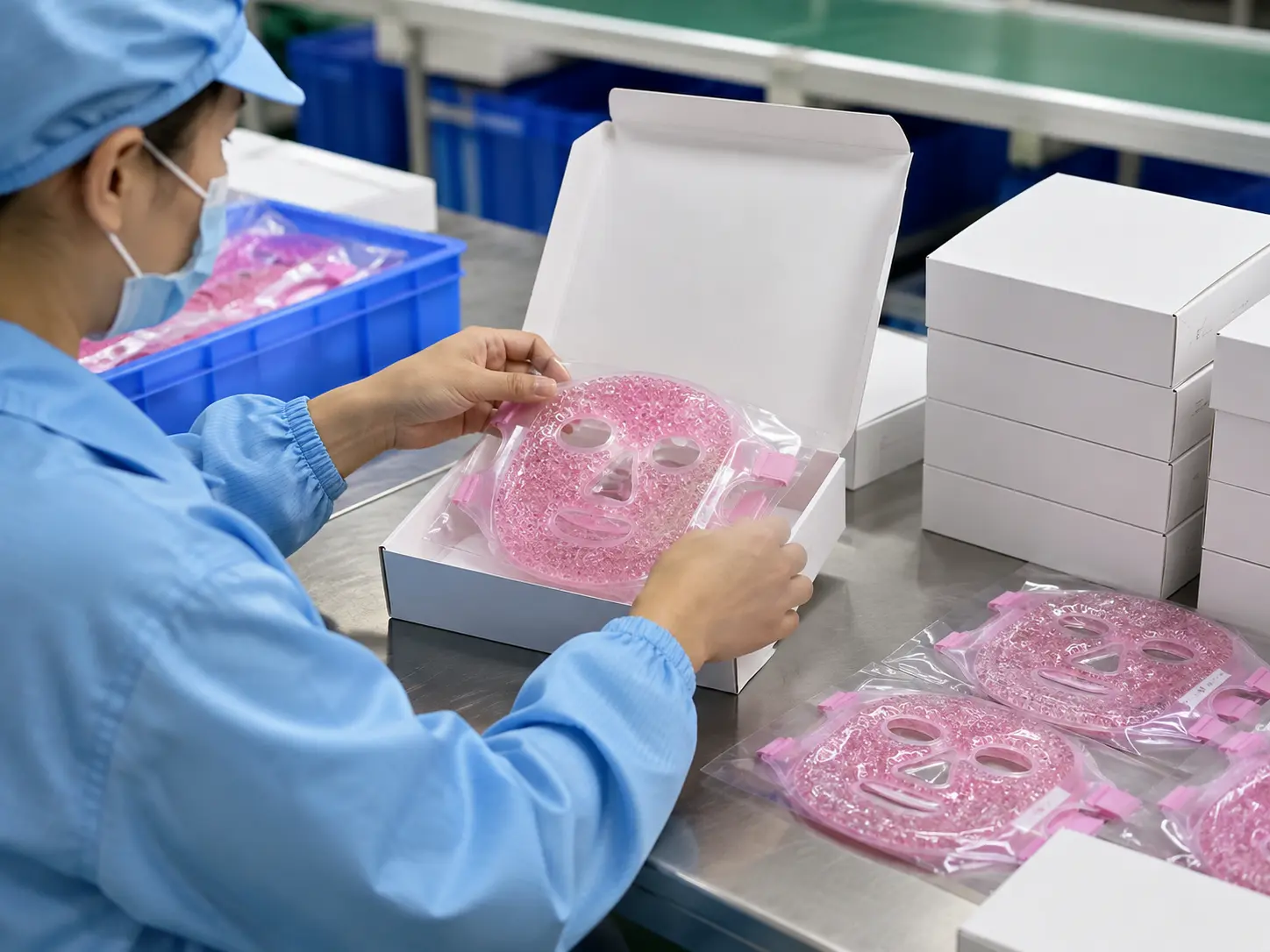
Evaluate the pack-out with the actual mask and all inserts. Check whether folding places stress on a seam, leaves a sharp crease near an opening, or distorts a strap. Decide how the customer will identify the correct side and find the instructions on first opening.
Confirm labeling, lot traceability, language, and channel requirements with the responsible market reviewer. An attractive carton is not a substitute for required information, and a barcode does not by itself establish traceability through every production and distribution step.
Frequently asked buyer questions
Is a facial cooling mask automatically a cosmetic product?
No classification should be assumed from that description alone. Review the product’s intended use, claims, construction, and destination market with the appropriate specialist.
Can the same mask be sold for home and professional use?
Only after reviewing the different use conditions. Shared handling, cleaning, storage, and user instructions may create requirements that were not addressed in a personal-use brief.
Is this the same sourcing task as a magnetic cooling mask?
No. A standalone mask is secured independently. A magnetic cooling mask used with a device has additional attachment and interface questions; do not treat the configurations as interchangeable.
Prepare a brief a supplier can actually evaluate
Send the intended channel, user group, standalone format, opening drawing, material preferences, preparation expectations, proposed claims, and approval checklist together. This makes it easier to identify what is feasible, what needs sampling, and what needs separate evidence before a launch decision.
Browse personal-care cooling product formats and the OEM and private-label development program. When ready, send Cryozin your facial cooling mask brief to discuss the proposed configuration and sample requirements.
Sources and further reading
- FDA: How to Determine if Your Product Is a Medical Device — intended-use and classification considerations.
- FTC: Health Products Compliance Guidance — substantiation of express and implied health-related advertising claims.
