
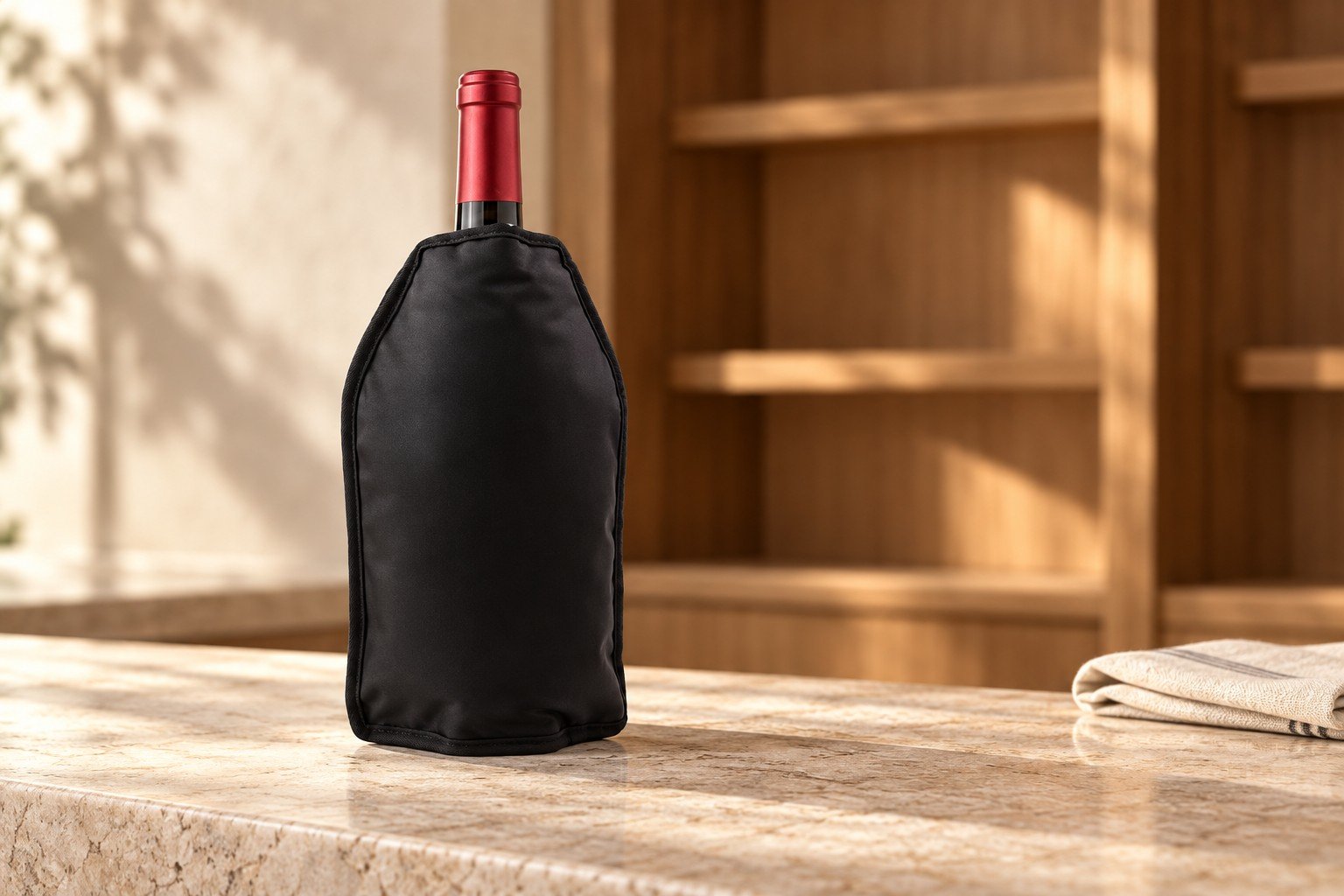
Cover image: AI-assisted editorial scene based on the catalog sleeve. The setting is illustrative; no cooling or bottle-fit test is shown.
A wine cooler sleeve and a wine bag can solve different problems. A sleeve containing pre-chilled gel adds a cold source around the bottle. An insulated bag without a cold source mainly slows heat exchange while carrying the bottle. Some bags include gel panels or accept separate cooling packs, so the words “sleeve” and “bag” alone do not tell a buyer how the product cools.
For a wine-accessory brand, gift supplier, or retailer, start with the promised task: cooling a bottle, carrying a chilled bottle, or combining the two. Then compare the complete construction, preparation routine, and intended bottles. This guide turns the wine cooler sleeve vs wine bag decision into a product brief that suppliers can quote against.
Compare the cooling source before the product name
| Buying question | Gel wine cooler sleeve | Insulated wine bag without a cold source |
|---|---|---|
| What is doing the cooling? | A gel section prepared according to its instructions | No added cooling source; the bag provides an insulating enclosure |
| What preparation matters? | The specified conditioning method and available storage space | The bottle’s starting temperature and whether a separate cold pack is required |
| What should fit closely? | Bottle body, shoulder, sleeve opening, and side connections | Bottle compartment, closure, dividers, and any cooling insert |
| What needs a separate check? | Whether the sleeve is intended to remain on the bottle during serving | Handle attachment, closure, carrying orientation, and loading |
| What must a quotation identify? | Sleeve construction and included components | Bag construction and every included or optional cooling component |
These are construction differences, not a ranking of cooling duration. A thick-looking fabric bag can arrive without any cooling insert. A thin-looking sleeve may contain gel. Request a component description or sample rather than judging from the outside photograph.
The U.S. Department of Energy’s heat-flow explanation distinguishes heat transfer through contact, air movement, and radiation. That general principle helps explain the difference between insulation and an added cold source; it is not a performance rating for a wine accessory.
Decide whether the bottle needs cooling, carrying, or both
For a table-service accessory, a close-fitting sleeve may be the first format to sample. The bottle can remain visible above the sleeve, and the buyer can check pouring clearance and whether the sleeve stays in its intended position. Do not assume the sleeve is also a handle or a protective shipping case.
For an event gift or a bottle carried between locations, a bag may address requirements that a sleeve does not: a carrying opening, a closure, or separation between bottles. Specify whether it will carry an already-chilled bottle or must include a prepared cold source. Those two briefs can produce very different assemblies and packing requirements.
Consider the preparation routine as part of the product. A wine retailer can explain a freezer-prepared accessory to a customer, while an event team handing out products at a venue may have different storage arrangements. Ask how the proposed product will be prepared before deciding that its retail presentation fits the channel.
As a named example, Vacu Vin’s Wine Cooler Sleeve Silver describes freezer preparation for its gel sleeve. Its instructions belong to that product. They do not establish a conditioning time, cooling rate, or duration for another manufacturer’s sleeve.
Use bottle profiles, not capacity labels alone
Two bottles carrying the same volume label can have different body diameters, shoulder shapes, and heights. Give the supplier the actual bottle or a dimensioned profile, including the widest body section and the point where the shoulder begins. A generic “wine bottle” description leaves too much for the supplier to interpret.
On a sleeve, inspect the upper opening, lower edge, and side connection with the bottle inserted. Check whether the prepared sleeve can be fitted and removed as intended, whether seams roll outward, and whether the bottle remains stable on its base. Review any change in handling after the specified conditioning process.
Elastic construction needs a defined fit range. Le Creuset’s sleeve listing, for example, describes elastic sides and a tapered top. Those features show why the attachment and shoulder profile belong in a comparison. They do not prove that another elastic sleeve will fit the same bottles.
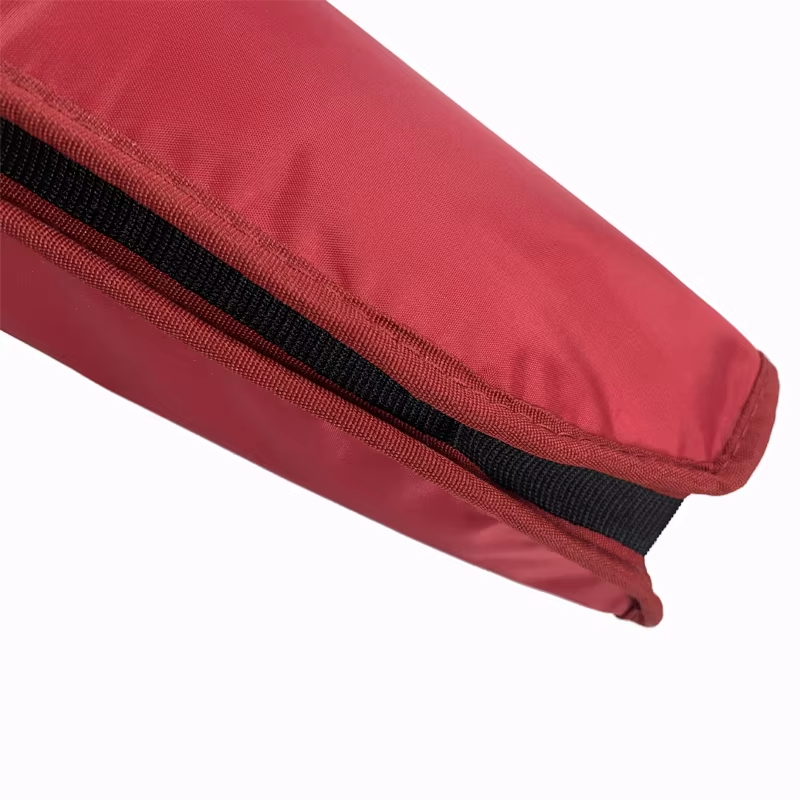
Cryozin’s wine bottle cooling sleeve with elastic sides provides a visible construction example. Review the selected color, bound edge, and side connection against the sample; a photograph of one bottle is not a universal fit declaration. The custom ice pack size guide can help organize the drawing inputs.
Recognize bags that already contain cooling panels
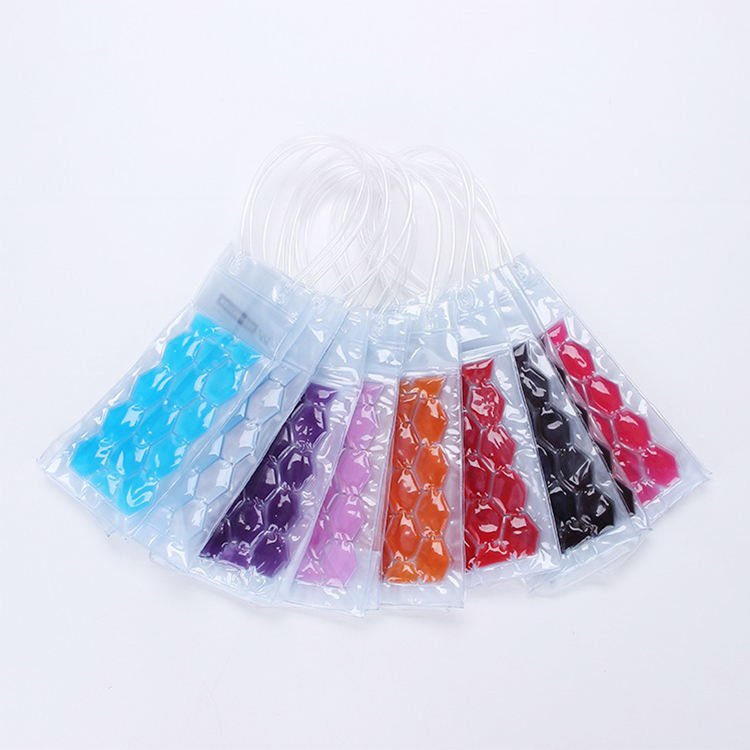
A bag with filled cooling cells is a third configuration: it combines a bottle-carrying format with a cold source. Compare it with the sleeve by preparation, contact area, bottle space, and handling. Compare it with an unfilled insulated bag by the components actually supplied.
Cryozin’s cell-panel bottle cooling bag with carry handles illustrates this distinction. The clear outer panels, visible filled cells, and loop handles are different from the close-fitting fabric sleeve. The listing is not evidence that Cryozin offers every insulated wine tote construction.
On the complete bag sample, inspect the opening and usable internal space. Check how the bottle sits when the bag is lifted and set down, where the handles attach, and whether any panel folds into the bottle space. Agree a handling check with the supplier; do not infer a carrying load from the presence of handles.
Ask for comparable cooling evidence
Separate “cool down a bottle” from “limit warming of a chilled bottle.” A report beginning with a warm bottle answers a different question from one beginning with a chilled bottle. A supplier’s headline duration may say little about the task in your brief.
For any proposed thermal claim, request the identified sample, preparation method, bottle and contents, starting temperature, ambient conditions, measurement location, and criterion used to call the result acceptable. Record whether the bottle was removed, poured, or left in the product throughout the check. Define the intended conditions before commissioning a comparison.
The same applies to an insulation material name. Nylon describes a possible outer textile; it does not identify every layer inside a bag. A reflective-looking lining does not establish the finished assembly’s cooling duration. For a deeper explanation of what changes a result, use the ice pack cooling-duration factors guide.
A selection card to send with the sample request
Use this editorial worksheet to make the first quotation specific. It is not a test standard or an approved product specification.
| Field | What the buyer should record |
|---|---|
| Primary job | Cool a bottle, carry a chilled bottle, or provide both functions |
| Bottle reference | Exact bottle profiles, count, orientation, and any required label visibility |
| Proposed construction | Gel sleeve, insulated enclosure, or bag with identified cooling components |
| Preparation | Available equipment and space; instructions to be confirmed for the sample |
| Handling | Serving routine, removal method, carry requirement, and closure requirement |
| Evidence | Claim being evaluated and the conditions for the proposed comparison |
| Retail unit | Sleeve or bag count, inserts, instructions, artwork, and individual packing |
| Decision | Preferred format and any issue that must be resolved before approval |
Select a gel sleeve when its bottle contact and preparation routine answer the brief. Select an insulated bag when the carrying enclosure is the priority and its cold-source requirement has been addressed. Consider a filled-panel bag when both functions are wanted, then assess the complete assembly.
Questions before sourcing a wine-cooling accessory
Will any wine bag cool a warm bottle?
No. Check whether it contains a prepared cold source, accepts one separately, or provides insulation only. Ask what starting bottle condition the supplier’s claim assumes.
Does a 750 mL label establish sleeve compatibility?
No. It describes capacity, not the bottle’s entire outside profile. Approve the relevant bottles and the sleeve’s prepared condition together.
Can a bottle sleeve replace shipping protection?
Serving and carrying checks do not establish protection for parcel transport. If the retail project includes shipping a bottle, treat the outer shipping package and its validation as a separate requirement.
For a Cryozin project, send the selected sleeve or filled-panel bag format, bottle references, preparation requirements, artwork, and quantity. Discuss the custom ice pack options once the construction is clear, then request a bottle-format and sample review. That gives the supplier a usable starting point for fit, configuration, and quotation.
Sources and further reading
- U.S. DOE Building Science Education — Heat Flow: general heat-transfer principles, not bottle-accessory test results.
- Vacu Vin — Wine Cooler Sleeve Silver: a named freezer-prepared sleeve example.
- Le Creuset — Wine Cooler Sleeve: a named elastic-side construction example.
- Cryozin product pages linked above: visible formats for sample discussion; no comparative cooling result is asserted.
