

Approve the bag through a complete filling and emptying cycle
For a refillable ice bag, approve the sample after filling it, closing the cap, checking its loaded shape, and emptying it. A flat outline and a cap photograph leave several buying questions unanswered: can the intended ice enter the opening, does the cap seat correctly, and can the filled bag reach the shape your retail brief requires?
On this page
These reusable ice bag sample checks help sports-care brands, distributors, and kit buyers turn those questions into a recorded decision. Start with the selected bag and its proposed instructions. Use the review below to agree what to inspect and what needs another sample.

Check filling access and the complete cap assembly
First, confirm that the sample is intended to be opened and refilled. The product name alone can be ambiguous. For example, Rapid Aid’s retail catalog, page 17, lists an unfilled ice bag alongside gel-bead ice bags with permanently sealed caps. That distinction belongs in your purchase specification.
For the refillable sample, measure the clear opening separately from the bag body. Ask the reviewer to use the proposed filling medium and preparation position. Record whether the opening provides enough working room, whether the bag can be supported during filling, and whether the cap or tether gets in the way. An opening described as “wide” still needs to suit the actual filling routine.
Review the cap and bag together. Identify the mating thread and any sealing component supplied with that model. Check that the cap starts and seats as specified, and photograph its final position. Record any difficulty aligning the thread, a seal that moves out of place, or an opening interface that distorts during handling. Ask the supplier to define the correct closure condition; do not invent a tightening force.
Agree a separate closure check with the supplier, including the filling amount, handling positions, observation period, and acceptance criteria. Record where any water appears and under what conditions. A clean observation on one sample supports that recorded result; it does not establish a guarantee for every fill level or handling condition. The leak-testing guide covers the wider test-planning questions.
Set the working fill before judging the shape
Keep three entries separate: the unfilled body dimensions, the clear opening, and the agreed filling amount. A bag’s inch-size reference or laid-flat dimensions cannot serve as its usable capacity specification.
Write the permitted filling medium and the amount used in the review, with the appropriate unit and measurement method. If the brief allows more than one filling option, record each option separately. Cryozin’s current refillable neck-bag listing specifies ice water or crushed ice; its loading amount still needs sample approval. The ankle and shoulder listings leave the filling medium and loading capacity for the selected assembly to be agreed.
Use the same recorded fill for the closure and fit reviews so both teams are assessing the same configuration. If the shape needs a different amount, record the change and repeat the affected checks. Keep preparation and care instructions specific to the approved bag, cap, and filling medium.
Give each loaded shape its own review
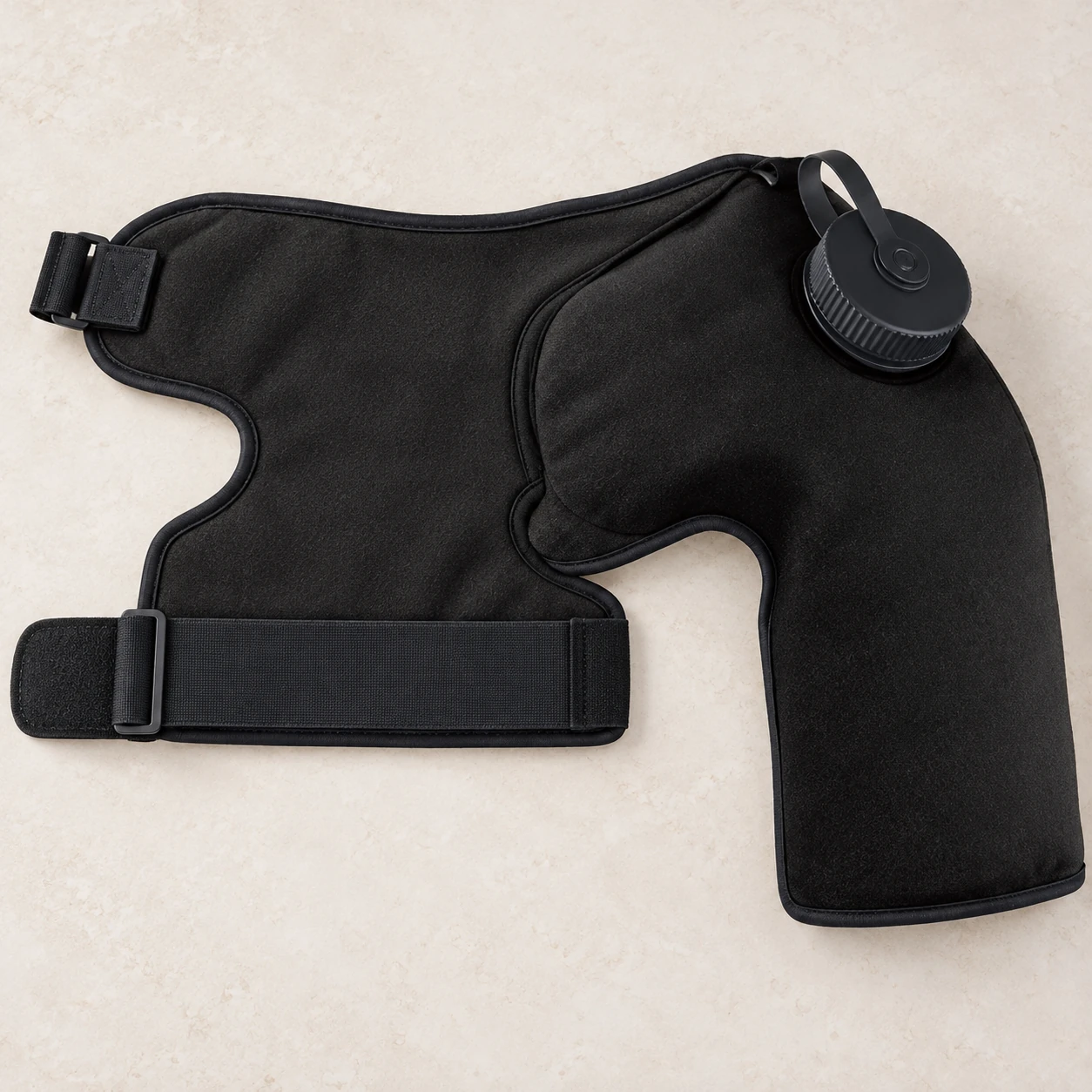
The round bag and the shaped ankle, neck, and shoulder bags create different sample questions. Cryozin’s three shaped formats are directly refillable bags. Their fill ports open into the shaped bag itself.
| Selected format | What to record |
|---|---|
| Round fabric ice bag | Check the gathered body and screw-cap opening at the agreed fill. Record how the bag is supported or retained in the intended position. Include a retaining accessory in the review only when it is part of the quoted assembly. |
| Refillable ankle bag | Review the ankle fold, adjoining foot coverage, and overlap at the fastening areas. Inspect the large side cap, tether, and sealing ring together with the loaded bag. |
| Refillable neck bag | Check the collar height, lower edge, and front-wing overlap on the selected fitting form. Record access to the side cap in the preparation position and how the filling is distributed through the collar. |
| Refillable shoulder bag | Review both left- and right-shoulder orientations. Record upper-arm coverage, the chest-strap route and adjustment, and access to the upper fill port. |
Use a fitting form with recorded dimensions and identify any proposed contact layer or accessory. Photograph the loaded assembly from views that show the cap, folds, and fastening overlap. When a strap is included, review its route with the bag carrying the agreed fill. Keep comments specific: “cap is obstructed in the preparation position” gives the supplier a clearer revision target than “fit needs improvement.”
Define the fit checks before comparing suppliers. A brand selecting a round bag for a compact kit may prioritize filling access and packed size; a buyer selecting a shoulder format also needs to resolve strap routing and left/right orientation.
Finish the review by emptying the sample
Carry the sample review through the proposed emptying routine. Record how the bag is held, where the remaining water collects, and whether the reviewer can follow the supplier’s drying instructions. For a shaped bag, include its folds and extended sections in this observation.
Ask the supplier to identify which cap or seal components may be removed for care and how they are reassembled. Match the retail instructions to that construction. Keep washing methods, drying arrangements, and storage directions pending until they are confirmed for the selected model.
If spare components belong in your assortment, list them by the approved bag and cap assembly. Cryozin’s ankle listing offers a replacement cap separately; compatibility must match the selected assembly. For other formats, put spare-cap, seal, tether, or strap requirements in the inquiry and confirm what can be supplied.
Copy this fill-close-fit-empty sign-off card
Use one card per candidate configuration. This is an editorial buyer worksheet for agreeing and recording a review, rather than a standardized test method.
Sample identity: SKU/reference ___ · sample revision ___ · review date ___ · reviewer ___
Supplied assembly: bag ___ · cap ___ · seal/tether, if included ___ · straps/accessories ___
Fill: permitted medium ___ · amount and unit ___ · measurement method ___ · preparation position ___ · opening clearance ___
Close: supplier’s closure instruction ___ · seating observation ___ · agreed handling/observation conditions ___ · acceptance criteria ___ · result ___
Fit: fitting-form dimensions ___ · contact layer/accessories ___ · orientation ___ · coverage/folds ___ · fastening overlap and cap access ___ · photo references ___
Empty and dry: approved instruction revision ___ · emptying position ___ · retained-water observations ___ · drying access ___ · component care/reassembly ___
Retail configuration: complete bags per selling unit ___ · included parts ___ · replacement parts requested ___ · individual packaging ___
Decision: approve / revise and resubmit / hold ___ · unresolved item and responsible person ___ · next evidence or sample required ___ · retained reference ___
Make the sample decision specific enough to act on
Approve the configuration when the agreed checks are complete and the recorded result meets your acceptance criteria. Request a revision when a defined change can be evaluated, such as moving an opening or adjusting a fastening area. Hold approval when the filling instruction, closure condition, or required evidence remains unresolved.
Identify the reference sample, drawing, and instruction revision in the decision. When the supplier sends a revised sample, list what changed and which checks need repeating. For the broader production handoff, use the sample approval checklist.
Confirm the sales unit before pricing. The current Cryozin ankle, neck, and shoulder listings each define a supply set as two complete refillable bags. The round bag’s quotation needs to define its order unit and complete retail contents. Carry those details into the sample request so the bag, components, and packaging are priced on the same basis.
Browse the refillable ice bag range to select a starting format. To discuss a sample, send Cryozin your filling and fit brief: include the reference product, intended filling medium, approximate dimensions or fitting range, quantity, selling unit, and packaging requirements. Attach the completed card or mark the fields you need the supplier to help resolve.
