

Choose a cooling gel seat cushion by the chair it needs to fit and the cooling routine your customers can follow. Compare a sealed gel cushion with a phase change material (PCM) pad in the intended configuration before ordering. Start with the usable seat area, then review initial feel, moisture after preparation, and the surface feel over a defined sitting interval.
This guide helps retail brands and procurement teams compare seating samples for office chairs or an adult vehicle-seat program, where the vehicle manufacturer allows the accessory. It also shows how to specify the order unit and decide what evidence your supplier needs to provide.
On this page
Compare gel and PCM seat cushions by preparation and fit
| Construction | What the buyer is choosing | What to verify |
|---|---|---|
| Sealed gel cushion | A pad with the specified gel formulation inside a sealed shell. A solid-gel sample and a water-based gel sample can respond differently. | Initial and loaded feel, supported preparation, surface moisture, edge position, and stability on the actual chair. |
| Segmented PCM seat pad | A pad with a specified phase-change fill. Panel layout and fold lines affect how it fits a seat and how it packs. | Conditioning method, firmness before and after preparation, loaded footprint, and recovery between uses for the actual fill and shell. |
The U.S. Department of Energy describes the storage of heat as a material changes phase in its overview of phase-change thermal storage. For cushions, use the actual fill specification and the finished sample to check performance. The material’s phase-change temperature is one input. The surface temperature, usable duration, and preparation routine depend on the complete product and conditions.
Compare the geometry of Cryozin’s three-panel lattice PCM seat pad with the round solid-gel cushion with a center opening. The round sample shows a solid-gel construction. Set a separate specification if your comparison uses a water-based gel.
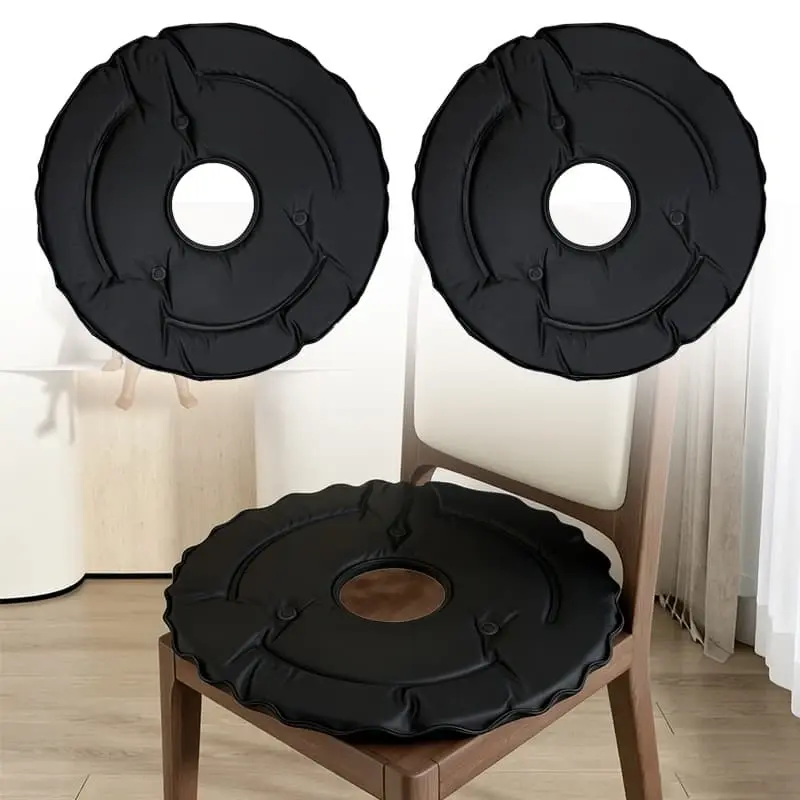
Choose the seat footprint before approving a size
For an office range, record the usable seat width and depth, the front edge, and the space against the backrest. Add the cushion to the intended chair and recheck seat height, usable depth, and whether the sitter can use the chair’s adjustments. The OSHA workstation purchasing checklist explains why seat-pan geometry and adjustability matter when selecting office chairs. Use the checklist as context for the chair, then verify the complete cushion setup yourself.
For an adult vehicle-seat range, start with the vehicle maker’s accessory instructions. Review the intended seat position and the effect of the sample on seating and restraint fit before listing compatibility. NHTSA’s seat belt guidance describes correct lap and shoulder belt positioning. A comfort cushion and an adult fit check do not establish compatibility with a child restraint.
In Cryozin’s seat-pad projects, buyers typically start with an existing office-chair or vehicle-seat footprint, then confirm it on the actual sample. The reference lattice PCM pad is supplied as a bare pad. State clearly whether your order includes a cover or any separate component so the quote and retail pack list use the same selling unit.
A customer reviewed two seat-pad samples for their ergonomic chair and moved to a new mold. Cryozin made a revised cushion with material and dimensions tailored to that chair. If neither reference fits your seat, send the chair drawing and intended material before approving tooling.
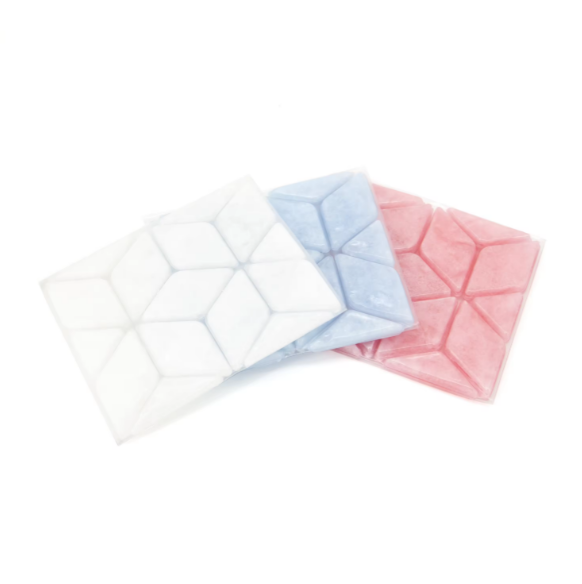
Compare the two samples under the same conditions
One recurring sample check is what happens immediately after preparation. A deeply chilled water-based gel sample can feel too cold initially, and condensation may wet the contact surface. Record those observations alongside the PCM sample’s feel and moisture. Treat them as results for those samples under those conditions.
- Keep the setup comparable. Use the same chair, room conditions, contact layer, and seating interval. Record the approved preparation for each product and the time between preparation and use.
- Record the starting condition. Note initial surface feel, moisture, firmness, and whether folds or edges affect the seat footprint.
- Repeat the observation. Recheck at agreed times. If you plan to print a temperature or duration claim, define the measurement location, equipment, conditions, and acceptance criteria first.
- Check seams separately. Agree with the supplier how production units will be sampled, how the load will be applied, and what counts as a leak failure.
In one 2,000-piece gel seat cushion order, a heavy-load check led to a sealing-process correction. About 100 cushions from the order were checked again at room temperature over 48 hours. The 200 kg load was shared across multiple samples, and the recheck found no leakage. That is a recorded factory correction and retest. It does not establish an individual cushion load rating. See the full leak-testing example when specifying your own acceptance plan.
What to send for a cushion quote
Share the intended chair or approved vehicle seat, usable dimensions, selected construction, and target order quantity by size. Provide the contact-layer preference, preparation and care instructions you plan to include, and whether cartons will carry individual boxed units or pads in bulk. Ask the supplier to identify the exact approved sample version on the specification.
Questions seat cushion buyers ask
Can I compare two pads by a published cooling time?
Use time claims only when the conditions match your use case. If the preparation, load, contact surface, room conditions or endpoint differ, run a side-by-side check with the two production-equivalent samples.
Can a round gel cushion and a three-panel pad share a box?
Check the packed dimensions of each finished sample. Record whether the pad is flat or folded, verify the box closes without pinching the seams, and confirm how each retail version will be identified.
Send your seat footprint, fill preference and quantities for a sample recommendation. For more options, browse the gel and PCM cushion catalog.
