
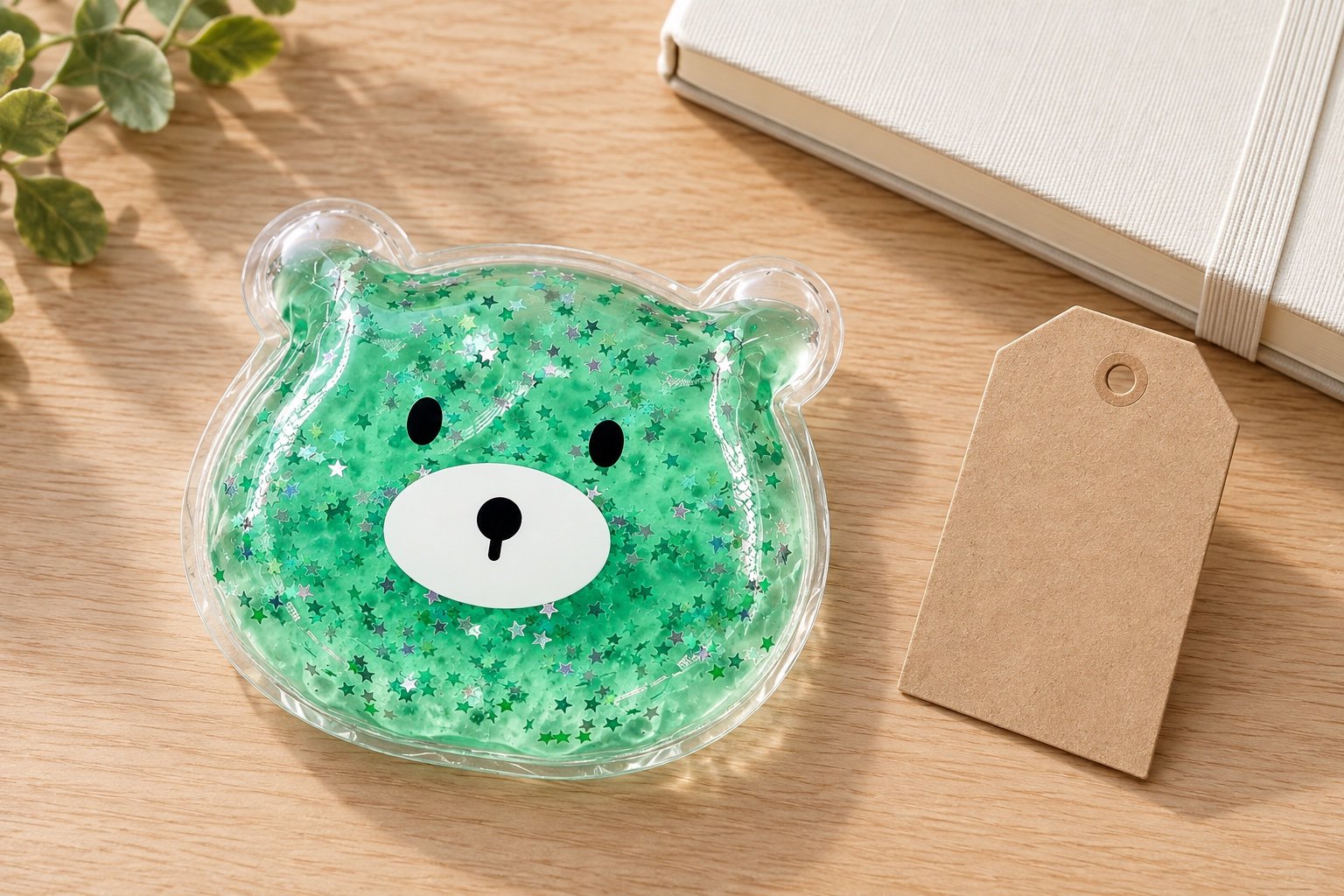
Good custom ice pack printing quality is not just a logo that looks sharp in a supplier photo. For a B2B order, the print should match the approved artwork, remain readable on the selected film, sit clear of seals and folds, and withstand the handling conditions defined for the product.
The most reliable approach is to turn “good printing” into written acceptance criteria before mass production. This guide shows brand owners, sourcing teams, and quality personnel what to inspect, what to record, and how to compare a pre-production sample with finished goods.
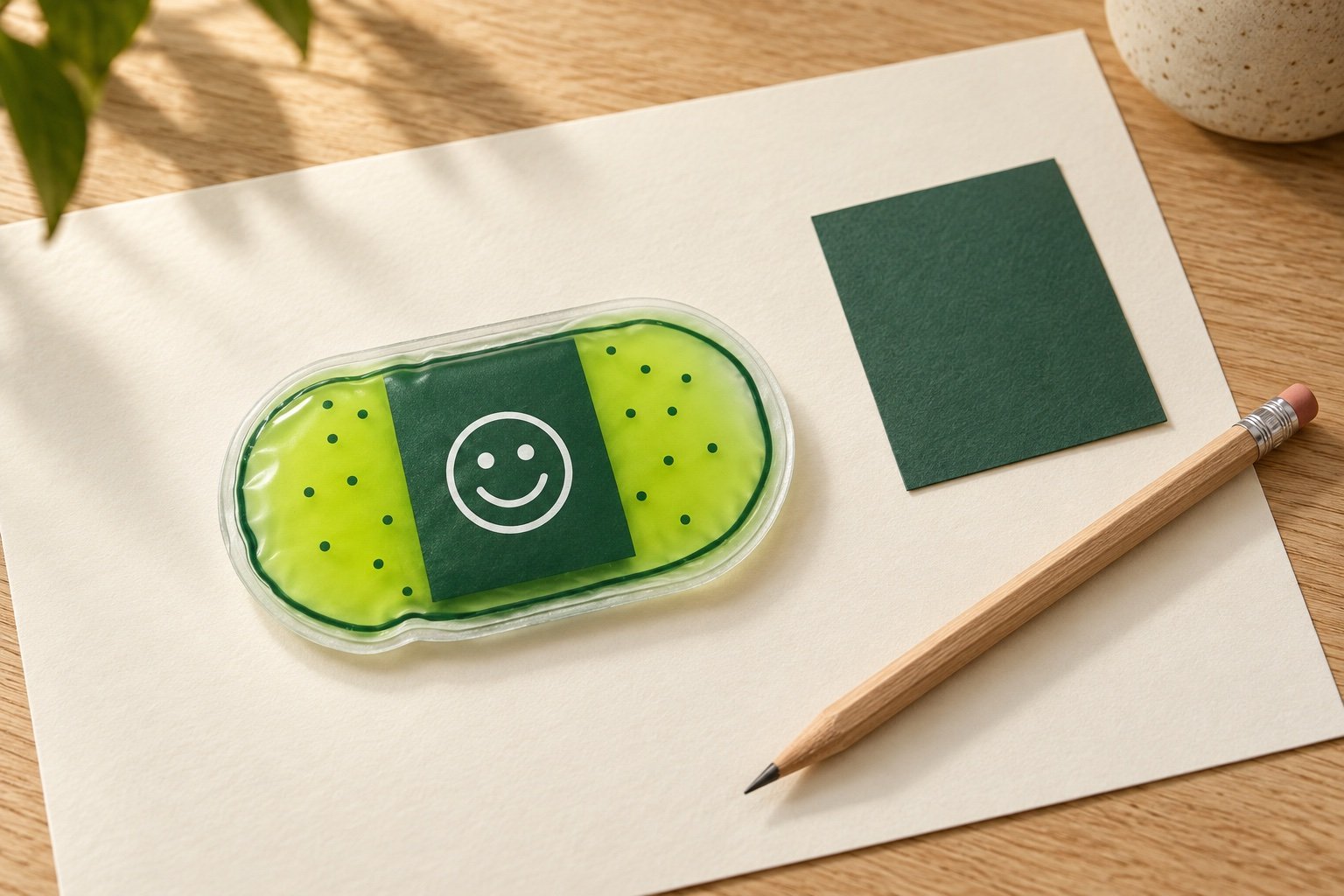
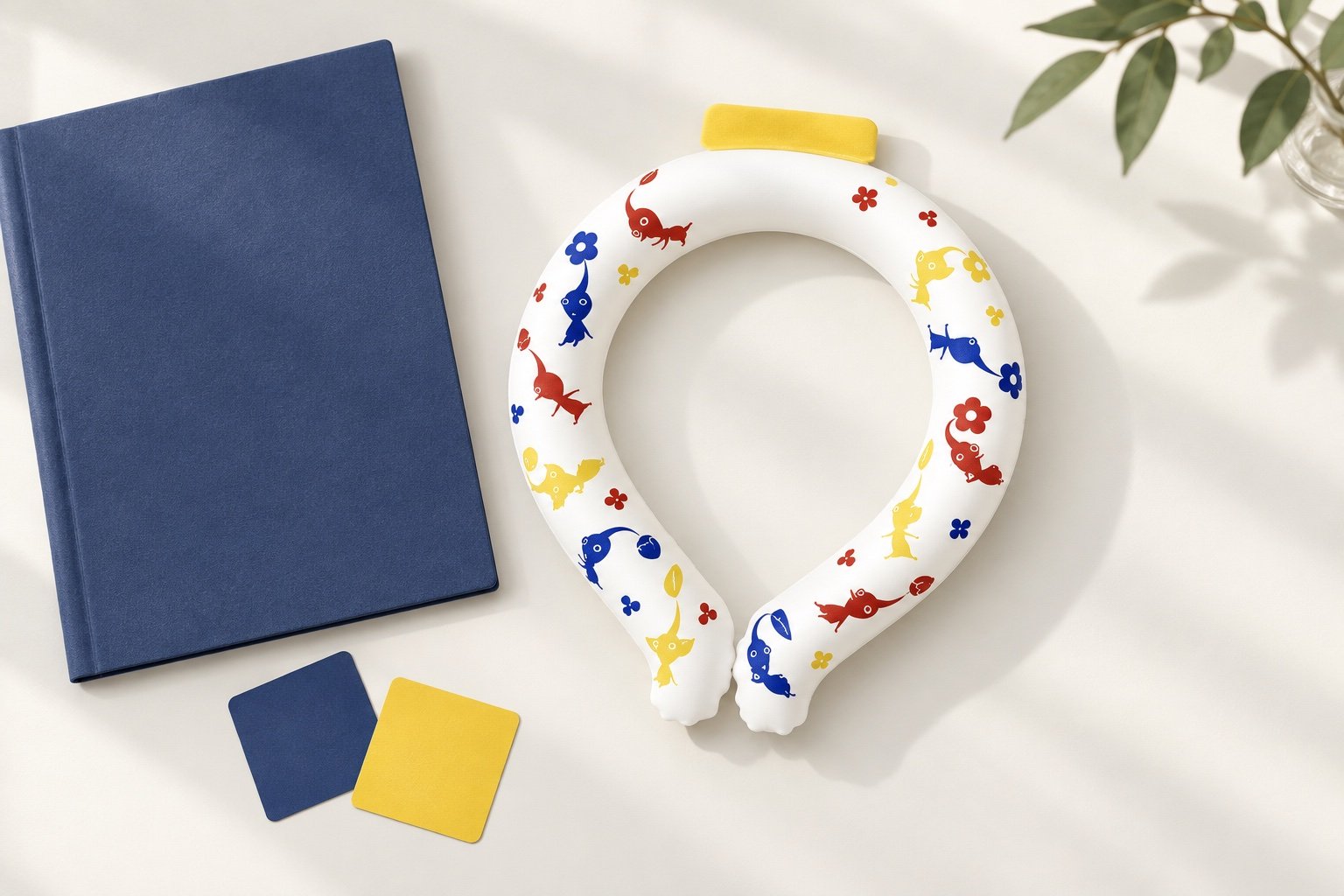
Compare branding surfaces on the oblong pack with an artwork panel and printed PCM neck ring. Use these as geometry references, then define the print location and approval method for the selected sample.
On this page
What should buyers evaluate on a printed ice pack?
A complete print review covers six separate questions:
- Artwork accuracy: Are the logo, text, symbols, and legal copy the approved versions?
- Position and scale: Is the print inside the agreed print zone and away from seams, fill ports, folds, and rounded edges?
- Visual quality: Are fine lines, small text, registration, opacity, and edges acceptable?
- Color: Does the printed result meet the agreed visual or instrumental tolerance on the actual substrate?
- Adhesion and durability: Does the ink remain attached after the agreed handling and exposure checks?
- Traceability and readability: Can required lot codes, barcodes, warnings, and instructions be read and scanned?
Start with an approved artwork and print specification
Quality inspection becomes subjective when the purchase order contains only a logo file and a general color name. A better specification identifies the artwork revision, finished print dimensions, orientation, print location, colors, minimum text size, and any no-print zones.
Place the print zone on the same drawing used for the pack dimensions and seals. A design that appears centered on a flat file can look displaced after the pack is filled, sealed, segmented, or folded. Keep critical text away from the perimeter seal and other areas where distortion is expected.
Before sending artwork, use the custom ice pack logo file requirements checklist to identify the preferred vector file, fonts, linked images, spot colors, and revision code. The separate guide to custom ice pack printing methods explains why process choice affects coverage, edge definition, setup, and economical order size.
Inspect visual quality on the actual filled pack
A flat, unfilled film sample is useful for an early color check, but it does not show how the graphics will look after filling. Review at least one finished sample under normal viewing conditions and examine:
- missing characters, reversed artwork, or the wrong language version;
- blurred edges, pinholes, streaks, smudges, or unintended ink transfer;
- misregistration between colors;
- uneven opacity over transparent, translucent, or colored film;
- distortion near chambers, welded edges, and curves;
- incorrect logo size, rotation, or distance from reference points.
Photographs help document defects, but they should not replace a physical approved sample. Camera exposure, screen settings, gloss, and ambient light can all change the apparent result.
Define color approval instead of asking for an “exact match”
Ink does not appear the same on every film. Substrate color, transparency, surface texture, gloss, ink opacity, white underprint, curing conditions, and viewing light can all affect the final appearance.
For that reason, buyers should identify the reference—such as an approved physical sample or specified color target—and state how acceptability will be judged. ASTM D2244 describes calculations for instrumentally measured color differences, but it also emphasizes that buyer and seller must agree on the permissible tolerance and calculation procedure. An instrumental value should be correlated with visual acceptance for the actual material and viewing condition.
The practical workflow is covered in more detail in Cryozin’s custom ice pack color-matching guide. Keep color approval separate from artwork approval: a correct logo can still be the wrong color, and an acceptable color can still be printed in the wrong position.
Choose adhesion and resistance checks that fit the product
Tape adhesion on flexible packaging
ASTM F2252/F2252M-25 provides a practice for evaluating ink or coating adhesion to flexible packaging materials using tape. Importantly, the standard does not set a universal pass/fail level. Pressure, tape application, removal angle, removal speed, test location, and acceptance criteria need to be controlled and agreed for the project.
Exposure to water, alcohol, or other chemicals
If the printed surface may contact water, cleaners, alcohol, skin-care products, or another specified substance, add a defined exposure check. ASTM F2250-13(2025) outlines evaluation of printed inks and coatings on flexible packaging after chemical exposure. The relevant liquid, contact method, exposure time, and evaluation outcome remain project choices.
Rub or scuff resistance
Repeated contact during packing, shipping, retail display, and use may produce scuffing. ASTM D5264-98(2019) describes laboratory comparison of abrasion resistance for flat printed materials such as labels, cartons, and inserts. It should not be treated as an automatic pass criterion for a filled, flexible ice pack; use it where the substrate and purpose fit, or develop a controlled product-specific handling check.
Build a measurable print acceptance table
| Inspection item | What the buyer should define | Useful record |
|---|---|---|
| Artwork revision | File name, revision, language, symbols, and copy | Approved artwork PDF and signed sample |
| Print position | Reference edges, dimensions, orientation, and tolerance | Dimensioned drawing and measured sample |
| Visual defects | Acceptable limits for smears, pinholes, streaks, and registration | Defect photos or approved limit samples |
| Color | Reference, substrate, lighting, method, and tolerance | Physical master and/or instrument record |
| Adhesion | Test location, tape/application procedure, and pass rule | Test sheet with sample and lot identification |
| Exposure resistance | Relevant liquid, contact time, method, and acceptable change | Before/after record |
| Barcode or small text | Content, size, quiet zone, position, and scan/read rule | Scan verification and line-clearance check |
Do not copy a tolerance from another product without checking the film, ink, print process, color, geometry, and end-use conditions. Acceptance criteria should be realistic enough for production control and strict enough to protect brand presentation and required information.
Classify print defects by buyer impact
A defect list becomes more useful when it states the consequence of each defect. A wrong logo version, an unreadable lot code, and a small cosmetic mark should not automatically receive the same treatment. Before production, the buyer and supplier should agree on defect descriptions, severity, inspection stage, sampling plan, and disposition.
| Buyer-defined class | Illustrative print issues | Decision to document |
|---|---|---|
| Potentially critical | Wrong required warning or language; missing traceability information; print that interferes with a safety-relevant instruction | Whether any occurrence requires hold, segregation, or full review |
| Major | Wrong artwork revision; logo outside the position tolerance; repeated barcode scan failure; adhesion or exposure result outside the agreed criterion | Sample-size rule, lot acceptance rule, rework options, and approval authority |
| Minor | Limited cosmetic variation that does not affect identity, required copy, readability, scanning, or agreed durability | Visual limit sample or written boundary separating acceptable variation from a defect |
These are planning examples, not universal classifications. The correct class depends on the artwork, market, label content, product use, and buyer requirements. The ice pack quality-evaluation guide explains how a broader sampling and inspection plan can connect incoming, in-process, and finished-product checks without treating a generic AQL example as the specification for every order.
Make the print inspection record repeatable
A useful report should allow another reviewer to understand exactly what was checked and reproduce the decision. For each sample or production lot, capture:
- purchase order, product code, production lot, date, and inspection stage;
- approved artwork revision, language version, substrate, and print process;
- approved physical sample or color-reference identifier;
- sample size, selection point, viewing condition, and measurement equipment;
- results by defect type, including location and quantity;
- photos with a scale or reference point when position or defect size matters;
- instrument readings or scan results when those methods are specified;
- lot disposition, concession or rework approval, and the responsible reviewer.
Record both conforming and nonconforming results. A report containing only close-up defect photos cannot show whether the sample was representative, whether the correct revision was inspected, or whether the issue was isolated. Consistent records also make it easier to compare the approved sample, the first production lot, and later repeat orders without silently changing the acceptance standard.
Separate sample approval from production inspection
The pre-production sample establishes what the buyer approved. Production inspection verifies that the order remains consistent with that reference. These are different decisions.
During sample approval, confirm the print method, artwork, substrate, filled appearance, colors, print zone, and planned durability checks. During production, verify the correct revision at line clearance, compare representative units with the approved sample, record defined defects, and preserve traceability to the production lot.
The ice pack sample approval checklist helps coordinate print approval with dimensions, fill, seals, accessories, packaging, and functional checks. For broader process evidence, use the ice pack quality-control overview as a starting point, then request the records applicable to the specific order.
Common red flags before mass production
- The approval sample uses a different film, surface treatment, or print process from production.
- The purchase order says only “logo as artwork” without an artwork revision or location drawing.
- Color is approved only from a phone photo.
- A supplier reports “tape test passed” without identifying the tape, application, removal, location, or pass rule.
- The print is checked flat but not after filling, sealing, folding, or attaching a cover.
- Barcode verification and mandatory copy are omitted from the inspection plan.
- Packaging graphics and product-film graphics are treated as though one test automatically covers both.
What should go into a custom ice pack print RFQ?
For an efficient review, provide the pack drawing, target film or material, finished dimensions, artwork files, print colors, printing area, expected handling or exposure, packaging format, target market, and requested evidence. Identify which items require a golden sample and which will be checked during production.
Cryozin’s custom ice pack program and OEM ice pack development process can be used to organize those inputs. Available print processes, substrates, tolerances, tests, and documentation must be confirmed for the exact product and order. To compare a design and inspection plan, send the artwork, pack drawing, use conditions, and target market for review.
Frequently asked questions
Is a Pantone reference enough to approve an ice pack logo?
No. A color reference is useful, but the final appearance also depends on the film, transparency, surface, white underprint, ink system, and viewing conditions. Approve the result on the intended substrate and finished sample.
Does a tape test prove that printing will last for the product’s full life?
No. It is an adhesion check under defined conditions. It does not reproduce every combination of moisture, temperature, abrasion, flexing, cleaning, storage, and handling. Add checks that reflect the expected use and packaging route.
Should the logo be inspected before or after filling?
Both can be useful, but the finished filled pack is essential for final visual approval because shape, tension, seams, and chambers can change alignment and appearance.
Can the same acceptance criteria be used for product film and retail cartons?
Not automatically. The substrates, printing processes, exposures, and defect risks differ. Define the relevant method and pass rule for each printed component.
Sources and further reading
- ASTM F2252/F2252M-25: Ink or coating adhesion to flexible packaging materials using tape
- ASTM F2250-13(2025): Chemical resistance of printed inks and coatings on flexible packaging
- ASTM D2244-25: Calculation of color tolerances and color differences
- ASTM D5264-98(2019): Abrasion resistance of printed materials by the Sutherland rub tester
Scene images are editorial concepts based on catalog references, not evidence of a factory, customer project, test or approved configuration. Catalog images illustrate visible product form only.
