
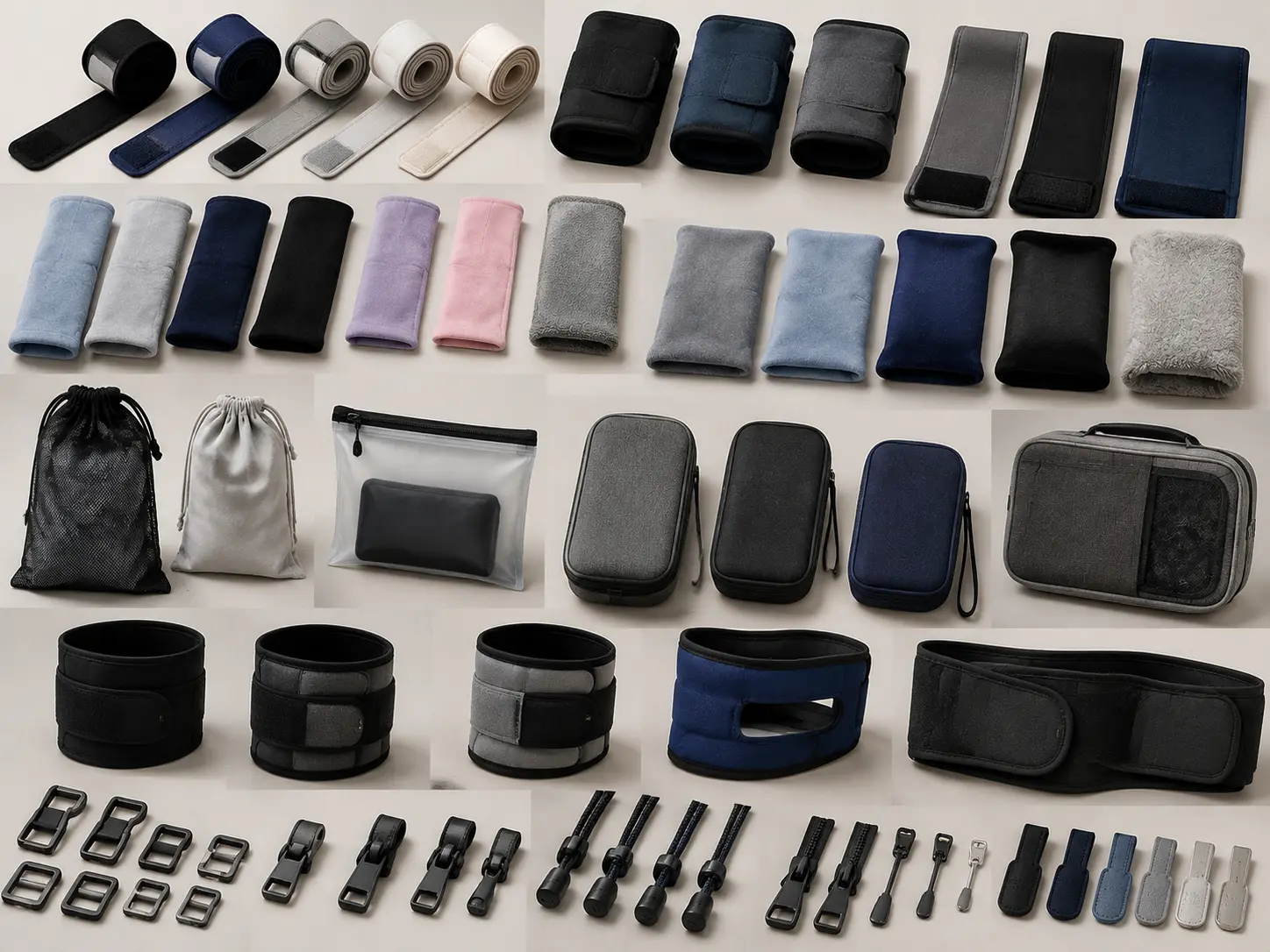
Custom ice pack accessories should be specified as functional product components, not treated as decoration added after the pack is finished. A strap, cover, fastener, pocket, or label can change fit, comfort, load distribution, cleaning instructions, assembly time, packaging size, and failure risk.
For B2B buyers, the practical approach is to define the job of each accessory, approve its material and construction, and test the complete assembly under the intended use conditions.
On this page
Which custom ice pack accessories may be needed?
| Accessory | Primary job | Important specification fields |
|---|---|---|
| Fabric cover or sleeve | Separates the pack surface from the user and helps manage handling or insulation | Fabric construction, thickness, closure, care method, dimensions |
| Elastic or fixed-length strap | Positions the pack and applies controlled retention | Usable length range, width, stretch behavior, attachment point |
| Hook-and-loop closure | Provides adjustable fastening | Hook/loop orientation, engagement area, edge finish, cycle test |
| Buckle, snap, or clip | Provides a repeatable mechanical connection | Material, size, opening force, load path, compatibility with intended users |
| Pocket or retaining panel | Keeps the gel insert in a defined location | Opening direction, insert clearance, migration control, seam placement |
| Label, instruction card, or retail component | Communicates identity, care, warnings, and project information | Approved artwork, language, placement, substrate, adhesion or stitch method |

Start with the use case and load path
A useful accessory brief begins with what the complete product must do. Is the pack held on a shoulder, wrapped around a knee, placed inside a fabric sleeve, or carried in a kit? Who adjusts it, while standing or seated? Which direction will the strap pull? Where can the insert move when the user bends?
Compare a gel pack with a separate sleeve and band with a knee wrap with attached straps. Review the insert, carrier, closure, and adjustment range as a complete assembly.
These questions determine the load path through the strap, seam, fastener, and fabric. A wider strap may distribute force differently from a narrow one. A pocket opening that is convenient during assembly may allow the gel insert to migrate during use. A soft cover may feel comfortable but still require a reinforced attachment area.
Buyers can first document these functional inputs in a custom ice pack design brief, then convert the approved concept into measurable construction fields.
For an ankle-specific application, use the ankle wrap coverage and strap specification worksheet to connect accessory choices with heel clearance, usable adjustment, and complete-sample checks.
Specify the material, not only its marketing name
Terms such as “neoprene,” “Lycra,” “flannel,” “mesh,” or “elastic” are not complete specifications. The buyer may need to define construction, composition, thickness or mass, stretch direction, recovery, surface feel, color, lamination, coating, edge treatment, and care conditions. The relevant fields depend on whether the component is woven, knit, nonwoven, foam-laminated, or coated.
ASTM D5034 covers grab-test measurement of breaking strength and elongation for most textile fabrics, while also noting limitations for high-stretch knitted fabrics. ASTM D751 contains a broader set of test methods for coated fabrics, including breaking, elongation, tear, puncture, low-temperature and seam-related properties. Neither standard means that every listed test is necessary for every ice-pack accessory; the buyer must select methods that match the material and end use.
Seams and fasteners need their own drawing details
A sewn accessory should not be released with a note that says only “strong stitching.” ASTM D6193 explains that seam performance depends on variables such as fabric, seam type, stitch type, stitch density, thread tension, and thread properties. Its stitch and seam classifications can help teams use consistent terminology, but it does not replace a product-specific drawing or approval sample.
A practical drawing may define:
- stitch and seam type, seam allowance, thread, and stitch density;
- reinforcement at strap ends and other concentrated-load points;
- hook-and-loop size, orientation, overlap, and edge distance;
- buckle or clip orientation and the material layers captured by the attachment;
- pocket opening, insert clearance, and anti-migration features; and
- inspection points for skipped stitches, raw edges, puckering, loose thread, and misalignment.

Build a test plan for the complete assembly
Component data alone may not predict how the finished wrap behaves. Test the insert, cover, strap, seam, and fastener together using the intended loading direction and conditioning state.
Dimensional and fit checks
Confirm flat dimensions, usable adjustment range, insert clearance, pocket position, and whether the product stays aligned across the target fit range. Use representative fit fixtures or an approved evaluation method rather than relying only on a flat table measurement.
Strength and retention checks
Define where the load is applied, the loading rate or hold time, the acceptance limit, and the allowed failure mode. Separate strap elongation, seam failure, fastener release, and fabric damage in the report.
Repeated-use and abrasion checks
Specify the actual movement, surface contact, fastener cycling, cleaning exposure, and inspection endpoint that matter for the project. ASTM D4966 warns that abrasion results should not automatically be converted into actual wear-life predictions without evidence connecting the laboratory method to the intended end use. This limitation is important when suppliers present an impressive cycle number without a defined pass/fail condition.
Conditioned checks
If the accessory is used with a frozen or heated insert, repeat the relevant fit, flexibility, fastener, and handling checks at the approved condition. Do not assume room-temperature assembly results represent the full product experience.
How to approve an accessory sample
Use one controlled sample package that includes the gel insert, cover, every strap or fastener, labels, instructions, and intended packaging. Record the revision of each component and photograph critical construction details. The approval should state which dimensions are measured, which characteristics are visual, and which require a functional test.
The process can be connected to the existing ice pack sample approval checklist. For projects with several materials, also align the accessory evidence with the buyer’s material-selection requirements.
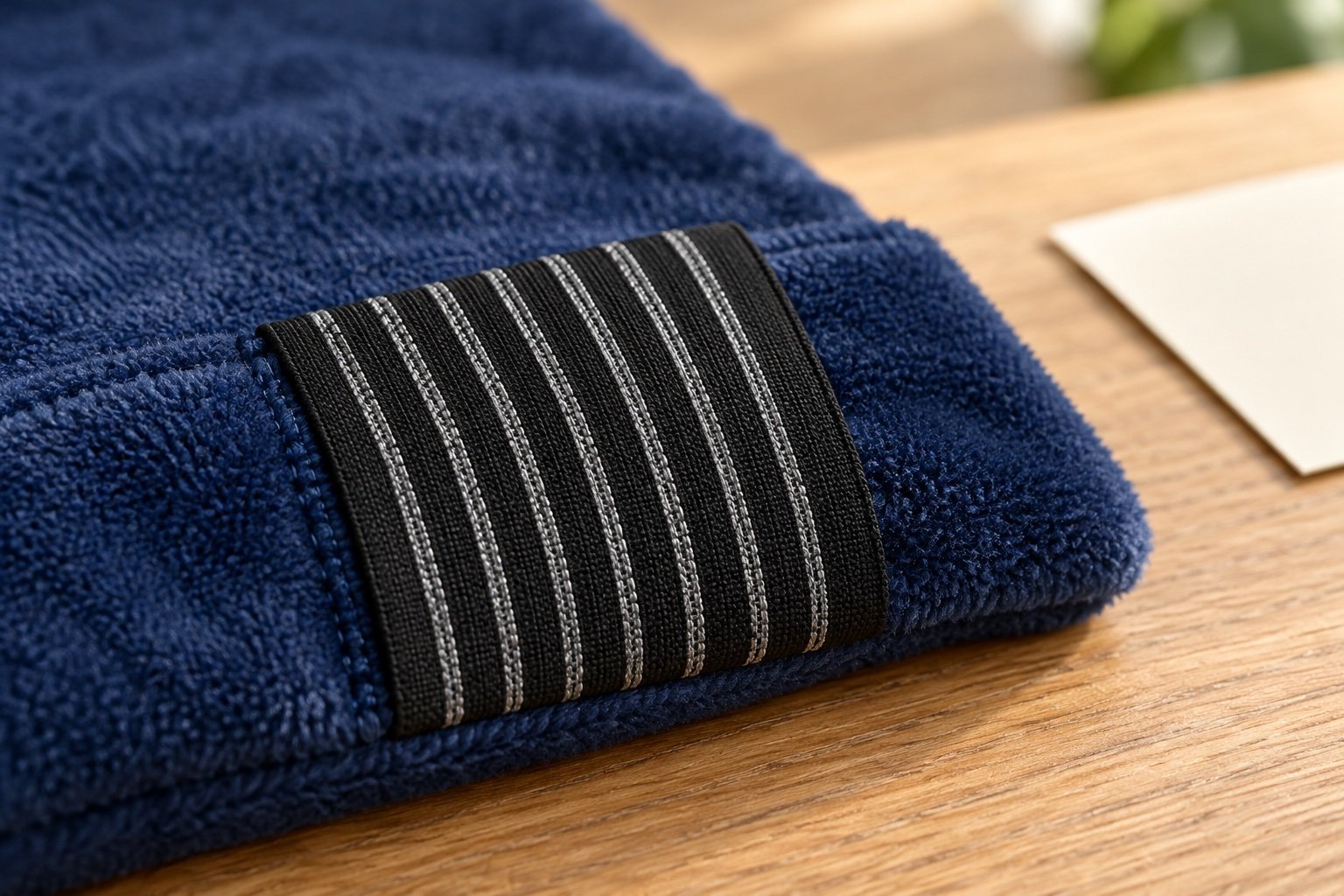
Accessory fields to include in an RFQ
- intended body area, user group, use environment, and fit range;
- insert dimensions, weight, conditioning method, and orientation;
- cover, strap, elastic, hook-and-loop, buckle, thread, and label specifications;
- colors, logo placement, artwork files, and packaging configuration;
- drawings with seam, reinforcement, fastener, and pocket details;
- care method and any restricted cleaning or temperature conditions;
- sample tests, sample count, acceptance limits, and reporting format; and
- approved reference sample and change-control requirements.
Put these fields into the custom ice pack specification template. If multiple options are still open, ask the supplier to identify the tradeoffs rather than submitting visually similar samples without component records.
Common sourcing mistakes
- approving a fabric color but not its construction, stretch, or thickness;
- measuring strap length without defining the usable adjustment range;
- testing a fastener by itself instead of testing its attachment to the finished assembly;
- using a laboratory cycle count as a guaranteed service-life claim;
- changing a cover or strap after approving the complete sample without rechecking fit; and
- treating an accessory as universal across products with different insert size, weight, or temperature conditions.
Questions B2B buyers often ask
Can one strap design fit every body area?
Usually not without tradeoffs. Body geometry, movement, required coverage, pack mass, adjustment method, and the intended fit range can change the best strap layout.
Is neoprene always the best cover material?
No material is automatically best for every project. Compare the required insulation, stretch, thickness, surface feel, construction method, care conditions, cost target, and applicable material documentation.
Should accessories be tested separately from the gel insert?
Component tests can help identify material properties, but the final assembly should also be tested because the insert’s weight, shape, temperature, and movement affect the seams and retention system.
Can an existing accessory be resized for a new pack?
Possibly, but resizing can change the load path, pocket clearance, fit range, and packaging. Treat it as a controlled design revision and verify the new assembly.
Make every accessory traceable to the approved product
The strongest accessory package is one a factory and buyer can both identify, measure, assemble, and test. Cryozin can discuss covers, straps, fasteners, printed components, and pack integration as part of a custom ice pack project. Available materials and constructions depend on the approved specification, sample, intended use, and target-market requirements. Send the insert dimensions, application, fit range, accessory concept, and required tests for a project review.
Sources and further reading
- ASTM International, ASTM D6193-16(2025), Standard Practice for Stitches and Seams.
- ASTM International, ASTM D5034-21(2025), Standard Test Method for Breaking Strength and Elongation of Textile Fabrics (Grab Test).
- ASTM International, ASTM D751-26, Standard Test Methods for Coated Fabrics.
- ASTM International, ASTM D4966-22(2026), Standard Test Method for Abrasion Resistance of Textile Fabrics (Martindale Abrasion Tester Method).
Scene images are editorial concepts based on catalog references, not evidence of a factory, customer project, test or approved configuration. Catalog images illustrate visible product form only.
