

Compare foam bricks and gel packs by the space they occupy, how they fit the load, and the conditions behind their cooling claims. A foam brick can be worth shortlisting when a fixed refrigerant shape is central to the pack-out. A flexible gel pouch deserves consideration when its dimensions and handling fit the shipment. Neither format guarantees a longer delivery window.
For food-shipment buyers, the useful question is whether a candidate works in the intended box at an acceptable cost per shipment. This guide helps you compare supplier offers before commissioning a full pack-out trial.
Cover image: AI-assisted catalog-reference scene for pack-format selection; not a validated shipping configuration.
On this page
Foam bricks vs gel packs: the difference that matters
Foam brick refrigerant
The foam supports a defined shape inside the package. Nordic describes its own ice bricks as semi-rigid refrigerants that retain their shape through freezing and thawing. That is a product-specific design description, rather than proof that every brick performs identically.
Ask first: What are the finished dimensions and tolerances at the conditions used in our packing process?
Flexible gel pouch
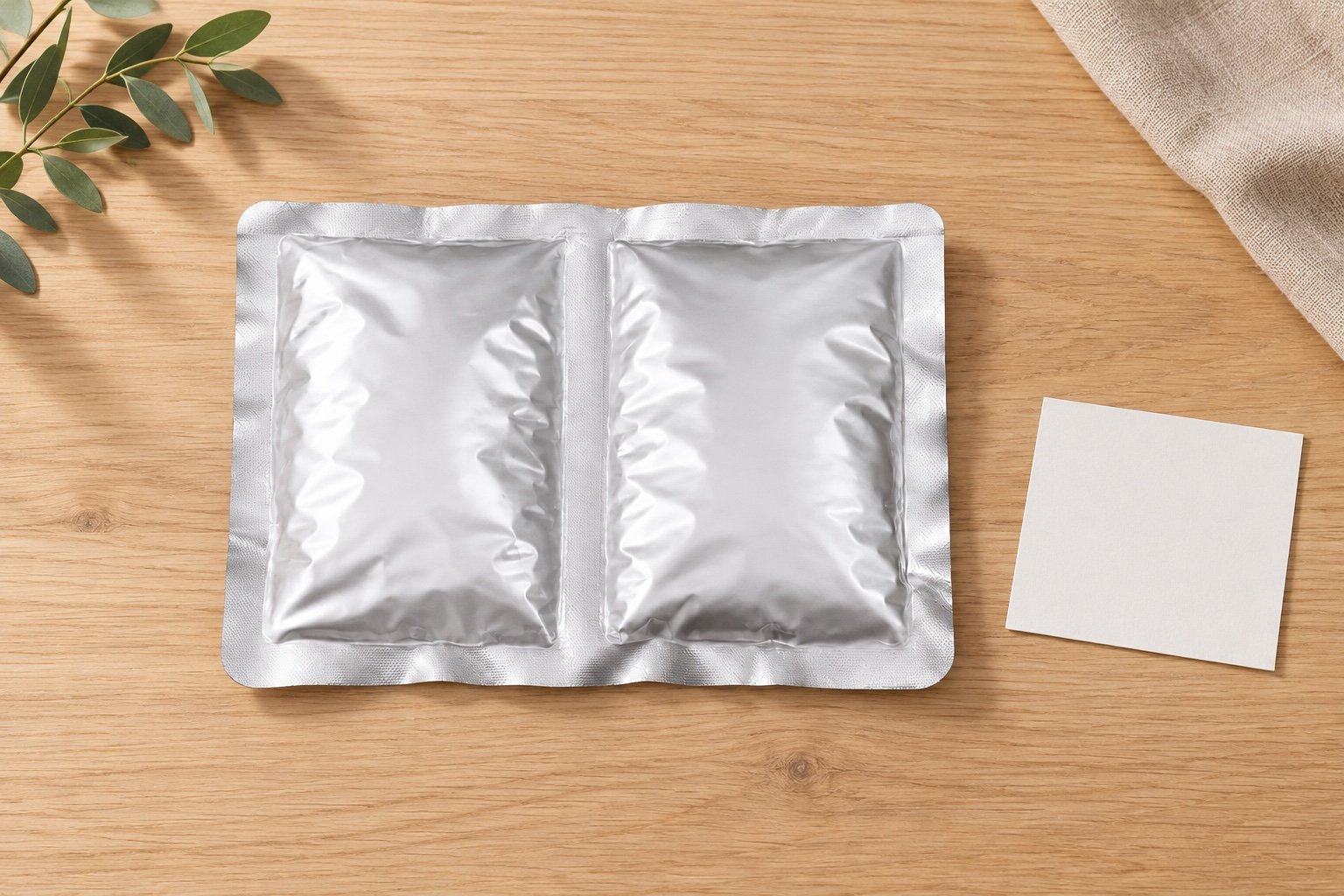
The coolant sits inside a sealed pouch, with the film, filling and chamber design contributing to its handling. A pouch that bends at room temperature may become firm after freezing. Evaluate the actual conditioned sample rather than judging it from a catalog image.
Ask first: Will the prepared pouch fit our available space without bending, squeezing or folding the seals?
A foam brick is not the same thing as a rigid, water-filled plastic bottle, a block of loose ice or an insulated shipping box. Also, “brick” and “gel” are not opposite chemical categories: a shaped brick may itself contain a gel refrigerant. Request the construction and coolant description separately.
Compare occupied space, not just nominal weight
Start with the internal dimensions of the shipper and the food in its primary packaging. Mark the spaces available for refrigerant, separators and closure. Then check the candidate in that layout after preparation.
A foam brick’s fixed profile can be useful in a repeatable slot. A flexible pouch may suit a shallow space or an arrangement with several smaller packs. Both can be a poor fit if their seals, thickness or frozen shape obstruct the payload or lid.
Pelton Shepherd’s explanation of foam-brick construction also distinguishes its pouch design from thermoformed versions. The lesson for a buyer is to inspect the whole envelope, including the seal flange. Do not transfer that supplier’s plastic-reduction figures to another construction.
- Record overall dimensions, including all sealed edges.
- Separate net coolant mass from the total finished-pack weight.
- Check thickness, placement and clearance in the prepared condition.
- Count how many saleable food units fit after refrigerant and separators are added.
- Photograph the accepted arrangement so another packer can reproduce it.
Check what the packing team has to do
Ask each supplier how the proposed refrigerant must be prepared, stored and staged. Compare those instructions with your freezer capacity, shelf arrangement and packing schedule. A candidate that needs a preparation routine you cannot reproduce is unlikely to be a dependable purchasing choice.
Use the same questions for both formats: Can packs be stacked during preparation? What end-point check is specified? How are partly prepared packs identified? What happens if a pack no longer fits its slot? Our gel-pack freezing-time guide explains why the preparation conditions belong beside any time estimate.
Inspect handling as well. Look at seal edges, puncture hazards, wet surfaces and the effect of condensation on the food’s outer packaging. Ask how damaged packs are removed from the process. Foam support does not make the complete package immune to damage, and a sealed gel pouch still needs appropriate handling.
Read a cooling claim as a system claim
“Lasts longer” is incomplete without a defined load, starting condition, shipper, surroundings and temperature end point. A brick and a pouch tested at different masses or in different boxes do not provide a useful head-to-head result.
Request a report or trial summary that identifies the exact refrigerant, count, layout, payload, preparation, exposure and measured locations. Check whether the food’s required range was maintained, rather than whether the refrigerant still felt cold at arrival. Do not assume a fixed shape determines the coolant’s phase-change temperature.
Use the existing food-shipping pack-out trial guide when you are ready to define the study. This format comparison does not qualify a food shipment, a pharmaceutical lane or a stated transit duration.
A supplier comparison card for your RFQ
Copy these fields into two columns, one for each proposed SKU. They are an editorial purchasing aid, not a laboratory standard or pass certificate.
- Product identity: supplier, item number, revision, pack construction and coolant description.
- Fit: overall dimensions, tolerances, conditioned thickness, seal flange and placement drawing.
- Preparation: equipment, loading instructions, preparation end point and staging conditions.
- Shipping evidence: complete tested configuration, exposure, temperature limits, sensor locations and report date.
- Handling: inspection criteria, condensation considerations, damage response and any supported reuse instructions.
- Commercial offer: quantity per case, MOQ, sample cost, lead time, freight basis and replacement terms.
- Decision: remaining questions, trial owner, required sample quantity and approval date.
Compare costs at the shipment level. Include refrigerant quantity, the box and insulation, preparation labor, freight weight and any return or disposal process you actually use. A lower unit price may not be the lower-cost option if it changes the box size or reduces the food load. Equally, a higher-priced brick does not automatically pay for itself.
Which format should enter the sample trial?
Shortlist a foam brick when stable dimensions solve a specific packing problem and the supplier can document the proposed construction and preparation. Shortlist a gel pouch when its footprint, chamber layout and handling suit your pack-out. Keep both in the trial if the evidence does not yet distinguish them.
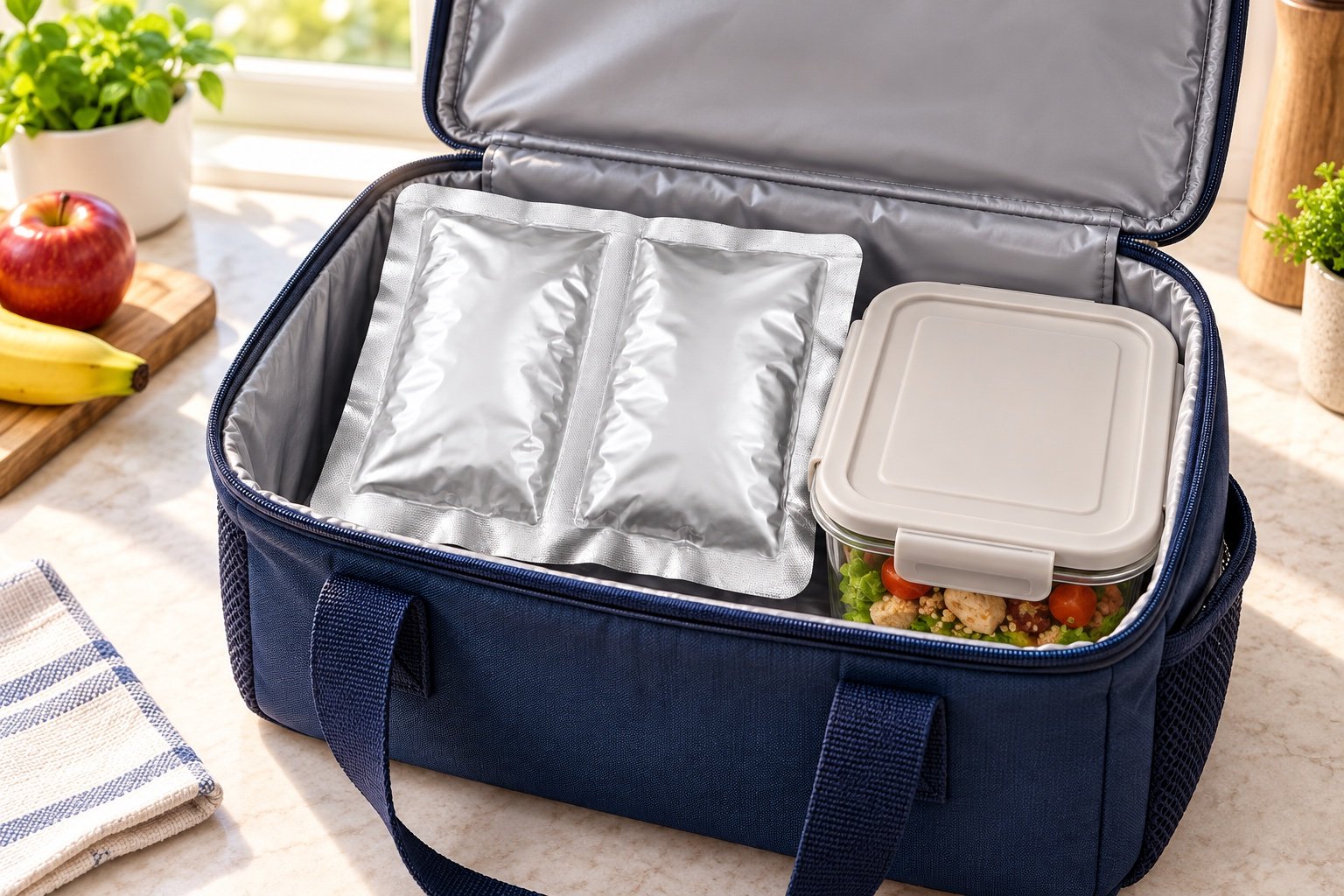
For gel-pouch candidates, compare the foldable dual-cell cooling pack and thin square cooling pack. Check their conditioned footprints in the shipper drawing; neither catalog format establishes a qualified food-shipping duration.
For the gel-pouch option, review Cryozin’s cold packs for shipping and send the internal box dimensions, payload range, target temperature range, delivery conditions and purchase quantity. Request a project-specific gel-pack discussion so the proposed format and sample requirements can be confirmed. This guide does not represent foam bricks as a verified Cryozin product line.
Questions buyers ask before changing formats
Do foam bricks always last longer than gel packs?
No universal result follows from the format name. Compare the exact refrigerants in a defined shipper, using the same payload requirements and exposure conditions.
Can we substitute a same-weight pouch for a brick?
Do not treat equal weight as an approved substitution. Dimensions, coolant, placement and preparation may differ. Review the proposed change against the existing pack-out and determine what verification is needed.
Does a silver pouch replace the insulation in the box?
Do not assume so from its appearance. Specify the pouch and the shipper insulation as separate components, then assess the complete arrangement.
Sources and scope: Nordic and Pelton Shepherd are cited for their own product constructions, checked October 21, 2026. The comparison card is Cryozin editorial guidance. No first-hand comparative test, universal hold time or product certification is claimed.
