Product Details
Thin Square Cooling Pack for Lunch Boxes and Shipping
A thin square single-pouch cooling-pack format for evaluation in lunch boxes and packaged-food shipping systems. Buyers should confirm the approved dimensions, thickness, weight, layer and filling records, intended food-contact boundary, conditioning instructions, integrity tests, pack-out and loaded-system thermal protocol.
- Harry Huang
- +86 15992718044
- harry@zejinbtg.com
Thin square cooling pack for lunch and shipping configurations
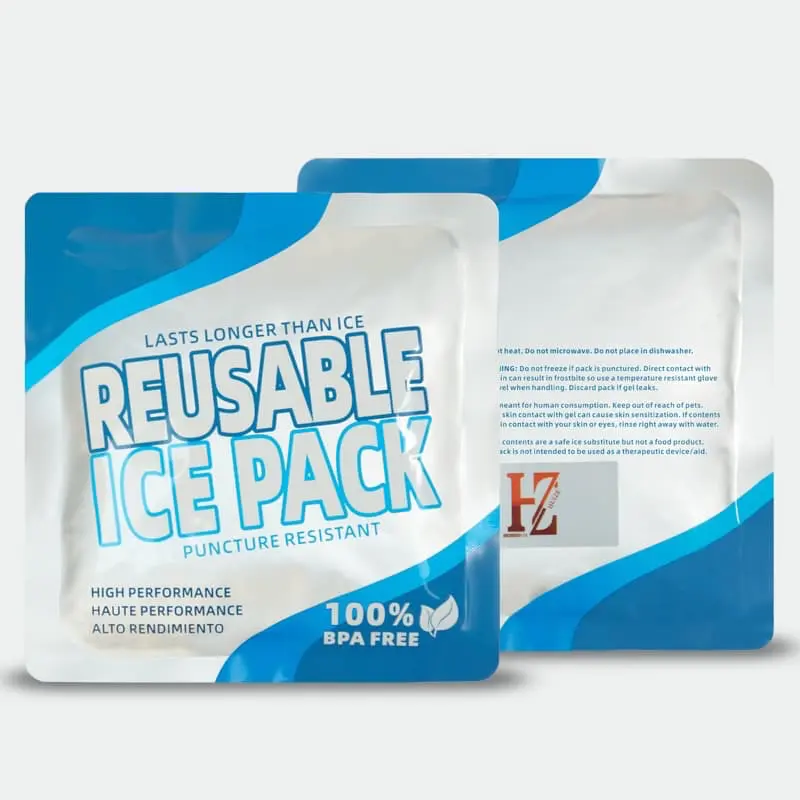
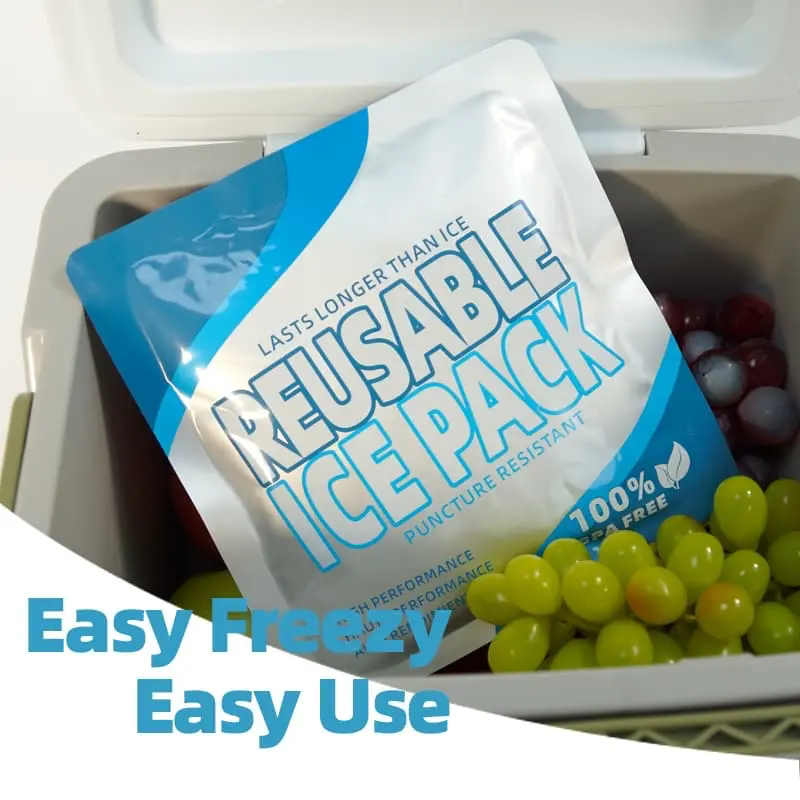
SKU 1065 is shown as a thin, nearly square, single-pouch cooling pack with printed blue-and-white artwork. Its broad flat format can be evaluated for placement beside packaged food or other permitted payloads in an insulated container. Final dimensions, thickness, mass, layer structure, filling and contact conditions must come from the approved SKU record.
Buyer facts and confirmation points
| Visible format | Thin square single pouch with printed front and rear surfaces |
|---|---|
| Dimensions and thickness | To be confirmed from the approved drawing and conditioned sample |
| Layer structure and filling | To be confirmed from the SKU BOM and material declarations |
| Food-contact boundary | Packaged-food/secondary-containment use unless an exact intended-use basis is approved |
| Conditioning and reuse | To be confirmed in controlled instructions and cycle records |
| Thermal result | Qualified for an exact container, pack-out, payload and route profile |
Specify the shipping system, not only the pouch
Cooling depends on the insulated container, pack count and location, payload mass, starting temperatures, void fill, ambient route, openings and endpoint. A sourcing brief should define the complete pack-out and acceptable payload range. Claims such as “longer than ice” or “stable cooling” require a named comparator and repeatable protocol.
Sample and pack-out checklist
- Approved drawing, tolerances and conditioned thickness
- Dry, fill and finished mass plus exact layer/filling records
- Container dimensions, insulation and closure
- Pack count, orientation, separators, void fill and payload position
- Conditioning and starting temperatures, route ambient profile and openings
- Logger accuracy, warm/cold probe locations, replicates and pass/fail endpoint
- Seal inspection, secondary containment and damaged-pack response
Define the food-contact boundary before using safety language
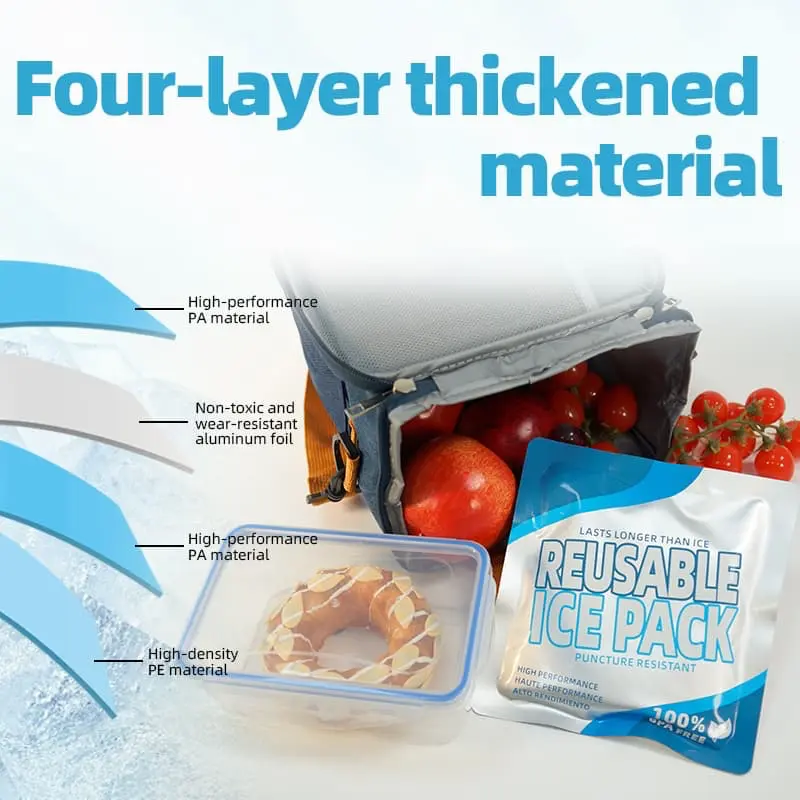
Do not infer “food grade,” “BPA-free” or direct-contact suitability from a generic PA, PE or foil label. FDA explains that food-contact status depends on the specific substance, manufacturer and intended conditions of use; see determining the regulatory status of food-contact materials. That guidance does not certify SKU 1065.
Until the exact finished-article documentation is approved for the target market and use conditions, specify contact with packaged food only and use appropriate secondary containment. Define food type, contact duration, temperature, repeat use, cleaning and foreseeable damage.
A sealed pouch is not a no-water guarantee
An intact sealed pack can be used without adding loose ice, but condensation may form and damaged packaging can leak. Publish integrity language only after named seal, puncture, compression, drop, aging and freeze-thaw tests are approved. Instructions should tell users how to inspect, isolate and replace a damaged pouch.
Compare the loose-pack formats
| SKU | Visible format | Primary sourcing question |
|---|---|---|
| 1065 | Thin square single-cell printed pouch | Flat coverage, intended contact boundary and shipping pack-out |
| 1070 | Silver foldable dual-cell pouch | Fold/hinge geometry, placement and fatigue/integrity evidence |
| 1001 | Narrow silver pouch | Compact-case dimensions and pocket compatibility |
| 1060 | Complete insulated case kit | Case BOM, payload layout and system qualification |
Artwork, packaging and inspection scope
Custom artwork is part of product compliance, not just decoration. Review every claim, warning, language, lot code and disposal statement before printing. Cryozin’s customization process can organize artwork and packaging discussion, subject to sample, technical and commercial confirmation.
The approved drawing, BOM, controlled artwork, instructions, pack-out and golden sample should become inspection references. Cryozin’s quality-control page describes a general process; exact test methods, sampling and acceptance criteria must be defined for SKU 1065.
Frequently asked sourcing questions
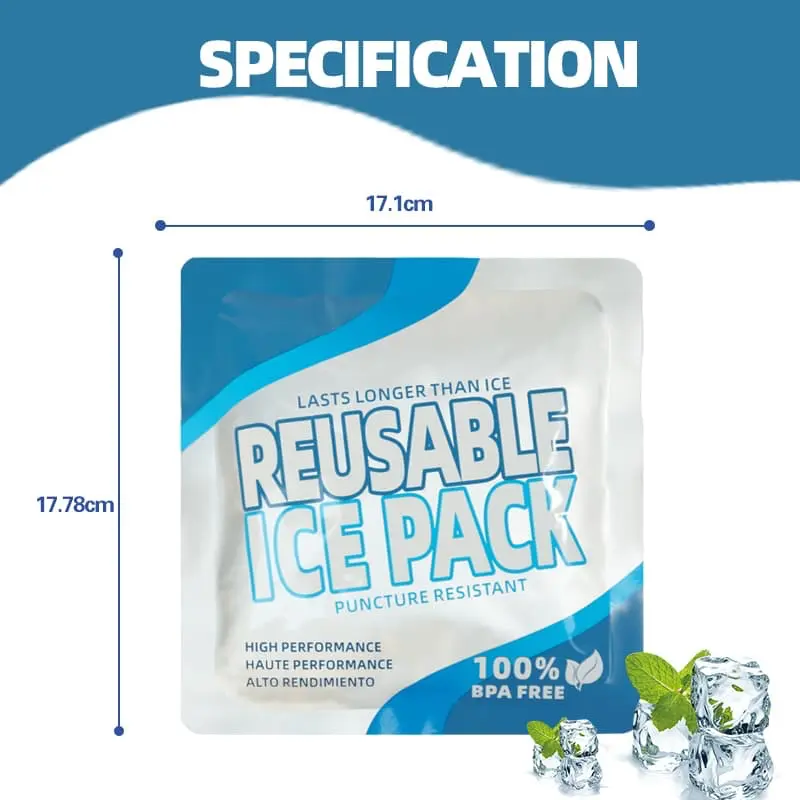
Is the pack 17.1 × 17.78 cm?
That figure appears in promotional media but was not supported by an approved drawing in this audit. Confirm dimensions, tolerance and conditioned thickness before publication.
Is it food-grade and BPA-free?
Not established from the public evidence. Approve exact finished-material and intended-use records for the target market before using either claim.
Does it prevent melted water?
It is a sealed-pouch format, not a guarantee against condensation or leakage. Use secondary containment where appropriate and follow approved inspection/replacement instructions.
How long does it stay cold?
No universal duration is established. Test the exact container, pack count, payload, preparation, route and endpoint.
Can it ship insulin or vaccines?
This draft does not support that use. Temperature-sensitive medical shipments require payload-specific limits, qualified packaging, monitoring, handling controls and regulatory review.
Prepare the lunch or shipping pack-out brief
Send the target market, food-contact boundary, payload and temperature limits, container drawing, pack count, route profile, conditioning resources, monitoring plan, quantity, artwork and packaging needs. Submit the brief or learn more about Cryozin.
Buyer resources for this product type
Use these guides to define specifications, samples and approval criteria before requesting a production quotation.