
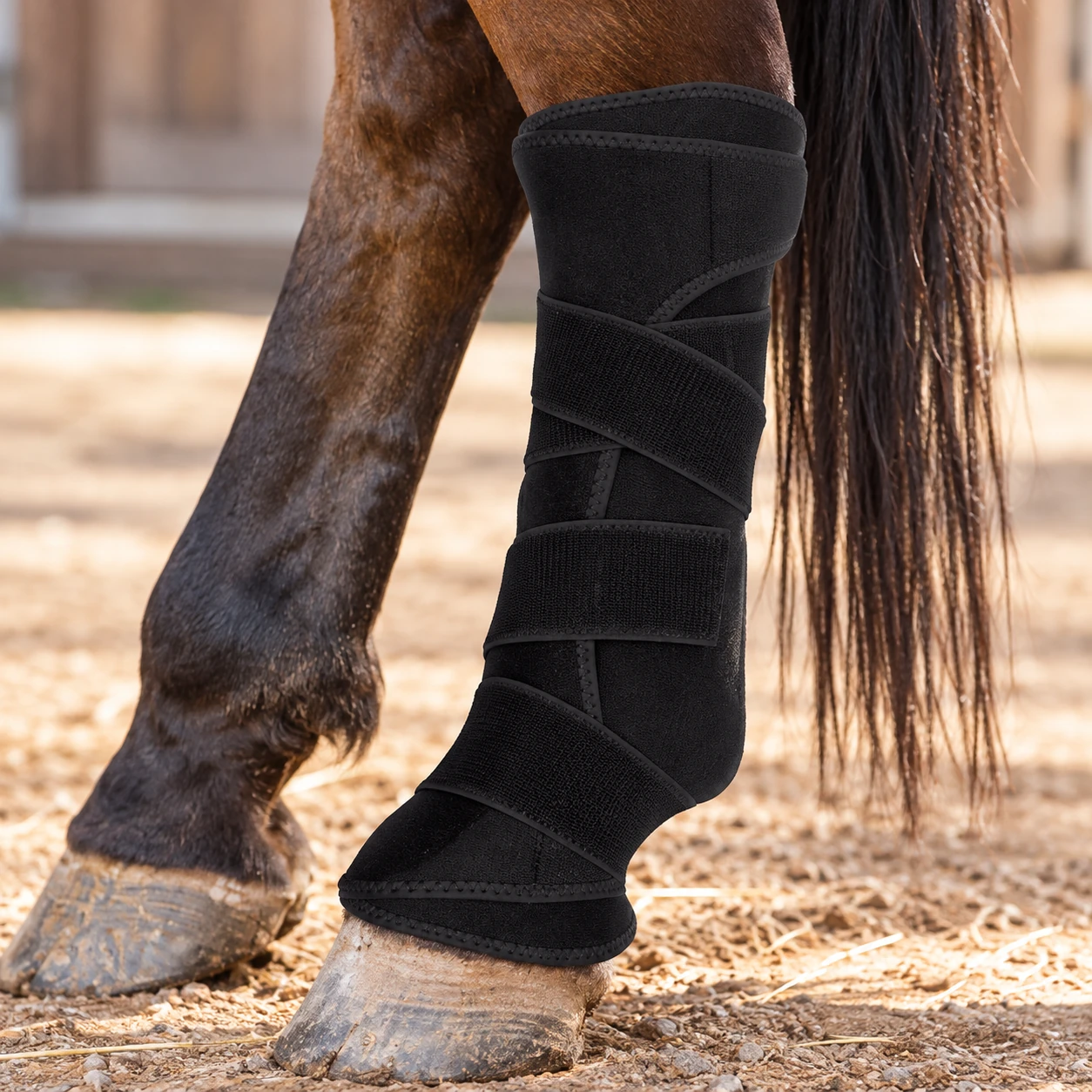
The best ice boots for horses fit the intended part of the leg, stay in position with the inserts installed, and come in a selling unit you can explain on a shelf label. For a tack shop or equestrian brand, the useful starting point is to choose a format, then price the complete kit and the replacement parts separately.
Start with a removable-insert wrap if your range needs a textile carrier and cold packs that can be handled separately. Consider an ice-and-water boot when the buyer’s veterinary brief specifically calls for immersion and the stable can support that workflow. Evaluate powered models separately because the electronics, liners, and after-sales requirements change the purchase.
On this page
Compare three ice boot formats before choosing a sample
| Boot format | What the buyer is choosing | What to verify before ordering |
|---|---|---|
| Removable-insert wrap | A textile carrier and inserts that can be prepared, handled, and replaced separately. | Loaded coverage, strap overlap, compatible pack revision, and number of wraps and inserts per retail unit. |
| Ice-and-water immersion boot | A boot or sleeve that holds ice and water around the area specified in a veterinary brief. | How far the boot and fill extend, where ice and water come from, and how the product is emptied and cared for. |
| Powered cooling-and-vibration boot | A system that adds powered panels to a boot-and-liner configuration. | Included panels and charging parts, compatible cold liners, and the replacement process for each component. |
Catalog examples show how different two apparently similar products can be. Ice Horse Tendon Wraps lists a single wrap with two inserts and a pair with four. The same company’s Full Tendon Wrap is listed as a pair with eight inserts. Compare the contents and compatibility of the exact model. These listings describe construction and order units.
Specify what the boot needs to cover
Ask for two drawings or clear photos of the loaded boot. The first should show where the carrier ends. The second should show where the insert actually sits. A long textile shell can extend below the filled section. A lower-leg wrap and a hoof immersion boot can therefore look like substitutes in a catalog while serving different briefs.
A Veterinary Record Open study of dry cooling of the equine digit evaluated a boot and cold-pack combination covering the foot and pastern in six horses. Researchers measured hoof-wall and pastern surface temperatures under a specific protocol. The useful purchasing lesson is to identify the area being cooled and ask for evidence on the relevant configuration. For an injured horse or a hoof-care protocol, follow the attending veterinarian’s guidance on method and use.
Check fit and closure with the inserts installed
Agree where to measure circumference and height for each intended size before suppliers propose a size chart. Compare the smallest and largest points in the requested range with the actual inserts installed. Note where closures overlap, whether a strap crosses an edge of the insert, and whether the upper or lower binding interferes with placement. Ask for both sides of the sample if left and right components differ.
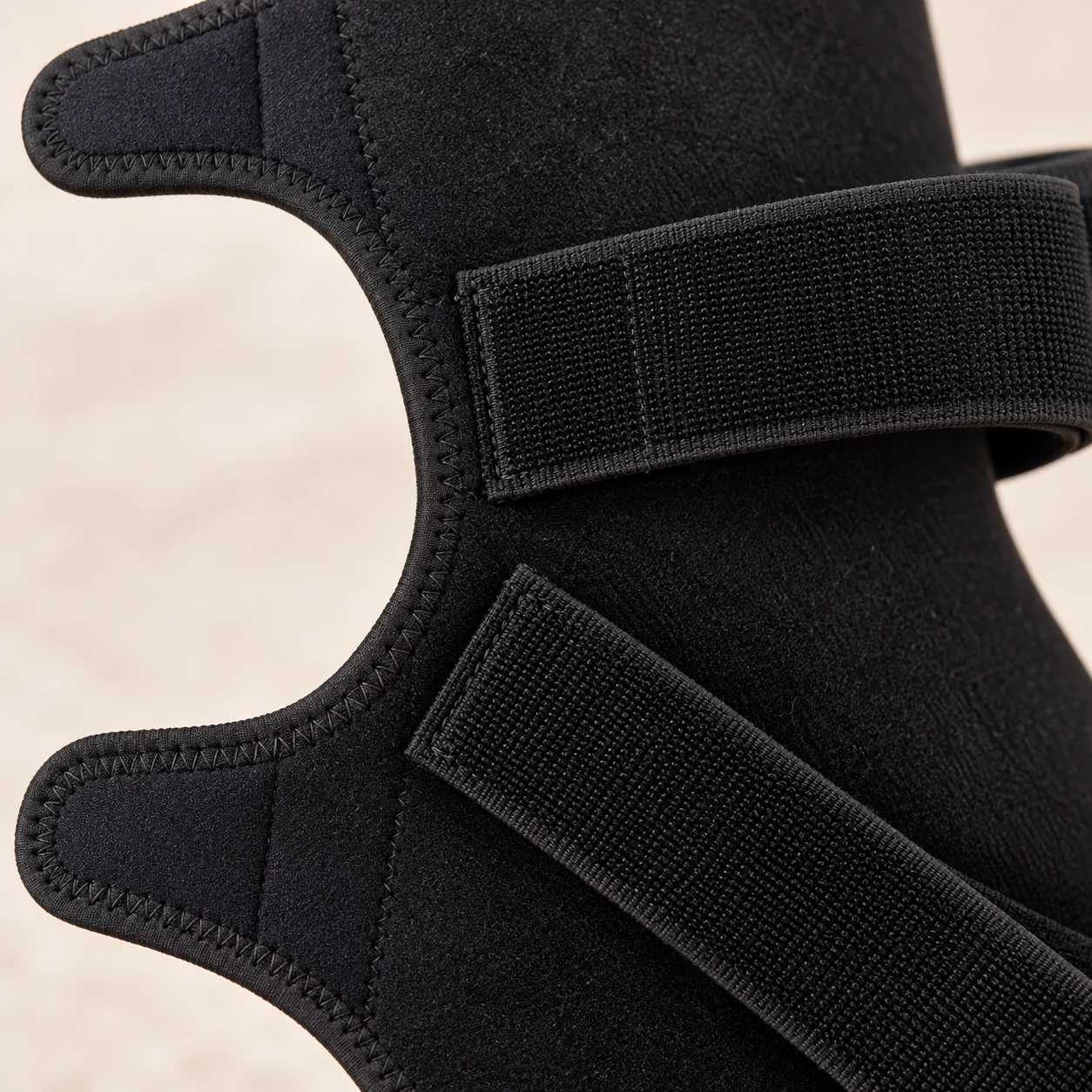
Have qualified handlers check positioning and removal under their approved handling procedure. A clean sample can answer practical questions: whether the fastener is easy to locate, whether the pocket lets the insert move, and whether the carrier and insert can be separated for care. Follow the supplier’s product-specific care instructions for each part.
Put every quote on the same selling unit
Count the wraps and inserts separately. One Cryozin paired configuration includes two leg wraps and eight inserts in total, four supplied per leg. Inserts can be rotated as spares. In the purchase order, specify how many inserts fit into each carrier at one time and how many are reserved for rotation. Use the same count on the quotation, retail label and packing list.
Two inserts fit in each wrap at a time, so the pair uses four fitted inserts. Record any additional inserts as rotation spares on the same quote.
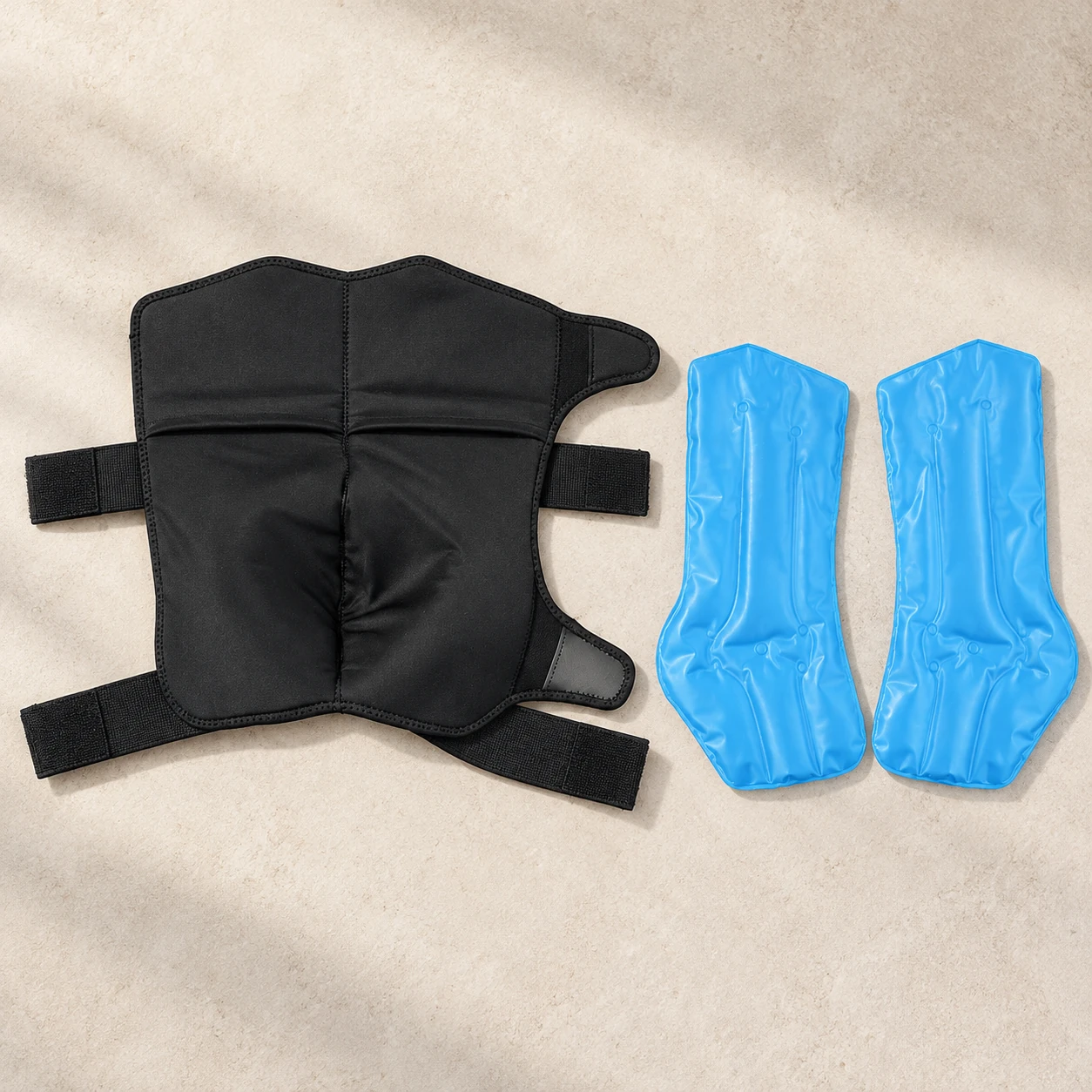
Record each insert’s dimensions, attachment method, shape and part number against the approved carrier size. Ask whether replacement inserts can be ordered on their own, how they are packed, and whether future revisions will still fit. If a product changes shape or pocket dimensions, make replacement compatibility an explicit approval item.
Copy this equine ice boot sample checklist
| Item | Record before approval |
|---|---|
| Coverage and fit | Intended limb area, upper and lower edges of the carrier, filled insert area, circumference checkpoints, and size range. |
| Loaded sample | Carrier and insert revision, pack position, fastening overlap, and handling observations. |
| Retail unit | Single or pair, carriers per retail unit, total inserts supplied, fitted inserts per carrier, rotation spares, and carton quantity. |
| Replacement plan | Insert part number, compatible sizes, minimum order for spares if applicable, and reordering route. |
| Care and release | Care instructions for each part, approved package copy, reference sample, and approval date. |
Request one fully configured sample and a separate replacement insert so you can check both together. Retain the approved drawing, sample photos and care copy under the same revision. The ice pack sample approval checklist can help document that approval before production.
Request a quote for an equine wrap kit
Cryozin’s multi-strap equine leg wrap is a removable-insert format. The reference configuration is one textile carrier and two shaped gel inserts. Ask for the carrier, inserts, packaging, and any separately requested spares to be listed on the same quote. For a custom order, send your intended coverage, size range, selling unit, and replacement requirements with a reference or drawing so the team can review the sample configuration.
Common questions about buying ice boots for horses
Should a shop order single boots or pairs?
Base the selling unit on how customers buy and replace the product. For a Cryozin paired order, list both carriers and the insert allocation per leg. Ask whether single-leg replacements can be quoted separately if your channel needs them. Keep the pack count visible on the label and specification.
Can replacement gel inserts fit another brand’s boot?
Confirm compatibility using the exact carrier and insert revision. Compare shape, thickness, attachment and pocket dimensions with a physical sample before describing two parts as interchangeable.
Does a longer wrap cool the hoof?
Length alone describes the carrier. Ask the supplier to mark the actual cooling contact area and confirm whether the hoof is included in the design. For a veterinarian-directed hoof cooling protocol, confirm the required method with the veterinarian.
