

Aluminum foil ice packs cannot be evaluated by silver appearance alone. The surface does not prove that a pack will keep a payload cold for a particular number of hours. A buyer needs to know the actual laminate structure, seal system, fill, dimensions, conditioning method, position in the shipper, payload, and ambient profile. Cooling is a whole-pack-out result.
This guide helps B2B buyers evaluate aluminum foil ice packs without relying on unsupported “insulated,” “food safe,” “leakproof,” or duration claims. It focuses on construction and validation; it does not replace a product-specific material declaration, regulatory review, or thermal qualification.
On this page
Buyer takeaway
- Confirm whether the silver layer is true foil, metallized film, or another construction.
- Approve the full laminate, sealant side, fill, chamber geometry, dimensions, and packaging—not a color sample.
- Define direct, indirect, or separated payload contact before requesting compliance documents.
- Validate the complete shipper, payload, conditioned packs, sensor plan, and ambient profile before making a duration claim.
First confirm what “aluminum foil ice pack” means
The silver surface may be a foil-bearing laminate, a metallized polymer film, a coated film, or another decorative or barrier construction. These structures can look similar while behaving differently in sealing, flexing, puncture resistance, pinholing, delamination, and heat transfer.
Do not approve the material by color or a marketing name. Request the controlled bill of materials, supplier and grade, layer sequence, nominal thickness or weight for each layer, adhesive or tie-layer information, sealant side, print construction, and relevant declarations for the intended market and use. Cryozin’s material-selection framework provides a broader route for comparing construction, handling, evidence, and project trade-offs.
Understand the job of each layer
| Layer or feature | Possible role | Buyer verification question |
|---|---|---|
| Outer layer | Print surface, scuff resistance, appearance, or mechanical support | Will it tolerate the expected handling, labels, and condensation? |
| Foil or metallized layer | Light, moisture, or gas barrier; reflective surface in some constructions | Is it actual foil or metallized film, and is continuity maintained after converting and flexing? |
| Adhesive or tie layer | Bonds dissimilar materials | Has bond integrity been checked after cold conditioning and flexing? |
| Sealant layer | Forms the pouch seal and contacts the fill | Is the layer compatible with the fill and the validated sealing window? |
| Heat seal or weld | Contains the fill and defines chambers | Are seal width, edge geometry, channels, and corner stresses controlled? |
| Secondary wrap or carton | Protects the finished pouch in distribution | Does the packaging prevent abrasion, puncture, contamination, and excessive compression? |
A drawing should also identify the fill mass tolerance, finished dimensions, seal width, corner radius, chamber layout, notches, and any fold or hinge area. A visually similar substitute is not automatically equivalent.
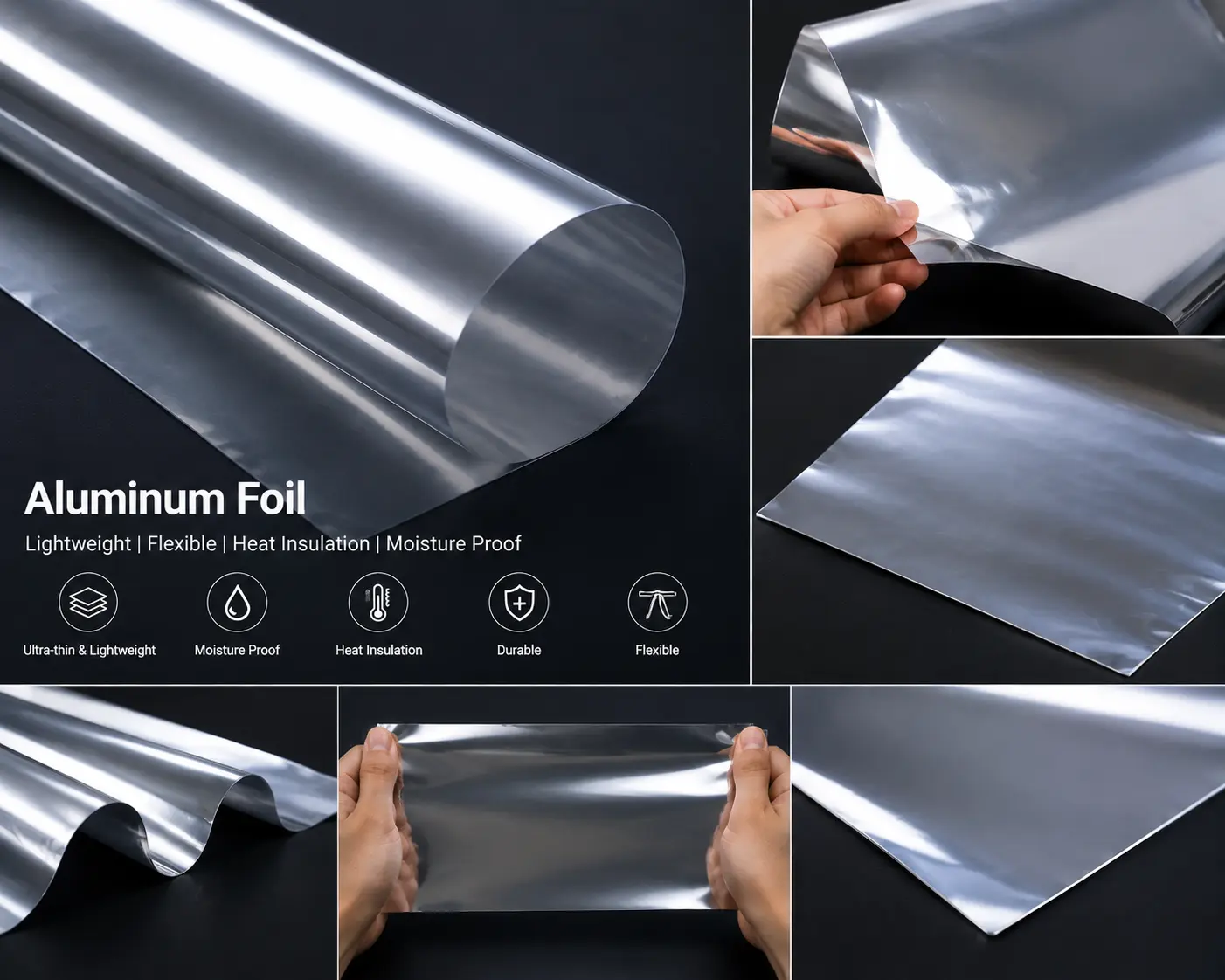
Reflective appearance is not the same as system insulation
Heat reaches a payload through conduction, convection, and radiation. A reflective surface can affect radiant heat transfer in the right configuration, but the effect depends on orientation and the adjacent air space. The U.S. Department of Energy’s building-science guidance likewise explains that radiant barriers work by facing an air space; a reflective layer is not a substitute for bulk insulation.
For an ice pack inside a cooler, the decisive variables usually include the shipper insulation, closures, air gaps, pack quantity and placement, payload mass and starting temperature, conditioning, and ambient exposure. Treat the pouch as one component in the system. Never convert a reflective appearance into a guaranteed cooling-duration claim.
Separate the pouch from the payload-contact boundary
“Used near food” is not the same as “intended for direct food contact.” The buyer should define whether the ice pack contacts sealed food packages, an intermediate liner, loose food, medicines, specimens, skin, or only the inside of an insulated shipper. That decision changes the documentation and risk review.
For U.S. food-contact uses, the FDA explains how to determine the regulatory status of food-contact material components. The basis depends on the substance, manufacturer or supplier, intended conditions of use, and applicable authorization or other status. A broad “food-grade” statement is not enough. Review the finished construction, inks, adhesives, sealant, fill, migration boundary, temperature, contact type, and target market with a qualified compliance professional.
Validate seals and laminate bonds after realistic conditioning
A foil-bearing laminate may experience repeated bending, cold-induced stiffness, crease formation, abrasion, or local stress near chamber divisions and corners. Testing only a flat, unused material coupon can miss failures caused by the finished pouch and its use cycle.
- Visual and dimensional checks: wrinkles, channels, sharp edges, pinholes, delamination, chamber balance, seal width, and filled thickness.
- Seal assessment: method, sample orientation, conditioning state, rate, reporting unit, failure mode, and acceptance range.
- Leak assessment: choose a method that can detect the defect sizes that matter; understand its limitations.
- Ply adhesion or bond checks: compare like constructions before and after defined conditioning.
- Flex and fold checks: focus on hinges, chamber dividers, corners, and areas constrained by the pack-out.
- Compression and distribution simulation: evaluate the filled pouch inside the actual unit and master packaging.
ASTM F904 covers comparison of ply adhesion in similar flexible laminates, including constructions containing foil. ASTM F88/F88M addresses seal strength of flexible barrier materials, while ASTM D3078 addresses gross-leak detection by bubble emission. These are method references, not automatic proof of fitness or universal pass criteria. The correct method and limits must match the product and intended claim.
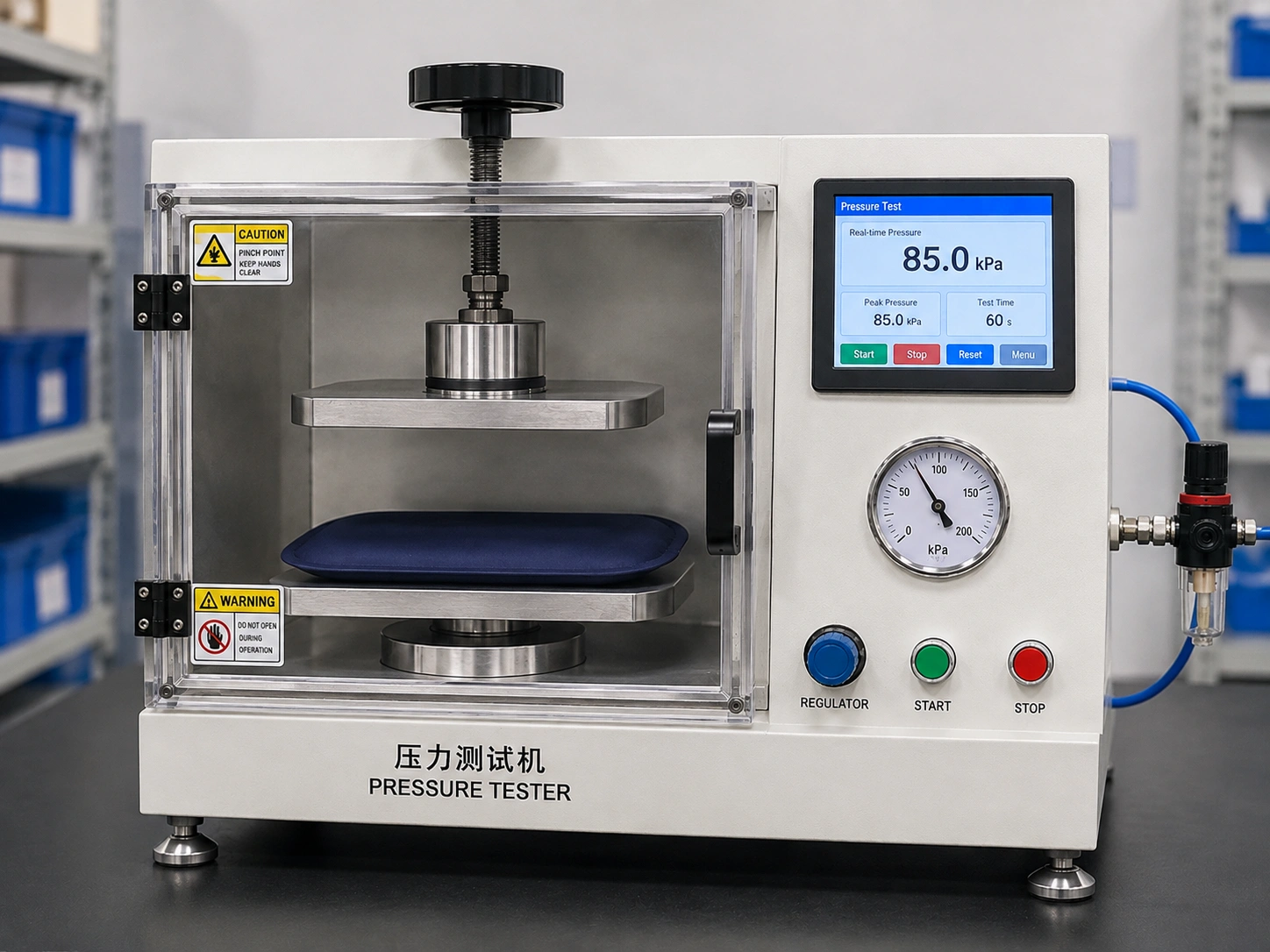
Qualify the whole pack-out, not a pouch in isolation
If the target is a temperature range during distribution, create a protocol for the complete system:
- Define the payload, quantity, mass, packaging, allowable temperature range, and starting condition.
- Specify the ice-pack SKU, fill mass, conditioning time and temperature, number of packs, placement, and orientation.
- Lock the cooler or shipping container, insulation, liner, dividers, closures, and empty-space treatment.
- Select a justified ambient profile and handling sequence for the intended distribution lane.
- Place calibrated sensors at risk-relevant locations and define the sampling interval.
- State the pass/fail rule before the test, including how excursions and sensor uncertainty are handled.
- Run enough replicates or seasonal profiles for the buyer’s risk level, and document any deviation.
The International Safe Transit Association lists thermal transport procedures, including Standard 7E, for evaluating parcel delivery-system thermal transport packaging against standardized profiles. Using such a procedure still requires a defined product, payload, pack-out, equipment, and acceptance plan. A procedure name on a sales sheet is not the same as a successful test of your configuration. Buyers building a food or meal-delivery system can use our food-shipping pack-out trial guide to organize payload, sensor, ambient-profile, and acceptance inputs.

Choose the format from the pack-out, not from a catalog photo
| Format | Potential design value | Questions to resolve |
|---|---|---|
| Slim single chamber | Fits narrow gaps or targeted positions | Does it stay in place, and is the fill distribution consistent after conditioning? |
| Dual chamber | Can fold around a corner or divide fill movement | Is the center seal or hinge protected from repeated bending? |
| Multi-chamber panel | Can distribute coverage over a broader surface | Do extra seals create stress points, and can it be packed consistently? |
| Foil pouch in a sleeve or liner | Adds handling or separation from the payload | Does the sleeve trap moisture, abrade the pouch, or alter heat transfer? |
| Custom geometry | Matches a product or container cavity | Does tooling, seal path, fill balance, and assembly remain manufacturable? |
For available product forms, see Cryozin’s aluminum foil ice pack category. The current slim silver pouch product page shows one form factor; final dimensions, mass, layer construction, fill, intended use, and performance must be confirmed in the approved project record rather than inferred from legacy imagery, URL wording, or copy. Programs that need an integrated cooler, payload, and distribution solution should continue to Cryozin’s cold packs for shipping project page instead of treating the pouch as a complete thermal system.
A practical RFQ checklist
- Intended payload and whether contact is direct, indirect, or separated by another package.
- Target market and any required material or food-contact documentation.
- Pouch dimensions, filled thickness, chamber layout, seal width, corner shape, and fill-mass tolerance.
- Complete laminate structure, thicknesses, sealant side, adhesives, inks, and supplier/grade controls.
- Fill identity or specification, freezing behavior, and compatibility with the inner layer.
- Conditioning instructions and the maximum/minimum environments expected in storage and use.
- Unit pack, carton, shipper, payload, pack quantity, placement, and distribution profile.
- Leak, seal, bond, flex, compression, drop, and thermal methods plus acceptance criteria.
- Sample approval, golden sample, lot traceability, retained samples, and change notification.
- Label, artwork, warnings, storage instructions, and claim-approval responsibility.

Common sourcing mistakes
- Approving “silver film” without a layer specification: visual similarity can hide a different sealant, barrier, or bond system.
- Assuming foil guarantees longer cooling: cooling duration is a whole-system result.
- Accepting direct-food-contact claims without intended-use documentation: applicability depends on the exact substances and conditions.
- Testing only the flat laminate: finished seals, corners, folds, fill pressure, and conditioning can create different failures.
- Publishing a time claim from one informal trial: a meaningful study requires a controlled, repeatable protocol.
- Changing the pack-out after validation: different placement, payload, carton, liner, or shipper can invalidate the result.
Frequently asked questions
Are aluminum foil ice packs automatically better than clear gel packs?
No. “Better” depends on the requirement: sealing, puncture resistance, flexibility, visibility, print, barrier, cost, compliance, placement, and thermal performance in the final system. Compare approved specifications and test results, not appearance.
Can a supplier guarantee a cooling duration for the pouch alone?
A duration claim is meaningful only with defined conditioning, ambient profile, payload, shipper, pack quantity and placement, sensor method, and pass criteria. Ask for the protocol and confirm that it matches your use case.
Does a silver pouch mean the package contains aluminum foil?
Not necessarily. It may be foil, metallized film, a coating, or another construction. Require the controlled laminate specification and supplier documentation.
What should be revalidated after a material change?
Assess the affected risks, which can include sealing window, seal strength, bond integrity, leakage, flex resistance, fill compatibility, printing, regulatory documentation, storage behavior, and thermal performance in the final pack-out.
Treat the ice pack as part of a controlled packaging system
The most useful aluminum foil ice pack is not the one with the strongest catalog claim. It is the one whose construction is defined, whose risks are understood, and whose finished pack-out is tested against the buyer’s real acceptance criteria. Cryozin can discuss custom pouch size, chamber layout, packaging, and sampling for an OEM or private-label project. Final materials, claims, test methods, and target-market documentation are confirmed against the approved specification.
Sources and further reading
- U.S. FDA — Packaging & Food Contact Substances
- U.S. FDA — Determining the Regulatory Status of Components of a Food Contact Material
- ISTA — Test Procedures, Guidelines and Standards
- ASTM F904 — Comparison of Bond Strength or Ply Adhesion of Similar Laminates
- ASTM F88/F88M — Seal Strength of Flexible Barrier Materials
- U.S. Department of Energy Building Science Education — Types of Insulation
