

Flannel ice pack covers should be specified as a finished textile component paired with a particular gel pack. A soft swatch is useful for screening, but it does not tell a buyer whether the sleeve still fits after cleaning, sheds fibers, leaves the pouch exposed, or changes the complete product’s handling.
For private-label brands, distributors, and procurement teams, the decision is whether a brushed cover construction fits the intended care routine and product format. Start with composition, fabric construction, finished dimensions, closure, and an agreed sample-care check. Do not treat “flannel” as a guarantee of cotton content, insulation, or skin-contact safety.
On this page
Ask what the supplier means by “flannel”
Before comparing prices, obtain a material description that identifies the fiber composition, fabric construction, weight, brushed face or faces, finish, and color. Ask whether the proposed material is the same as the swatch and whether an alternative supply changes any of those fields.
A buyer may be comparing a brushed cotton fabric, a blend, or another soft textile sold under a loose trade description. Do not substitute one for another on hand feel alone. If the brief calls for a particular composition, write it explicitly and identify how it will be verified.
Keep the cover separate from the sealed pouch in the bill of materials. The textile is not the gel enclosure and does not replace an approved leak-resistant pouch construction. For wider fabric trade-offs, use the nylon and polyester cover comparison; this guide focuses on the brushed sleeve’s specification and paired sample checks.
When a removable brushed sleeve is worth evaluating
A removable sleeve is a candidate when the program needs a defined textile contact surface, separately handled care, or replaceable covers. It is less convincing when the required cleaning route has not been established or the pack shape cannot be retained reliably.
- Simple rectangular pack: an envelope opening can make insertion straightforward, but the overlap must retain the filled pouch in the intended orientations.
- Shaped pack: the cover pattern must preserve the useful outline without introducing empty fabric pockets or exposed pouch corners.
- Wearable system: define whether the sleeve merely covers the pouch or also carries straps. A soft cover alone is not a fastening system.
If repeated removal and reassembly is inconvenient, compare the removable route with another construction before approving it. The right choice depends on the whole product and instructions, not on which textile feels softest during a brief sales meeting.
Fit the cover to the filled pouch, not the flat drawing
Specify finished internal width and length, usable opening, overlap depth or closure geometry, seam allowance, and the pouch’s filled dimensions. Record the measurement state. An empty pouch outline can underestimate the space required by a filled pack.
Ask for a paired sample and check that insertion does not require forcing, sharp folding, or pulling hard on the pouch seal. Then inspect the corners and opening while the assembly is held and repositioned as intended. A loose sleeve may migrate; an overly tight one may be difficult to load. Set the project’s acceptable behavior rather than adopting a universal clearance.
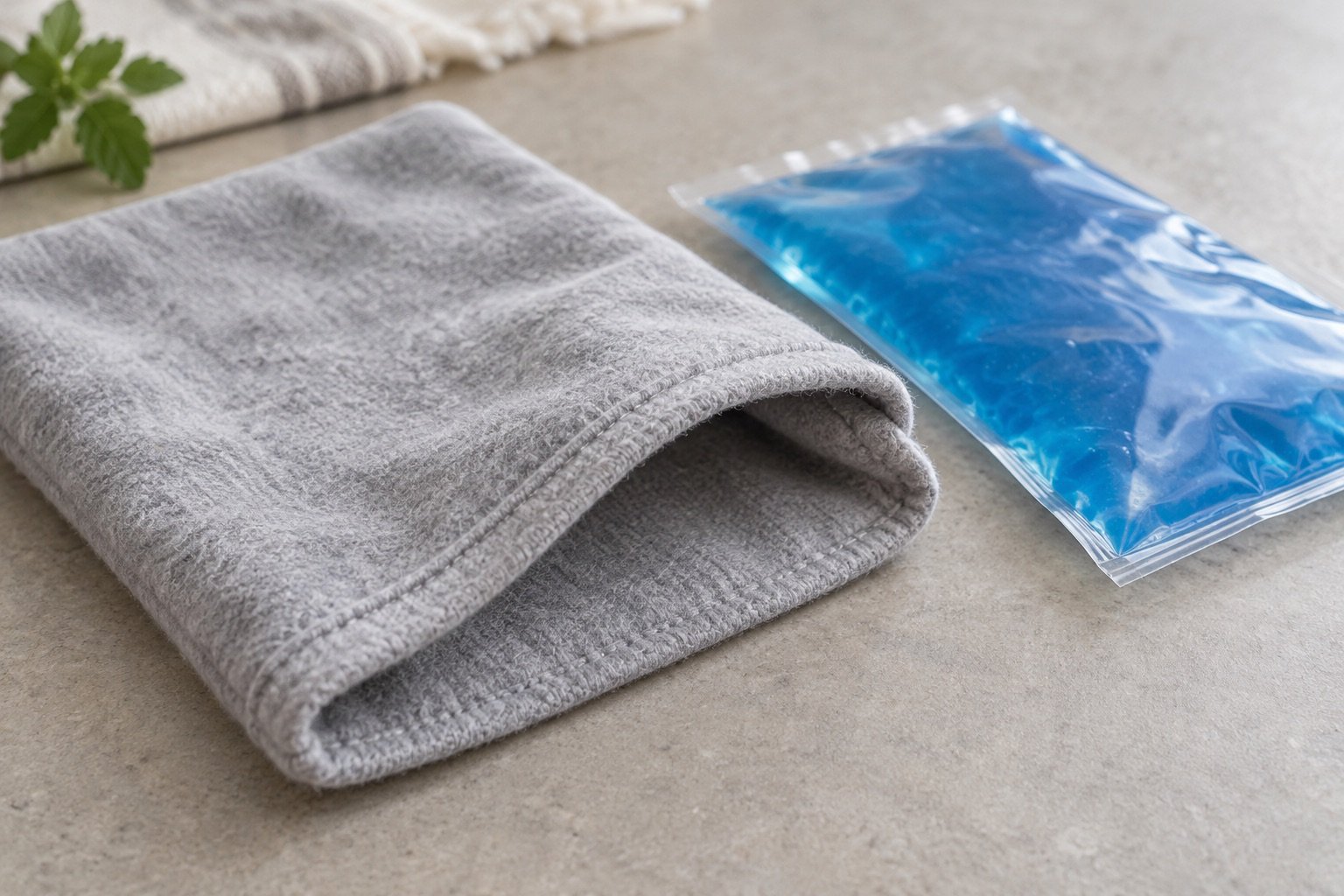
Repeat the fit check after the proposed care procedure. If the fabric changes size or the seam puckers, the initial fit may no longer describe the product the customer uses. Include any authorized preparation condition for the pouch, but do not assume the textile and pouch may be heated, frozen, or washed together.
Review softness, shedding, and color on the finished sample
Record the agreed face of the fabric, seam orientation, label placement, and edge finish. Review the sample dry and under relevant approved use conditions. Compare it with the retained reference sample using the same inspection approach.
Ask what appearance changes the buyer will accept after care: visible fuzz, pilling, lint transfer, color change, staining of a neighboring component, or a distorted opening. Make those acceptance decisions before bulk production rather than describing every change later as “normal.”
The AATCC test-method index lists separate methods for dimensional change, colorfastness to laundering, and colorfastness to rubbing. A laboratory can advise which method and edition fit the material and end use. The public index is not the full procedure, a certification, or a universal passing grade.
For a functional comparison, evaluate complete assemblies under the same documented preparation and environment. The cover can affect heat transfer, but a heavier fabric or warmer hand feel does not establish a safer contact temperature or longer cooling time. Any such statement needs an appropriate finished-product evaluation.
Write a care route that users can actually follow
Decide who removes the pouch, what components are cleaned, the proposed washing and drying route, and how the user knows the cover is ready for reassembly. “Washable” leaves too many questions unanswered.
Review finished cover dimensions, opening operation, seam appearance, color, and surface condition after the agreed procedure. Use representative production-intent materials and retain before-and-after records. The number of cycles and acceptance limits should come from the intended use and an agreed plan; this guide does not prescribe a generic service-life claim.
AATCC’s standard-laundering resources explain the role of controlled laundering conditions in textile evaluation. Such a test can support a defined material question, but it does not by itself establish that a cover is suitable for clinical reprocessing or that the entire gel pack can be laundered.
If a clinic or another shared-use channel is involved, close the cleaning and reuse requirements for that setting with qualified personnel. Do not label an ordinary textile sleeve “disinfectable,” “antimicrobial,” or “hospital grade” without applicable evidence.
Check composition and care wording before printing
For U.S. sales, the FTC textile and wool labeling guide explains fiber identification and labeling coverage, including exclusions. Have the importer or qualified reviewer determine the requirements for the exact finished item; do not assume every ice pack cover falls under the same rule.
Make voluntary fiber statements accurate and consistent across the sewn label, carton, online listing, and supplier documentation. Keep composition, origin, care, traceability, and any performance statement distinct. A soft-touch description should not drift into “hypoallergenic” or a skin-safety promise without support.
Reserve a label position that does not interfere with pouch insertion or the intended contact face. Approve a physical label and seam placement, not only a digital artwork proof. If branding changes the fabric, finish, or seam, assess whether it also changes the approved sample.
Compare a flannel sleeve with the existing retention system
Do not replace mesh, stretch knit, or another cover solely to add a premium-sounding material name. First decide what the textile must do. A sleeve that holds an insert inside a strap assembly has different requirements from a loose protective cover.
Cryozin’s rectangular gel pack with mesh sleeve and adjustable strap provides a concrete reference for separating pouch, sleeve, and retention functions. It is not evidence that a flannel substitute is compatible. For the full component list, see the guide to specifying ice pack covers, straps, and fasteners.
Eight fields to send with a cover inquiry
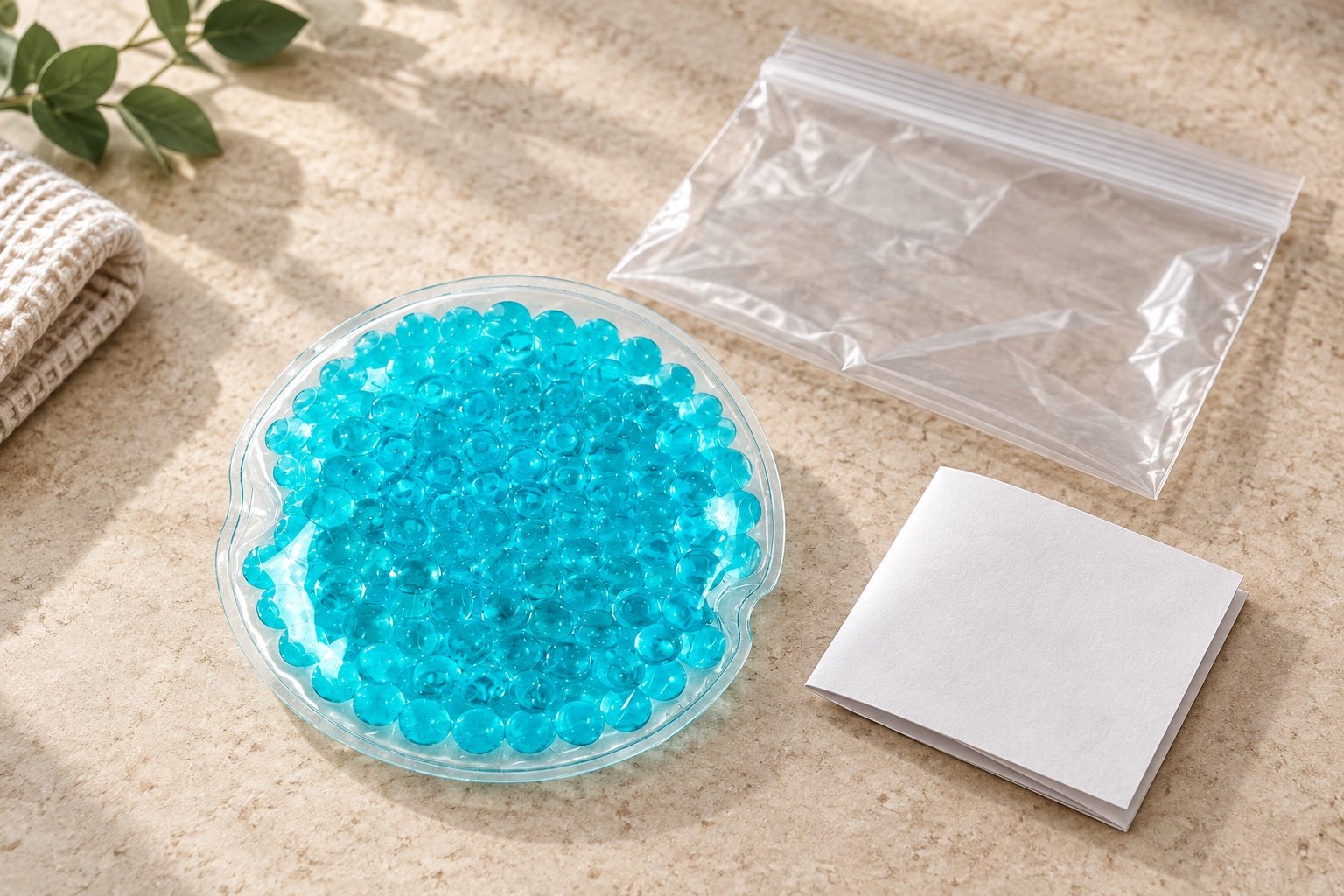
Copy these fields into a supplier request. This is an editorial handoff tool, not an approved bill of materials.
- Program: target market, channel, user, intended use, and whether the cover is individual or shared-use.
- Paired pouch: sample revision, filled dimensions, shape, weight, and approved preparation method.
- Textile: composition, construction, weight, brushing/finish, color, and reference swatch identity.
- Pattern: finished internal dimensions, usable opening, overlap or closure, seam layout, and tolerances.
- Assembly: insertion/removal, retention, label location, straps if any, and acceptable exposed areas.
- Care: components cleaned, proposed procedure, drying/reassembly instructions, and sample-check conditions.
- Acceptance: fit after care, surface appearance, color transfer, seams, opening function, and documentation.
- Order: quantity, colors, covers per pack, spare-cover options, packaging, and delivery requirements.
Request separate confirmation for fabric availability, development work, cover quantity, and the finished assembly. A gel-pack order quantity does not automatically define the textile supplier’s minimum or justify ordering unapproved spare covers.
Questions to resolve before approval
Is flannel always cotton?
Do not assume it. Request the actual fiber composition and material specification behind the supplier’s description. Approve the identified material, not the word alone.
Will a flannel cover stop condensation or leaks?
Do not make that promise. A textile may manage surface moisture under some conditions, but it does not repair a leaking pouch. Check the complete assembly and distinguish condensation from seal failure.
Can one sleeve fit several pack sizes?
Only after the proposed pairings are evaluated. Record which pouch revision each cover fits. A shared sleeve that is acceptable for one filled geometry may be too tight or loose for another.
Approve a paired assembly, not just a fabric swatch
A useful flannel cover specification closes material identity, filled fit, care, and retention. Keep any thermal, safety, or durability promise tied to applicable evidence. Discuss custom ice pack and cover requirements or send the eight-field cover brief to Cryozin to confirm whether the proposed material and assembly can be developed for your program.
Sources and further reading
- FTC: Textile and Wool Acts labeling guide — coverage and composition disclosures.
- AATCC: Standard Test Methods and Procedures — method selection, not a product pass claim.
- AATCC: Standard Laundering — controlled textile-care evaluation.
