
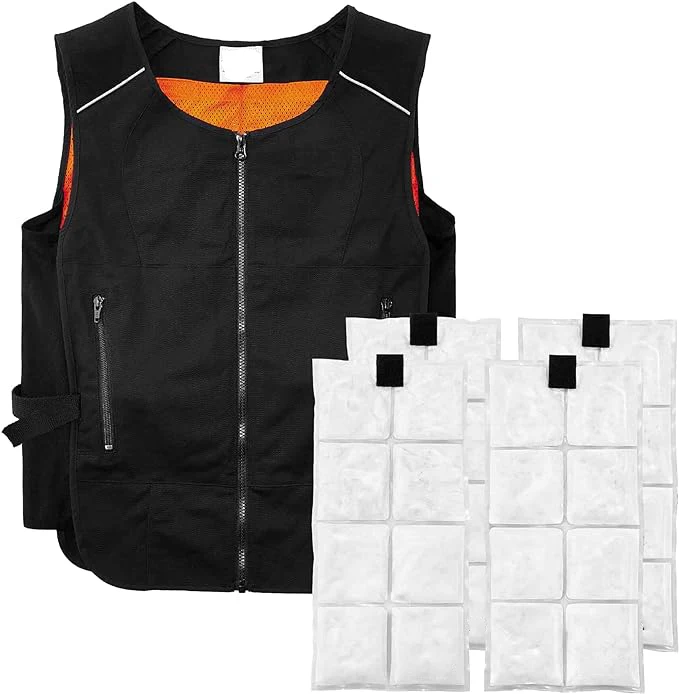
Choose a mascot cooling vest with the costume on and every cooling pack installed. A vest can fit the performer on its own and still interfere with a costume zipper, chest harness or quick exit. For a crew that shares costumes, the buying decision also includes how many fitted carriers and compatible spare packs are needed between sessions.
Start with the costume’s available space and the venue’s pack preparation setup. Then choose a carrier, approve the loaded fit and quote the complete kit. This guide is for costume makers, event teams and organizations ordering for multiple performers.
On this page
Which cooling vest design belongs on the shortlist?
| Design | When to shortlist it | What to verify |
|---|---|---|
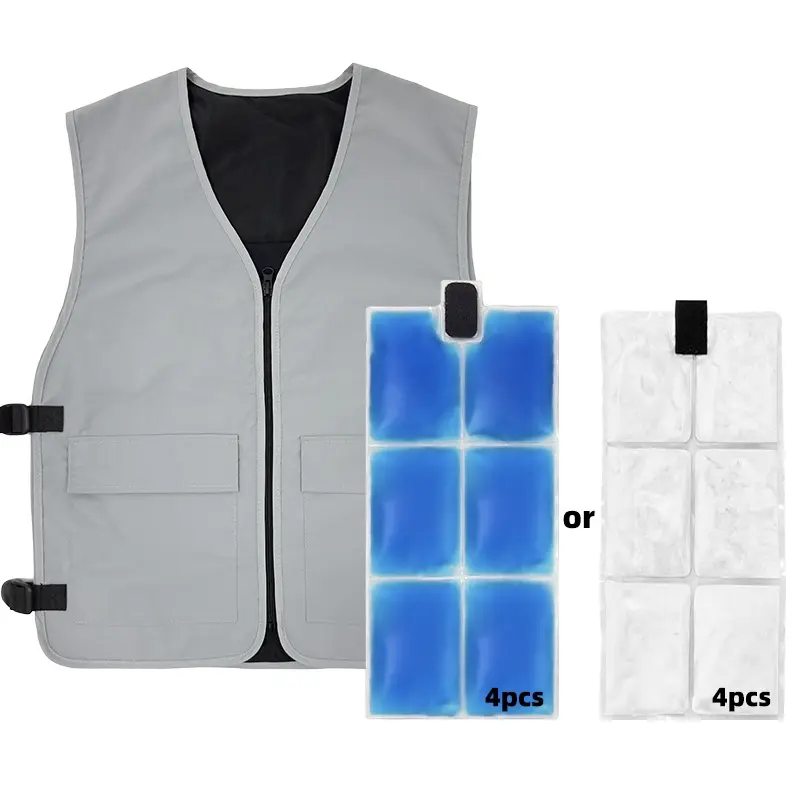
| Pocketed vest with removable PCM packs | When the team wants to keep the fitted carrier and exchange a complete module set. | Loaded front and back thickness, pocket access in the actual costume, and the exact preparation method for the specified packs. |
| Pocketed vest with frozen gel or ice inserts | When the location can prepare and hold the specified frozen inserts between uses. | Freezer space, insert rigidity after conditioning, moisture handling, and barrier and care instructions. |
| Integrated segmented vest | When a fixed cell layout is a candidate for the costume and the team can handle the whole assembly for preparation. | Position and bulk of the cells, access to the closure, and what must be exchanged or replaced if the cells are fixed. |
Hogtown Mascots’ selection guide describes under-costume vests with pockets for gel ice packs as well as more structured carriers. The Mascot Store’s A2001 listing provides a useful buying example because it lists a carrier with a set of packs. When comparing quotes, ask the same question of every supplier: what arrives with the vest, and what must be ordered separately?
Run a loaded fitting in the actual costume
First locate the hardware the performer already wears. Mark the costume zipper, shoulder harness, internal padding and any radio or microphone. Ask the vest supplier for the loaded front and back thickness at those points. Check whether buckles, pull tabs or pocket seams sit directly under another closure.
For under-costume orders, our buyers have focused on how the vest works when worn. They put it on under the costume as an inner layer, where its appearance is concealed. Approve how the loaded vest sits and how the performer or handler reaches the packs.
- Dress with the full kit. Use the intended base layers, all fitted modules, the costume and any harness or communications gear.
- Rehearse the normal movement. Close the costume, reach for the usual controls, turn, and practice any kneeling, sitting or doorway movement required by the role. Note contact points and movement restrictions.
- Rehearse the handoff. Have the performer and handler follow their normal removal procedure. Check which closures they can reach, when the costume has to come off to change packs, and where the removed packs will go.
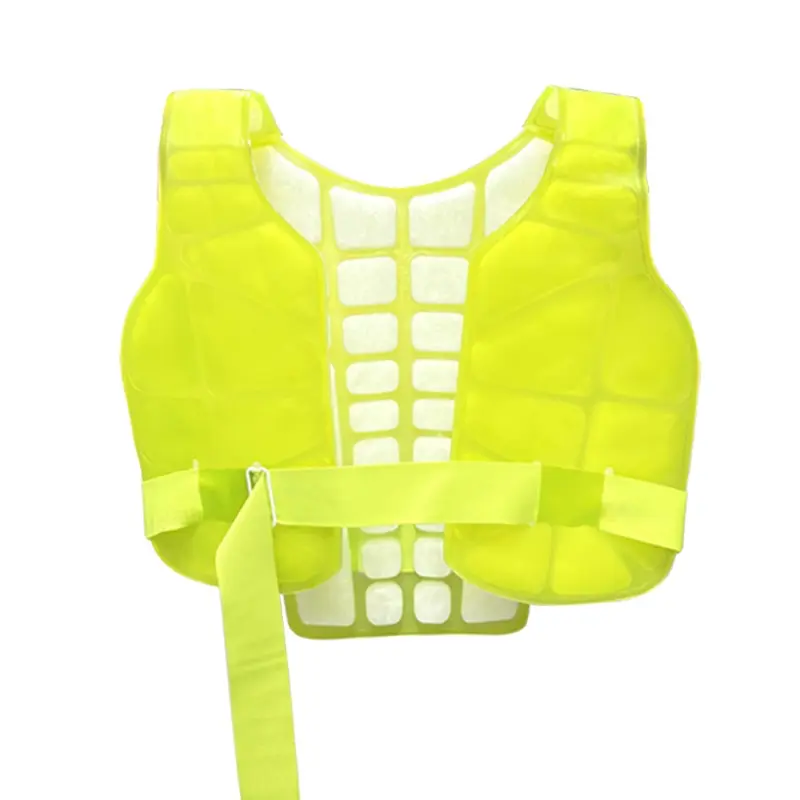
For a fitted costume, evaluate the smallest and largest performer in the intended range with the complete assembly. A generic PCM vest sizing and module guide can help you record measurements. Actual costume clearance remains a separate fit check.
Plan pack changes around the venue, not the catalog
Ask for the exact pack preparation method and the equipment it needs. Record which facilities are available at load-in, backstage and on the road, then agree who handles prepared and returned packs. For a removable system, label complete module sets by carrier model and size if they differ. Store prepared and returned sets separately so the next performer can identify the correct kit.
Start the count with the number of performers who can be in costume at the same time. For example, if three performers each use one installed set and the approved schedule requires one prepared exchange per performer before any set is ready again, plan for three fitted carriers and six compatible module sets before loss or damage spares. A set means all modules needed for one vest. Use the venue’s actual workflow to decide how many sets you need.
Build the heat plan separately. NIOSH workplace heat guidance addresses water, recovery breaks and controls for heat exposure. NIOSH also describes wearable cooling as an auxiliary measure and discusses how added clothing can affect heat burden. For performance teams, keep costume breaks, access to water and a cool recovery area in the plan. A product’s advertised duration cannot determine an appropriate performance schedule.
Copy this mascot cooling kit approval sheet
| Item | Record before approval |
|---|---|
| Costume and hardware | Costume ID and revision, closure location, harness or padding, and available loaded clearance. |
| Fit trial | Performer size range, complete module layout, normal movements, dressing and exit check, and observed interference. |
| Order unit | Number of carriers, complete sets per carrier, separate spares, compatible part numbers, and storage or transport packaging. |
| Backstage handling | Preparation equipment and space, prepared and returned storage, pack exchange steps, and who manages them. |
| Release sample | Approved carrier and module revision, care instructions, packing list and sign-off for each costume type. |
Ask each supplier to quote the same approved components and show which packs can be reordered. If the vest is a costume accessory for resale, use the same carrier and insert description on the quote, packing list and customer-facing instructions.
Shortlist a vest and request a fit sample
Use Cryozin’s PCM cooling vest catalog to shortlist a sample architecture. The round-neck zip cooling vest with mesh lining is a carrier-and-insert reference. The wrap-adjusted segmented vest provides a separate architecture to compare. Review either candidate with the actual costume before approving fit. Send the costume clearance, size range, intended pack-change workflow and quantity to discuss the sample and kit specification.
Common questions about mascot cooling vests
Can we share one vest across several costumes?
Approve the loaded fit for every costume and performer expected to use it. Record how the carrier is cleaned, which inserts are compatible and whether more than one performer needs a vest at the same time.
Should we choose the lowest pack temperature?
Ask how the selected material is prepared, how the carrier separates it from the wearer, and how the full kit feels and fits during the approved trial. A nominal phase-change temperature describes the material, and wearer comfort depends on the assembly and use conditions.
Can we order spare packs without a second vest?
That depends on the design and supplier’s parts program. Ask for a separately quoted set of compatible modules, then identify the carrier and pack revision on the order.
