
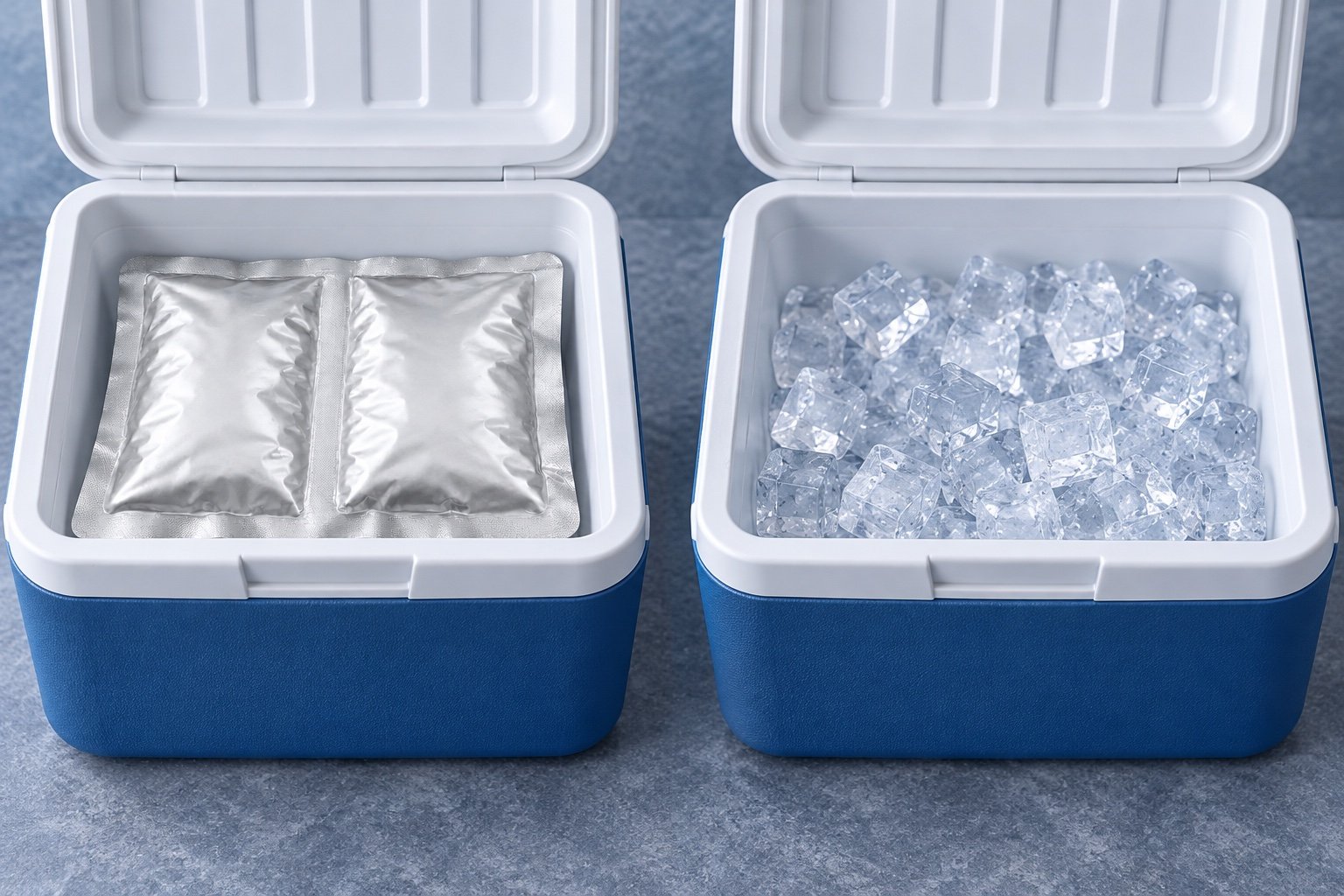
Gel ice packs and ice can both provide cooling. A sealed gel pack contains its filling and can be prepared for repeated use; loose ice can fill irregular spaces but leaves meltwater. The better choice depends on where you need cooling, how you will replenish it, and whether containment or flexibility matters.
Neither format is automatically colder, longer-lasting, or more suitable for every purpose. Here is how the choice changes in a cooler and a cold compress, followed by a simple comparison sheet for buyers.
Cover image: illustration of blue and clear sealed pouches. Color does not identify their formula or cooling performance.
On this page
Gel ice packs vs ice: the practical differences
Start with where the cooling goes and how you will replenish it. A cooler needs room for its contents and a plan for moisture. A cold-compress product needs the approved shape, contact layer, and preparation instructions for that item.
Loose ice. Useful for filling gaps when ice is easy to replace. Plan for drainage and separate contents that need to stay dry.

Refillable ice bag
Consider a bag when the user supplies ice and wants to contain meltwater. Check the cap, opening, and approved filling instructions on the actual bag.
View the refillable fabric ice bag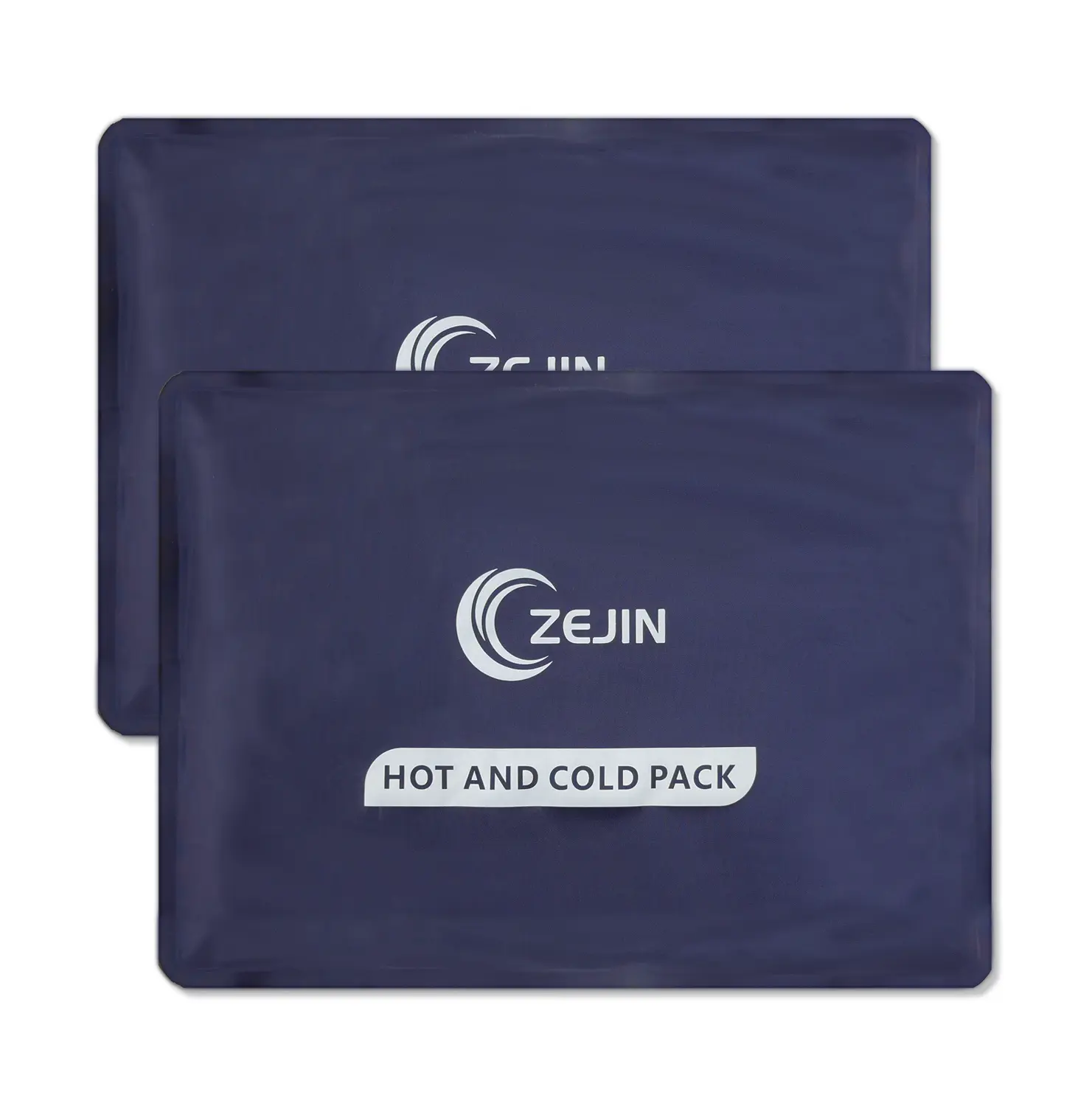
Sealed gel pack
Consider a fixed pack shape for repeated use where the specified cooling preparation is available. Measure how the prepared sample fits the available space and review condensation handling.
View the rectangular gel packFor a bulk assortment, send the use setting, available dimensions, cooling preparation, and proposed units per retail pack. Include replenishment, cleaning, and replacement in the cost comparison. Compare prepared samples under the same conditions before making a duration claim.
Do gel packs stay cold longer than ice?
Not as a universal rule. The answer depends on coolant mass, formulation, starting condition, container, surroundings, and what “still cold” means. A small gel pouch and a large block of ice are not an equal comparison. Neither are a pack on an open table and ice in an insulated cooler.
McGill University explains that gel packs contain water and varying additives, some of which change freezing behavior. That explains why a pack can behave differently from frozen plain water; it does not prove a longer cooling duration for every formula.
For buyers, compare the temperature of the thing you need to cool, not just the feel of the pack. Our guide to cooling-duration variables covers the conditions that belong beside a duration claim.

Which makes more sense in a cooler?
Consider sealed packs when keeping the contents out of meltwater is a priority and you can prepare the packs before use. Check that the shapes fit the available space. Condensation still needs attention, and a damaged pouch must be removed rather than treated as a waterproof barrier.
Consider ice when you need flexible packing around contents or can replenish it during the trip. Plan how the cooler will handle meltwater. A sealed water bottle or ice bag changes that trade-off; it uses more fixed space but contains the water.
The FDA’s outdoor food-safety guidance accepts ice or frozen gel packs in a cooler and says cold food should be kept at 40°F or below. Choosing gel does not remove the need to keep the cooler closed and verify food temperature. A cold-feeling pouch is not proof that all the food has remained safely chilled.
A picnic comparison is also not qualification for a delivery route. Food shippers should use a defined food-shipping pack-out trial for the actual container, payload, journey, and acceptance limits.
Which works better as a cold compress?
Start with fit and the product instructions rather than a “colder is better” rule. Cleveland Clinic discusses both bagged crushed ice and frozen gel packs as cold-compress options. Its guidance emphasizes protecting skin from direct cold contact. It does not endorse a Cryozin product.
A pliable gel pack may be convenient for a repeated routine, but some gel packs become firm after freezing. Crushed ice in a closed bag can also conform around a curve. Compare the actual conditioned pack, barrier, and fit; a room-temperature photo does not show frozen flexibility.
Compare the prepared assembly and covering, then follow the instructions for the selected model.
Follow the exact use instructions and a clinician’s advice where applicable. This format comparison does not set a treatment schedule, prove better recovery, or make a cooler pack suitable for use on skin.
A comparison sheet buyers can use
Write one use case at the top, then record the same fields for each candidate. This is an editorial planning tool, not a standard test method.
- Format: gel pouch, loose cubes, bagged crushed ice, block, or frozen bottle.
- Complete configuration: coolant mass, dimensions, pouch or bag, cover, and container.
- Preparation: instructions, conditioning time, and measured starting condition.
- Use setting: cooler load and openings, or the contact shape and barrier.
- Result: a defined temperature endpoint, fit, wetness, or replenishment requirement.
- Repeat routine: cleaning, refreezing access, handling, losses, and replacement.
For a cooler assortment, compare the complete use routine. For a brand developing a reusable pack, describe those requirements in a custom ice-pack brief. Product browsing belongs in the reusable ice-pack range; the comparison itself does not establish performance for a particular item.
Choosing a route for a bulk order
A prefilled gel pouch and a refillable ice bag are different supplied units. Confirm what arrives filled, what the buyer must add, and whether a cover or strap is included. Compare the complete selling unit and preparation method when you request samples.
For existing reusable formats, specify quantities by SKU through the wholesale ice pack route. For a project-specific shape, logo or packaging change, review the custom ice pack options before requesting a quotation.
Choose for the setting, then check the actual product
Sealed gel packs offer a contained, repeatable format. Ice offers several adaptable formats and an option for replenishment. Duration, fit, cleanup, and preparation can point to different choices. Define the job first, then compare like for like.
For an OEM or private-label project, send Cryozin the use case and sample requirements, including dimensions, preparation conditions, covering, and the result you need to verify.
Sources and scope: McGill University ingredient explanation; FDA outdoor food-safety guidance; Cleveland Clinic cold-compress guidance. Linked beside the relevant statements and checked October 12, 2026. No first-hand comparison test, universal cooling-duration claim, or product-specific medical benefit is asserted.
