
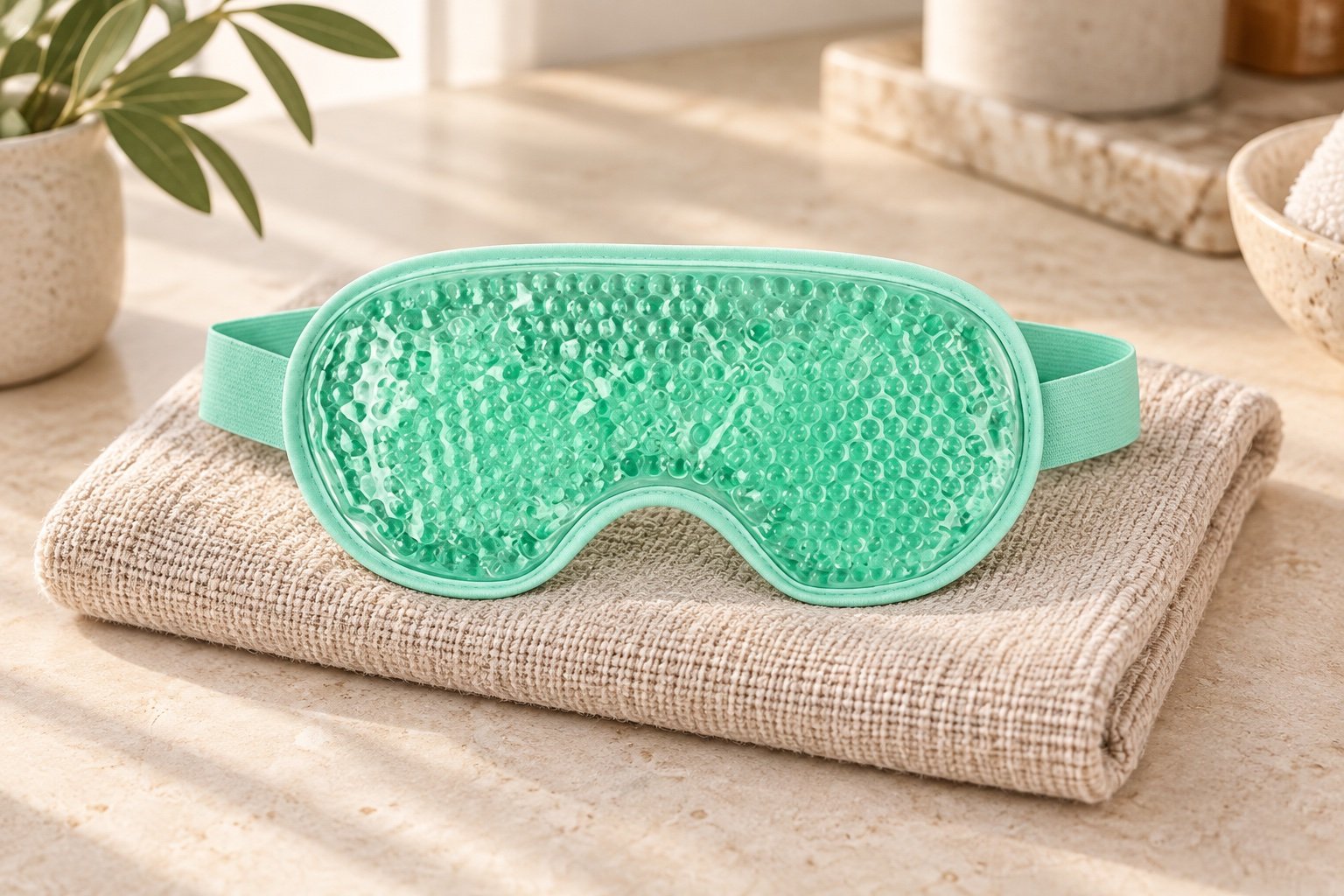
A gel ice pack can stay flexible after freezing because its filling is not just plain water. Ingredients that lower the freezing point can help some of the mixture remain mobile, while the pouch and chamber layout determine how easily the pack bends. Other packs freeze much more firmly. The word “gel” alone does not promise a soft pack at every freezer temperature.
McGill University’s ingredient explainer describes propylene glycol as one possible freezing-point modifier. This explains a general mechanism; it does not identify the formula or performance of a Cryozin product.
On this page
What should you check if your gel pack freezes hard?
- Read the label first. Look for the required cooling method and whether the pack is intended to remain flexible. Use the preparation instructions for that exact product.
- Check the pouch and seals. Stop using a broken or leaking pack, as advised by the National Capital Poison Center. Do not cut it open or add ingredients to soften it.
- Do not force a rigid pack around a curve. Ask the manufacturer whether its condition is expected under your freezer settings. A frozen pack that is too stiff for the intended shape may be the wrong format for that application.
- When comparing products, ask about frozen flexibility. A soft pack at room temperature may behave differently straight from the freezer. Compare under the same conditioning instructions rather than judging by a product photo.
For brands and purchasing teams, the next step is to turn that fit requirement into a repeatable sample check. The sections below explain which construction choices matter and what to record. They do not prescribe treatment temperatures or establish a product’s medical effectiveness.
What “flexible after freezing” should mean in a specification
Flexibility can refer to several different behaviors:
- the pack bends around a curved body area;
- the filling redistributes when pressed;
- the outer film does not crack or become excessively rigid;
- the pack can be removed from the freezer and positioned without waiting for a long conditioning period;
- multi-chamber sections move independently enough to improve fit.
A buyer should identify which behavior matters for the product. A flat shipping coolant, a clinic cold pack, and a wearable knee wrap do not need the same bending profile. The expected use position, contact area, cover, strap system, and target freezer conditions should be part of the brief.
Why water-rich gel can become stiff at low temperature
Water is a major part of many cooling-gel systems. As free water crystallizes, the filling becomes less mobile and the pack can feel hard. Research on hydrogels shows the same underlying challenge: low temperature can reduce flexibility when the water phase freezes. Researchers have used water-miscible components such as glycerol to depress freezing and help experimental gels retain mechanical behavior at subzero temperatures.
For example, a peer-reviewed study on sub-zero mechanically stable hydrogels reported lower freezing temperatures in glycerol-water gel systems, while another study on anti-freezing polyacrylic acid hydrogels demonstrated that changing the water-glycerol ratio affected cold-state mechanical performance. These studies are not specifications for a commercial ice pack; they illustrate why solvent composition and polymer structure can change behavior below 0°C.
A supplier should therefore provide product-specific evidence instead of borrowing a temperature claim from unrelated research. The exact ice-pack formulation and filling system, food-contact or skin-contact requirements, preservative system, film compatibility, filling process, and intended market all affect what can be used.
Six factors that affect frozen gel-pack flexibility
1. Gel formulation
The balance of water, humectant or freezing-point modifier, thickener, salts, and other approved ingredients determines how much of the filling crystallizes and how freely the remaining phase can move. More “antifreeze” is not automatically better: formulation changes can also affect viscosity, cooling profile, weight, clarity, handling, compatibility, and regulatory review.
2. Freezer setpoint and actual product temperature
A freezer dial is not a measurement of the gel temperature. Setpoint, load, door openings, airflow, shelf position, and storage time can change the temperature reached by the sample. A meaningful comparison records the freezer condition and uses the same placement and conditioning time for each sample.
The gel ice pack freezing-time guide explains how to define the conditioning endpoint and record freezer load, placement, starting state, and repeatability before comparing flexibility.
3. Fill weight and pack thickness
A thick mass of filling behaves differently from a thin layer. Fill weight also changes drape, thermal mass, pressure on seams, and how easily gel moves when the pack is bent. Compare samples with the same nominal dimensions and fill-weight tolerance; otherwise a “more flexible” sample may simply contain less gel.
4. Gel viscosity and distribution
Viscosity helps control how the filling flows and stays distributed, but the room-temperature feel does not fully predict frozen performance. A filling that moves slowly at room temperature may remain uniform in use, while another may pool or create thin zones. Evaluate distribution before freezing, immediately after removal, and during bending.
5. Film and laminate construction
The outer material also stiffens as temperature falls. Film type, thickness, laminate structure, printed layers, seam geometry, and aging can influence the feel of the finished pack. This is why buyers should evaluate the complete assembly. Cryozin’s PVC, TPU, and laminated nylon comparison provides a separate overview of outer-material trade-offs.
6. Chamber and shape design
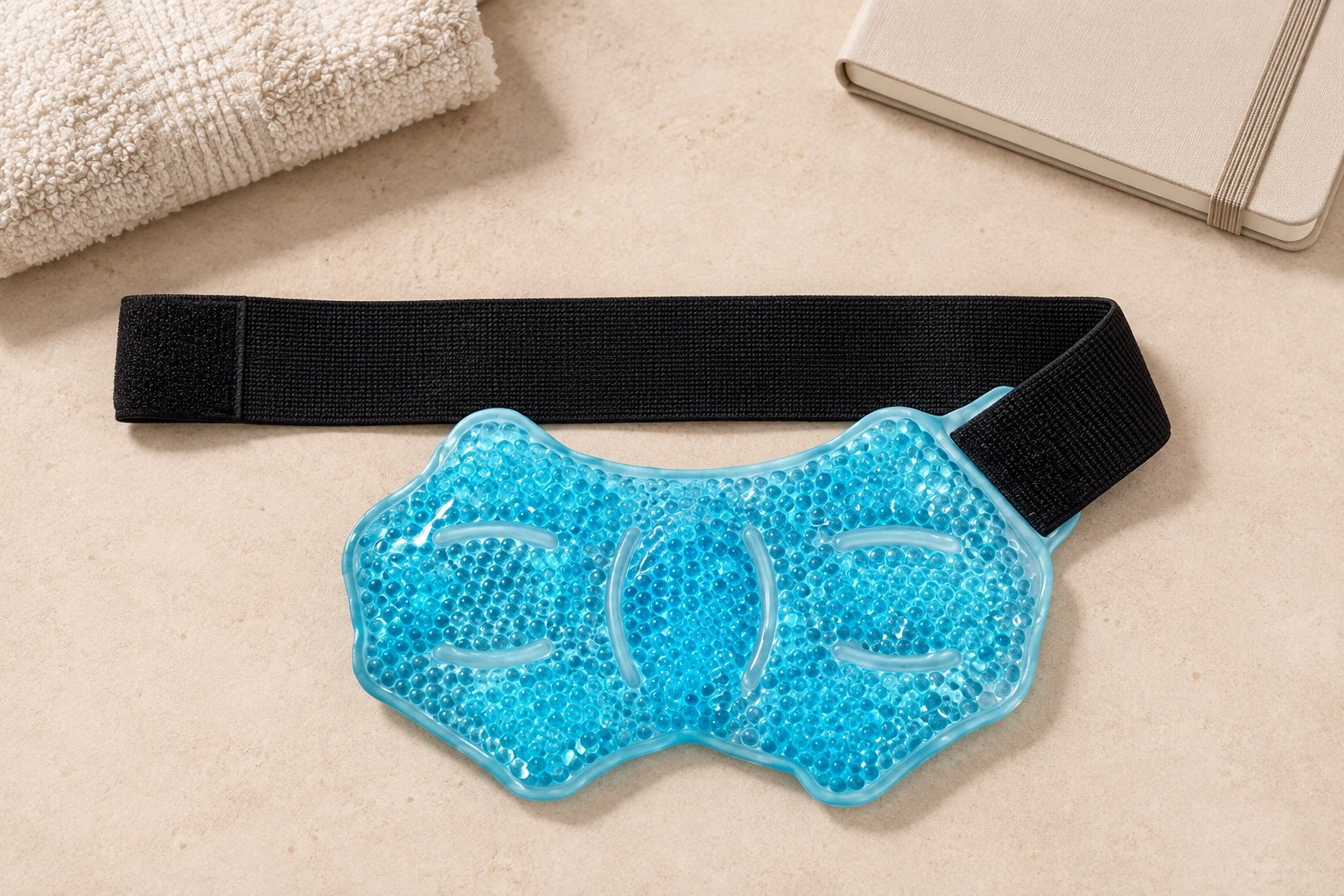
Segmented or multi-chamber construction can limit gel migration and allow sections to articulate around a curve. The trade-off is that more weld lines change the usable area and can create a different pressure distribution. A single large chamber may feel fluid but can allow filling to pool away from the target zone. Test the actual shape on a fixture that represents the intended geometry.

Write a repeatable frozen-flexibility test
A buyer test does not need to be complicated, but it should be repeatable and tied to the use case. A practical sample protocol can include the following:
- Define the sample. Record material, dimensions, fill weight, chamber layout, printing, cover, and sample revision.
- Condition consistently. Specify freezer setpoint or measured range, storage time, shelf position, and sample orientation.
- Measure promptly. State the maximum time between freezer removal and evaluation.
- Use a standard bend fixture. Wrap the pack around an agreed cylinder or curved form rather than relying only on hand feel.
- Define the acceptance result. Examples include conforming to a minimum radius without cracking, maintaining chamber articulation, or meeting a scored flexibility range.
- Inspect the pack. Check seals, film whitening, delamination, printing, leaks, and abnormal gel separation after bending.
- Repeat after cycles. If the product is reusable, agree on the number of freeze-thaw cycles and the same inspection after cycling.
Photographs and short videos help document the setup, but they should support—not replace—the written criteria. The approved reference sample should be labeled and retained so production samples can be compared with the same method.
Do not use one freezer result as a universal claim
A result from one setpoint and storage time does not prove flexibility at every temperature. Avoid language such as “never freezes” or “stays flexible in any freezer” unless the exact claim is supported across defined conditions. Instead, state the test condition and outcome: for example, the sample met the agreed bend criterion after a specified conditioning procedure.
Likewise, cold-state flexibility does not establish cooling duration, therapeutic benefit, skin safety, leak resistance, or shelf life. Those are separate attributes with their own test methods and acceptance criteria. The ice pack quality evaluation checklist shows how to review the wider product and documentation package before a bulk order.
Common reasons a sample feels too stiff
- The test temperature is lower than the design condition. Confirm the actual freezer environment before changing the product.
- The fill layer is too thick. Review fill weight, chamber dimensions, and distribution.
- The formulation has too much crystallizable water for the target condition. Ask for a formulation route designed around the defined test.
- The outer material dominates the feel. Compare film thickness and laminate construction, not only gel samples in containers.
- Gel has migrated into one area. Consider viscosity, fill process, and chamber design.
- The sample was tested after an inconsistent storage time. Standardize conditioning before comparing suppliers or revisions.

Questions to send with a sample request
- At what defined temperature and storage time is the sample designed to remain pliable?
- What material, thickness, fill weight, and chamber layout are used?
- Which formulation details can be documented without disclosing proprietary ratios?
- What bend or handling test does the supplier use for sample approval?
- How is fill-weight consistency controlled during production?
- What freeze-thaw inspection is appropriate for the intended reuse cycle?
- Which safety and market documents apply to the actual formulation and use case?
Cryozin’s public material-selection page lists several filling routes, including standard gel, gel beads, anti-freeze gel, and phase-change materials. Buyers should still confirm the selected formula, test condition, and evidence for their specific product rather than treating a category name as a performance guarantee.
Related product references: Buyers can explore reusable flexible ice pack formats and a flexible nylon gel pack. Frozen flexibility must be verified against the approved formula, fill weight, construction, and test conditions.
Turn flexibility into an approval criterion
The best way to source a flexible gel ice pack is to define the use geometry, freezer condition, sample construction, and acceptance method before comparing results. Formulation matters, but film, fill weight, viscosity, chamber design, and test consistency matter too.
If your program needs a defined cold-state feel, include the temperature range, conditioning time, bend fixture, and pass/fail result in the RFQ. Cryozin can review these inputs during its documented customization and sampling process. Contact Cryozin to discuss a product-specific sample specification for your brand or distribution channel.
Sources & Further Reading
- PubMed — Sub-Zero Temperature Mechanically Stable Low Molecular Weight Hydrogels
- PubMed — Ultra-Stretchable and Self-Healing Anti-Freezing Strain Sensors Based on Polyacrylic Acid Hydrogels
Sources accessed September 7, 2026. These studies illustrate hydrogel anti-freezing mechanisms in specific research formulations; they do not verify the composition, safety, temperature range, or performance of a commercial ice pack.
Scene images are editorial concepts based on catalog references, not evidence of a factory, customer project, test or approved configuration. Catalog images illustrate visible product form only.
