
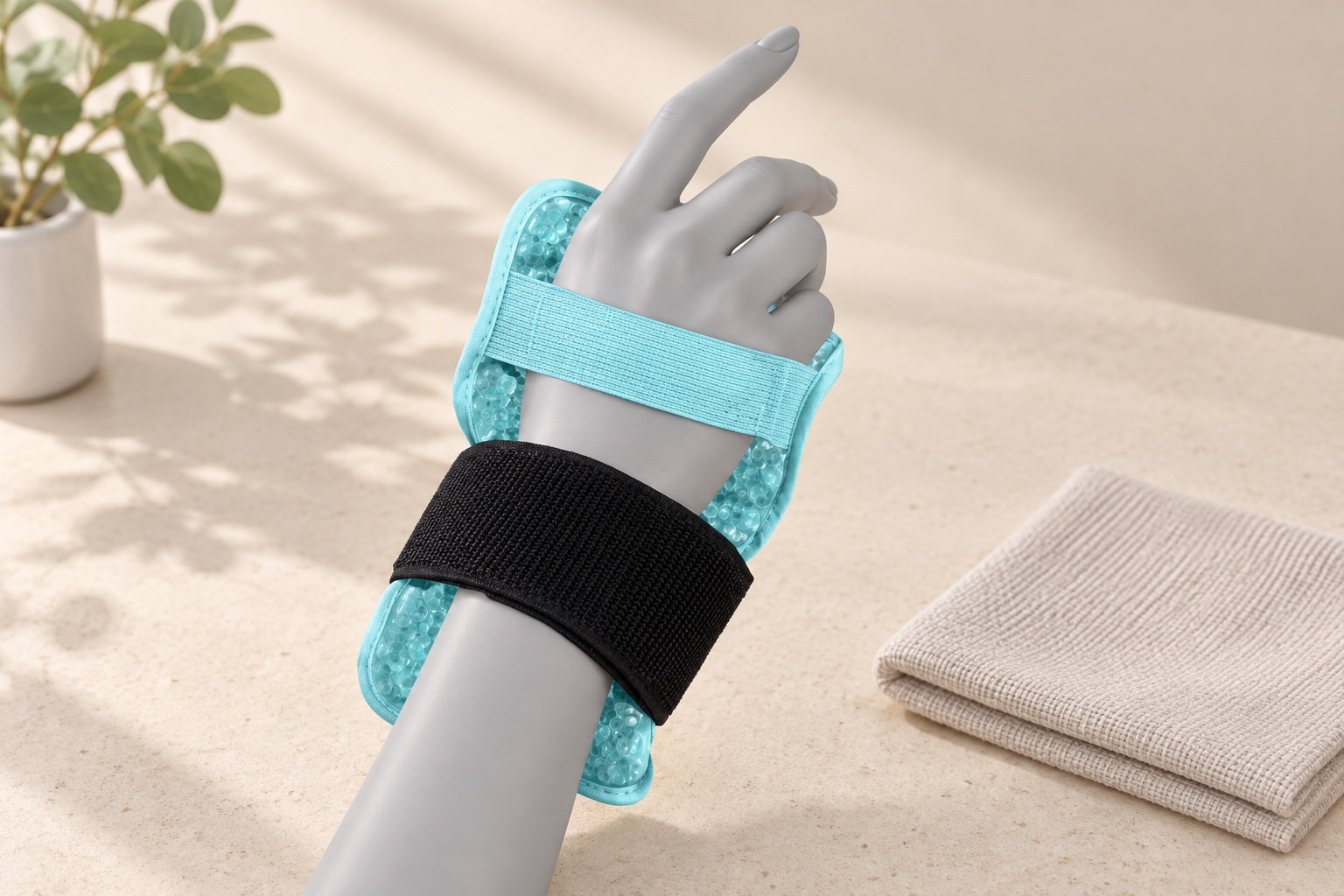
For B2B buyers, the best reusable gel ice pack material is the one that matches the product’s use case, price position, sealing method, and packaging plan—not simply the material with the strongest headline specification. PVC, TPU, and laminated nylon can all be appropriate, but they create different trade-offs in flexibility, appearance, durability, and custom development. This guide helps product managers and sourcing teams compare reusable gel ice pack materials before requesting samples or approving a production specification.
On this page
How to compare reusable gel ice pack materials
Start by defining the product format. A flat economy pack, a soft wearable wrap, and a premium private-label kit place different demands on the film or fabric-facing surface. The gel formula, fill weight, seal geometry, cover construction, and expected freezer handling all affect the final result. Buyers should compare complete constructions rather than treating a material name as a complete specification.
Reviewing Cryozin’s cold and hot therapy product options can help a team identify whether its concept is closest to a flat pack, a contoured pack, or a wearable format with a textile cover. If the product format is still undecided, begin with the broader guide on how to choose hot and cold packs by use case, material, and filling system. Buyers who need a component-level overview can also review what is inside a reusable ice pack.
| Material approach | Often considered for | Key strengths | Points to confirm in sampling |
|---|---|---|---|
| PVC film | Value-oriented flat gel packs and established shapes | Common processing route; practical for straightforward designs | Freezer feel, clarity or finish, seal appearance, odor expectations, and destination-market requirements |
| TPU film | Projects prioritizing softness, flexibility, or a more premium hand feel | Flexible feel and potential fit for more demanding pack shapes | Film grade, low-temperature handling, print compatibility, seal window, and cost impact |
| Laminated nylon construction | Wearable packs, covered packs, and products where surface feel matters | Textile-facing appearance and design flexibility when paired with a suitable inner barrier | Layer construction, edge finish, cover attachment, cleaning expectations, and leak protection |
The comparison above is directional. “Laminated nylon,” for example, can describe several layer combinations rather than one universal material. Ask the supplier to identify the relevant layers and which layer provides the liquid barrier. The same principle applies to PVC and TPU: grade, thickness, surface finish, and the chosen sealing process can materially change performance. The ice pack film-thickness guide and RF-welding compatibility guide explain why a material name alone is not a finished manufacturing specification.
PVC gel packs: where a practical cost position can fit
PVC is commonly discussed for reusable gel packs because it can support familiar flat-pack constructions and established manufacturing methods. For a B2B program with a straightforward shape, limited printing requirements, and a value-focused retail position, it may be a reasonable route to evaluate.
That does not make PVC the automatic low-cost answer. A buyer still needs to specify the thickness range, target dimensions, fill weight, seal width, edge profile, and intended cold-storage conditions. A very thin film or narrow seal may lower material use, but it can also reduce the margin for handling variation. During sample evaluation, inspect corners and fill-transition areas rather than judging only the center of the pack.
For projects involving a particular market, channel, or label claim, confirm requirements with the appropriate internal or external compliance resource before choosing the final construction. Material selection should follow the actual product brief and market obligations, not a generic assumption about what is acceptable.
TPU gel packs: when flexibility and finish deserve more attention
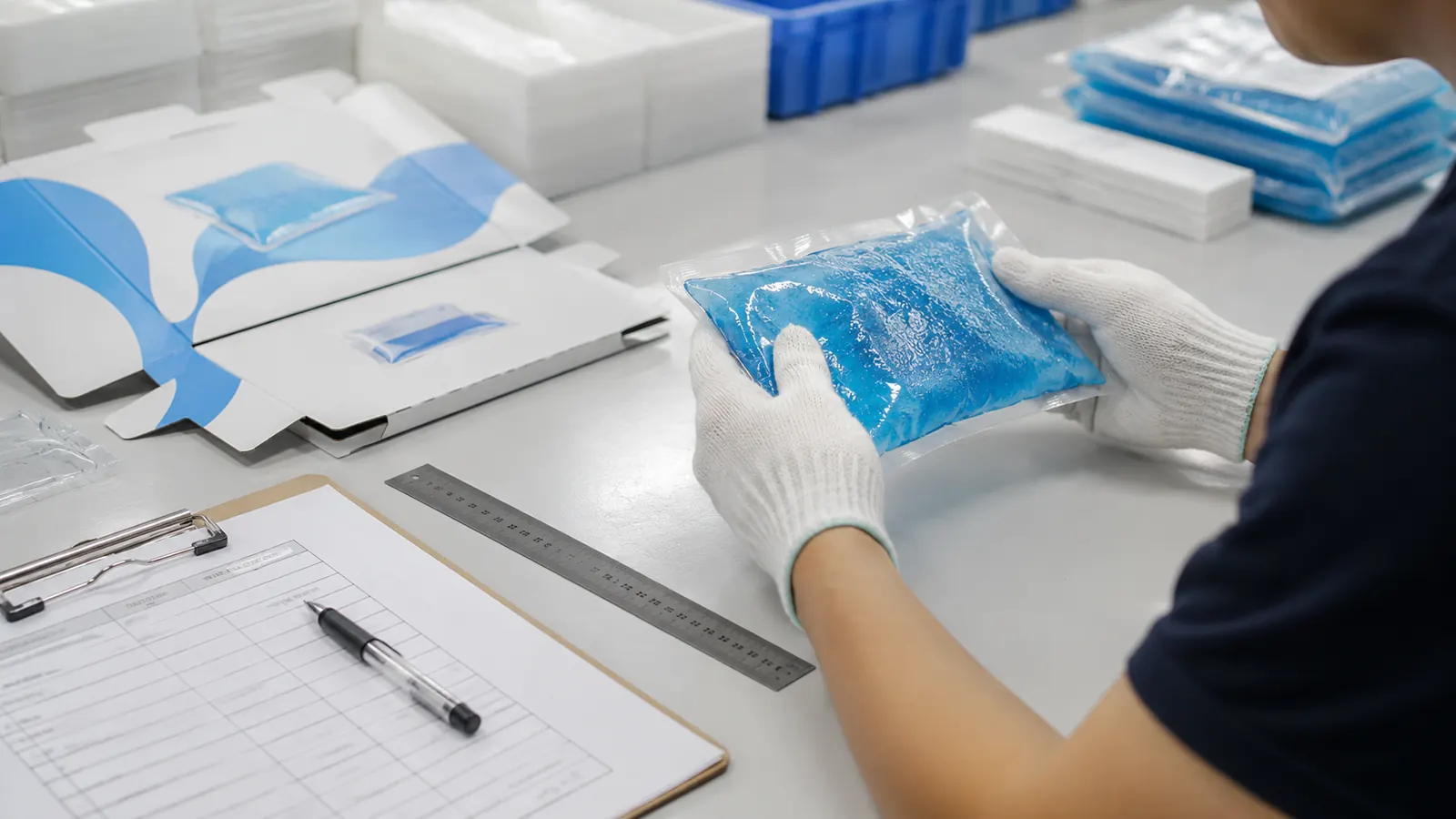
TPU is frequently considered when a buyer wants a softer, more flexible reusable gel pack or a product that needs to conform more comfortably within a wrap or shaped assembly. It can be especially relevant when the product brief puts more weight on tactile feel, pliability after cooling, or a premium presentation.
For a TPU gel ice pack manufacturer discussion, avoid requesting “TPU” as a single line item. Ask which film grade is proposed, what thickness is being quoted, and how the material behaves after the product has been stored under the intended cold conditions. If the product uses a colored film, printed graphics, or a fabric cover, request a sample that includes those real project elements. A clear, unprinted stock sample is useful for early fit checks, but it does not confirm the finished production construction.
TPU can add cost compared with a simpler film route, so assess it against a specific user-facing benefit. For example, a contoured pack or branded therapy wrap may justify added material cost if the final handling, fit, or presentation supports the product position. A basic promotional flat pack may not need the same material approach.
Laminated nylon cold packs: understand the full construction
A laminated nylon cold pack is usually evaluated for the exterior feel, appearance, and construction options it can bring to a reusable product. It is not enough to state “nylon” in an RFQ, because the liquid barrier, laminate, backing, and edge construction need to work together. Nylon may form part of a layered structure, while another layer provides the barrier for the gel.
This approach can be useful for covered packs, wearable products, or designs that need a more textile-like surface. Cryozin’s nylon hot and cold pack with mesh pouch and elastic band illustrates a format where the pack construction and wearable components need to be considered as one product system.
When discussing laminated nylon cold pack OEM development, confirm how the layers are bonded, where sealing occurs, whether the edges are bound or exposed, and how the insert is retained within a cover or pouch. Also describe whether the finished product will be wiped clean, used with a removable cover, or packed with accessories. These details affect both material choice and assembly planning.

Compare the construction, not only the outer material
A reusable gel ice pack is a system. The material decision should be reviewed alongside the items below:
- Gel formulation and fill ratio: The pack should be evaluated in the intended storage condition, because the gel’s handling characteristics influence how the finished pack bends and distributes pressure.
- Seal design: Confirm the seal width, corner shape, fill-port treatment, and visual acceptance criteria. A seal that looks acceptable at room temperature still needs review after relevant handling.
- Dimensions and tolerance: Define the nominal size and acceptable variation, particularly when the pack must fit a sleeve, box, pouch, or wrap.
- Cover and attachment method: Stitching, binding, hook-and-loop placement, and insert retention can create their own durability considerations around the gel pack.
- Artwork and packaging: Print area, barcode space, warning copy, folding lines, and retail inserts should be included in the production sample when they are part of the order.
For B2B buyers, a basic “PVC vs TPU” comparison becomes useful only after these construction choices are clear. The custom ice pack RFQ checklist can help organize those inputs before a supplier quotes a final version.
Build an evidence pack for the selected material
A useful material file should let the buyer trace the quoted construction to the approved sample and later production. It does not need to be a large document package, but each record should answer a defined question.
| Record | What it should identify | Why it matters |
|---|---|---|
| Material description | Film grade or laminate structure, supplier reference, color or finish, and revision where available | Prevents a broad term such as “TPU” or “nylon” from standing in for the actual construction |
| Dimensional specification | Nominal thickness or layer construction, tolerance, pack dimensions, seal width, and fill target | Connects material selection to a measurable finished-product requirement |
| Approved sample record | Sample code, date, artwork version, packaging version, and agreed deviations | Creates a production reference rather than relying on memory or photographs alone |
| Test and inspection plan | Conditioning, handling, seal or leak checks, sample size, frequency, and acceptance criteria | Shows how the proposed construction will be evaluated under relevant conditions |
| Change-control record | Which material, gel, seal, printing, or packaging changes require buyer notice and reapproval | Protects the approved construction after sourcing or process changes |
Material declarations, technical data sheets, safety data sheets, test reports, and management-system certificates have different scopes. Ask which exact question each document answers, confirm that it applies to the proposed material or finished product, and avoid turning a limited document into a broader marketing claim.
Sample evaluation checklist for material selection
Ask for samples that let your team compare real alternatives under the same conditions. A focused review is more useful than an informal approval based on a single sample.
- Freeze and handle the pack as intended. Record whether it remains appropriately flexible for the target format and whether the surface feel matches the product brief.
- Inspect seals and edges. Look for consistent seal appearance, corner finish, and any signs that handling could stress a transition area. If the project requires formal criteria, translate the risk into agreed leak-testing methods and, where relevant, a scoped burst-pressure test.
- Check fit with the full assembly. Place the pack in its actual wrap, pouch, carton, or retail sleeve. A pack that fits alone may not fit once the finished system is assembled.
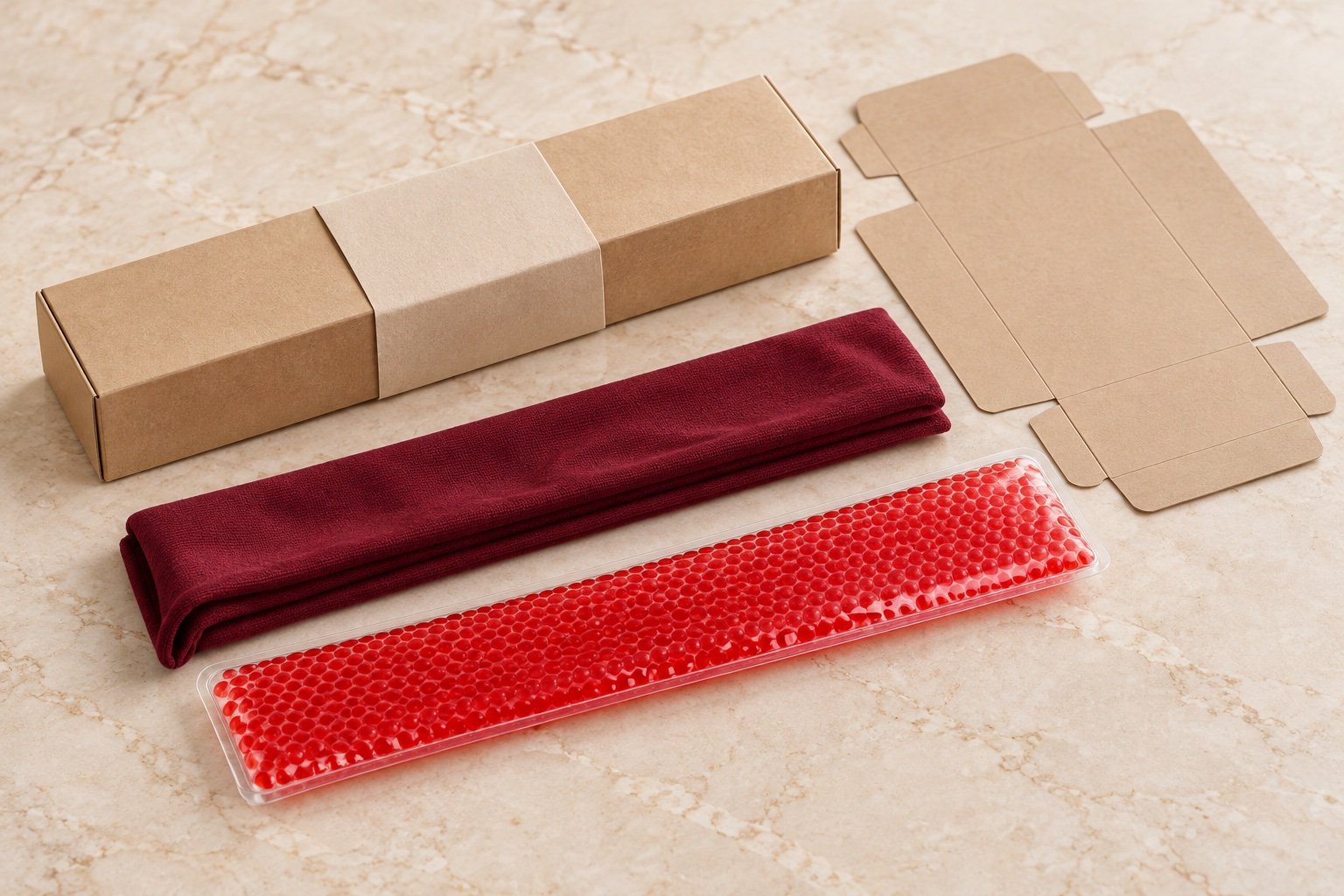
- Review branding and packaging at production scale. Confirm print placement, legibility, color expectations, and how the product is protected in its intended pack-out.
- Consolidate feedback into one revision list. Identify each approved point, change request, and open question before the next sample or production approval.
Questions to ask before a bulk order
Material decisions affect commercial planning as well as product performance. Before placing a bulk order, ask the supplier to clarify:
- Which material and layer structure are included in the quote?
- Which dimensions, fill weight, seal details, and color references are confirmed?
- Does the quoted PVC gel pack MOQ differ from the MOQ for a TPU or laminated construction?
- Which sample version is the production reference, and how will revisions be documented?
- What artwork, packaging files, or approvals are required before production planning begins?
- What open items could change the price, lead time, or packaging method?
Clear answers help purchasing teams compare like for like. They also make it easier to decide where a premium material is worthwhile and where a simpler construction will better support the target cost. Record the final choice in a reusable hot and cold pack specification rather than leaving the material decision only in a quotation.
Standards and technical references for material comparison
Material names alone do not establish thickness, weldability, seal quality or finished-product durability. Buyers should compare the specified grade and complete construction using agreed measurements and tests.
- TWI’s RF-welding material guidance explains that PVC and polyurethanes are commonly RF welded, while other polymers may require special conditions.
- ASTM F2251-13(2023) covers contact-micrometer measurement of flexible-packaging thickness and states that buyer and producer must jointly determine acceptability criteria.
- ASTM F88/F88M-23 covers seal-strength measurement for flexible barrier materials and helps define a repeatable comparison of candidate constructions.
Scope note: These references do not rank PVC, TPU or laminated nylon as universally superior. Final selection should be based on the specific grade, gel compatibility, sealing process, use conditions, sample evidence and destination-market requirements.
Choose reusable gel ice pack materials around the product brief
PVC, TPU, and laminated nylon each have a place in custom reusable gel ice pack materials planning. The right choice depends on the pack’s shape, intended handling, surface feel, package format, price position, and the complete construction behind the material name. Use Cryozin’s ice pack material selection framework to organize the candidate construction and evidence needs. For broader project planning, explore Cryozin’s cold therapy solutions for brands and industries and manufacturing background.
If you are comparing PVC, TPU, or laminated nylon for a custom program, send Cryozin your target dimensions, application, quantity range, artwork status, and destination market. That information supports a more useful sample recommendation and OEM/ODM quotation.
Scene images are editorial concepts based on catalog references, not evidence of a factory, customer project, test or approved configuration. Catalog images illustrate visible product form only.
