

Build your construction cooling gear order around the jobs people do and the equipment they already wear. A crew that returns to a staffed trailer between tasks can support a different setup from workers who move between sites all day. Compare vests, neck accessories, and helmet liner candidates by fit and preparation, then issue each item to the roles that can use it as intended.
This guide gives site buyers a role-by-role equipment matrix, a practical sample review, and a quotation checklist. Use the employer’s heat plan to set water access, recovery breaks, and a cooler place to rest. Review optional cooling gear alongside those measures and the protective equipment required for each task. OSHA guidance on water, rest, and shade
On this page
Start with the job and the issue point
Take the crew roster to the site supervisor before opening a catalog. For each role, record the task, clothing and protective equipment, movement, and where people return between assignments. Two workers on the same site may have very different access to a cooled break area or a place to prepare replacement inserts.
OSHA identifies workload, environmental conditions, and clothing or protective gear as factors in occupational heat stress. NIOSH recommends engineering and work-practice controls, including changes to the work or schedule that reduce exposure. Use the site’s assessment and controls to set the purchasing brief. OSHA heat hazard recognition NIOSH workplace recommendations for heat stress
Assign a named location to each option. A base trailer can hold prepared stock only if the selected preparation method, equipment, space, and access are confirmed. A mobile crew needs a handoff it can actually reach. For towel or other water-activated options, check where workers can wet, store, and clean the item under its instructions.
Match construction cooling gear to each crew role
Use the matrix during a walk-through with the safety lead. Treat each row as a screening decision. The final assignment depends on the task, the full equipment combination, and the approved sample.
| Work setting | Candidate to review | Before assigning it |
|---|---|---|
| Ground crew returning to a staffed base | Pocketed vest and matching removable inserts. | Fit the loaded garment with actual work layers. Confirm a staffed preparation and exchange point. |
| Mobile inspection or logistics crew | A compact neck accessory or water-activated option, where the role and preparation support it. | Check collars, straps, head movement, water or reconditioning access, and the route back to stock. |
| Crew using a harness or required visibility garment | Start with the worn equipment combination. Shortlist a cooling option only after the combination is reviewed. | Check the task and the loaded sample with the site’s responsible person. Preserve access, fit, and the required protective function. |
| Crew using a specific helmet or face and hearing attachments | A liner candidate for the exact helmet configuration, subject to documented accessory permission. | Record the model and suspension. Confirm the manufacturer’s guidance and site approval before adding the liner to the issue list. |
Several rows can apply to the same person. A worker who returns to the trailer might have a workable insert exchange route and still need the loaded vest checked with a harness or visibility garment. Record both decisions in the same roster entry before assigning the product.
Shortlist the format and review the whole assembly
Vest and inserts for a crew with a staffed exchange point
Request the loaded garment as the sample. Check the shoulders, closures, reach, and movement over the actual work layers. Ask the supplier to identify the carrier, insert drawing, pocket locations, filling, and approved preparation instructions as one configuration. This helps the buyer order matching replacement inserts later.
Cryozin’s gray pocketed cooling vest is a reference option with four removable packs in its regular configuration, two at the front and two at the back. Confirm whether the order uses phase change material (PCM) or gel inserts, and match any spare to the approved pocket and insert. For a more detailed comparison of loaded garments and order units, see the work cooling vest buyer’s guide.
Cryozin can quote reflective trim and a custom vest color. If crews wear high-visibility clothing or a harness, bring those items to the fit review and check the loaded vest with the actual layers and equipment.
Neck accessories for a role that can wear them without interference
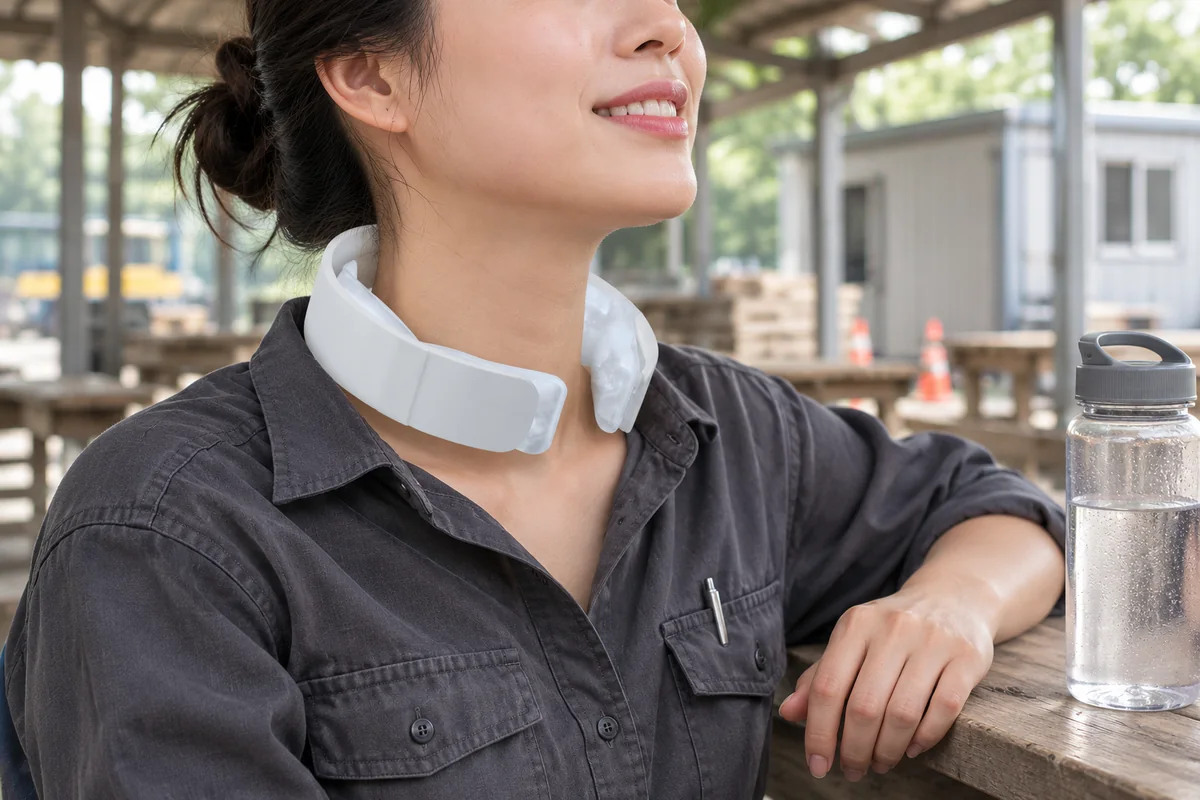
Check the opening and fit with the collar and chin strap the worker already uses. Review head movement, retention, and contact with other equipment. A neck item that moves into a strap path during an ordinary task needs a different format or assignment. Compare a ring with a flexible wrap if the opening or closure changes how the item can be worn.
A broad-cell PCM neck ring provides one construction to review. Check the front gap, chamber layout, fit, and conditioning instructions for the sample. The neck ring and wrap comparison covers the differences in more detail.
Helmet liner candidates for an exact model review
Record the helmet model, suspension, chin strap, and any face, hearing, or other attachments before requesting a liner sample. Confirm the helmet manufacturer’s instructions for the intended accessory and configuration. OSHA’s head protection bulletin describes manufacturer-approved accessories and directs users to the manufacturer’s guidance for use, care, and storage. OSHA head protection bulletin
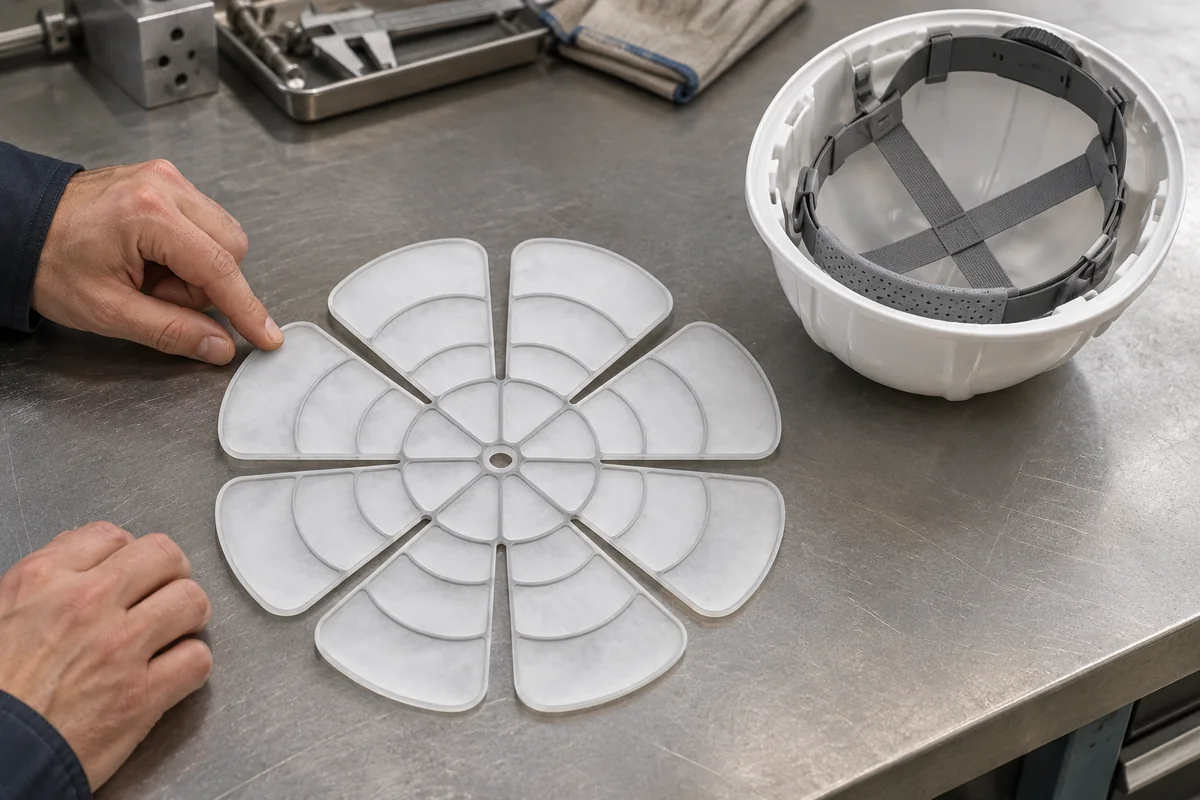
Cryozin’s 22 cm segmented PCM liner is an accessory candidate to evaluate against a specific helmet. A matching diameter is one drawing check. Hold the issue decision until the manufacturer’s instructions and your site review cover the actual combination. Use the helmet liner selection guide for the separate compatibility checks.
Walk the exchange route before ordering spare packs
Start at the preparation area and follow the route an insert will take to its wearer and back. Choose distinct places for prepared stock, returns awaiting inspection, and items to be cleaned or prepared again. Identify who checks the stock when a shift begins and who handles a mismatch or damaged pouch.
Consider an illustrative site with an early crew working next to a staffed trailer and a later crew leaving from a satellite yard. The early crew can test an insert exchange at the trailer. The later crew needs a documented preparation and handoff arrangement at the yard or an alternate format suited to its access. A tray of spare inserts back at the trailer does little for a worker who cannot return to it.
Rehearse the handoff using representative filled samples and the equipment you intend to use. Record the number of matching items you can prepare and stage under the chosen instructions, when crews can actually collect them, and who can tell approved models apart. Set the spare quantity from the trial, the shift overlap, and the units still being prepared. Ask for the exact compatible insert as a separate quotation line.
Cryozin’s standard gray vest set contains one garment and four inserts. Buyers decide how many spare inserts to order for their site. Request that quantity on a separate quote line and use the insert specification approved for the vest.
Send one buying brief for the whole crew
Give suppliers the same roster assumptions so the quotes cover comparable equipment. The blank fields below can go into an email or purchase worksheet.
| Send this field | What to record |
|---|---|
| People and tasks | Crew roles and counts by shift, clothing, required equipment, and movements to check. |
| Configuration | Candidate product and sample revision, size mix, supplied components, and any exact helmet model. |
| Preparation and handoff | Approved method, location, available equipment, staged stock, collection route, and person responsible. |
| Quotation units | Separate complete sets, carrier-only units, compatible replacement inserts, and packaging. State the quantity for each. |
| Sample approval | Loaded fit, instructions, accessory documentation where applicable, handoff rehearsal, and who approves. |
| Delivery | Destination, date needed for issue, and any labeling or carton requirements. |
Before approving the order, review an assembled sample for each proposed role and document who signs off on fit, instructions, compatibility, and the issue route. If the configuration changes, record the revised component IDs and confirm the affected rows again.
Common questions before buying for a crew
Should everyone receive the same cooling gear?
Use the same configuration when workers have comparable tasks, equipment, fit, and access to preparation. Where any of those conditions differ, compare separate assignments. The roster gives the buyer a way to explain the quantities in the quote.
Can we buy spare inserts from a different vest style?
Check the specific carrier and approved insert drawing, including dimensions, compartment shape, attachment points, and filling. Use the matching part number in the quote and confirm the loaded sample before placing the order.
What should we do if the crew has no dependable place to prepare PCM packs?
Ask the site team to verify a preparation and handoff route first. A water-activated item may be a candidate where its instructions, water access, and work conditions fit. Keep the chosen option tied to what workers can actually use at that location.
Request a crew cooling gear quote
Send the role counts, required work equipment, candidate formats, preparation setup, and delivery location. Specify whether you need complete garments, compatible spare inserts, or individual accessories. Cryozin can review catalog options and the sample configuration against that brief. Browse Cryozin’s outdoor cooling range.
Request a crew equipment quote
These AI-assisted use scenes are based on the corresponding Cryozin catalog products. Worksite settings and props are illustrative.
Sources for site and product review
- Workplace factors that affect heat stress. OSHA heat hazard recognition
- Water, recovery breaks, and cooler rest locations. OSHA guidance on water, rest, and shade
- Engineering and work-practice controls for heat exposure. NIOSH workplace recommendations for heat stress
- Manufacturer guidance and approved accessories for head protection. OSHA head protection bulletin
