

Cover image: AI-assisted editorial scene based on the catalog insert. The separate helmet provides context and does not demonstrate compatibility.
Choose a hard hat cooling liner by the helmet manufacturer’s accessory requirements first, then by cooling method and preparation routine. A PCM insert and a water-activated pad require different inputs. Neither should be selected from its diameter or a cooling-duration headline alone.
For workwear distributors and procurement teams, the first useful question is whether the proposed accessory is permitted for the exact helmet system. Once that is established, compare how it is prepared, attached, handled, and supplied.
On this page
Separate the two product routes
“Cooling liner” describes a product’s position and purpose, but it does not identify its cooling mechanism.
| Route | What the buyer is evaluating | Questions before requesting samples |
|---|---|---|
| PCM liner | A sealed insert using a specified phase-change material | What PCM grade and preparation method are proposed? What evidence applies to the complete insert? |
| Water-activated pad | A pad designed to be wetted and used according to its instructions | What wetting method, water access and handling routine does the exact model require? |
For an example of the second route, Allegro’s 8407 technical sheet describes a cotton liner with absorbent polymer material, a soaking step, and a harness attachment. The linked sheet is revision E, dated January 24, 2023. It illustrates that manufacturer’s construction; its preparation and compatibility statements do not apply to a sealed Cryozin PCM insert.
A buyer considering Cryozin’s PCM head-cooling products should therefore request a PCM-specific product record. Do not infer that Cryozin supplies the water-activated alternative because the two formats appear in this comparison.
Check the helmet’s accessory rules before testing fit
Write down the helmet make, model, suspension, size range, and other accessories already in use. Obtain the current helmet instructions and identify who can approve the proposed accessory combination.
Restrictions can be specific. In its V-Gard H1 accessory instructions, MSA limits the approved integrated system to the specified accessories. That is a model-specific instruction, not evidence that an independently supplied cooling pad is approved for that helmet.
If the instructions exclude the proposed accessory, a comfortable physical fit does not resolve that restriction. Pause that combination and consult the helmet manufacturer. Do not cut, drill, relocate suspension parts, or improvise an attachment to make a liner fit.
Where the accessory is permitted, document the specified installation and evaluate the actual assembly. Similar-looking helmets can have different suspension geometry, padding, ventilation paths, and accessory locations.
Compare the prepared assembly, not just the loose pad
Ask for overall dimensions, thickness, filled or wetted mass, edge construction, and attachment details. Then determine which measurements apply before preparation and which apply in use.
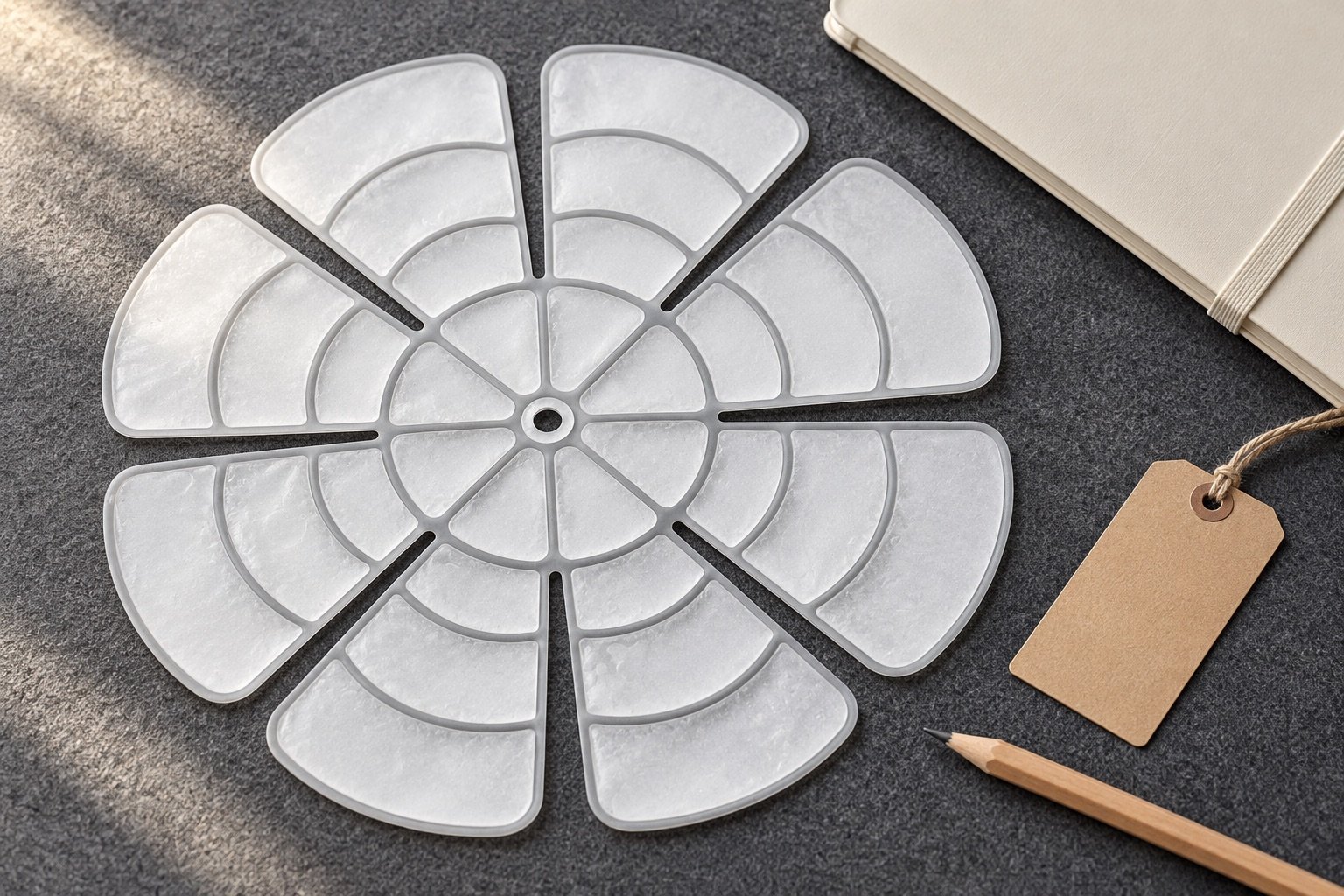
A flat outline drawing cannot show every interaction inside a helmet. Record where chambers, seams, tabs, and closures sit relative to the suspension. Review the installation with the other accessories included in the intended configuration.
For water-activated models, use the exact preparation instructions. Ask the supplier for the prepared thickness and mass, and examine the sample in that state. A dry sample alone does not answer how the assembly will fit or handle after its specified preparation.
For PCM models, ask how the proposed conditioning procedure affects handling and shape. Do not assume that a listed phase-change temperature establishes the temperature at every contact point or the duration of useful cooling. The existing PCM phase-change temperature guide explains the material-specification questions in more detail.
Match preparation to the buyer’s operation
Before choosing a route, describe the preparation facilities available to the intended customer. A product that is practical at a fixed site may require a different routine for a mobile team.
For a PCM proposal, ask about conditioning equipment, storage, staging, spare inserts, and the method for deciding when an insert is ready. For a water-activated proposal, ask about water access, wetting, handling, reactivation, drying, and care. Record the product-specific instructions rather than inserting a universal time.
If the project includes torso cooling as well, compare that separately using the work cooling-vest technology guide. A vest comparison cannot establish the suitability of an accessory inside a helmet.
Then consider ownership. Who prepares the liner, checks its condition, issues it, and removes damaged units? These operational questions can distinguish otherwise similar sample offers without relying on an unsupported performance ranking.
Ask what a cooling claim actually measures
A statement such as “lasts for hours” needs a defined measurement. Ask the supplier for the exact product, preparation condition, ambient exposure, mounting arrangement, measurement location, and endpoint behind the statement.
Different suppliers may describe material phase behavior, a surface temperature, or wearer feedback. Those are different observations. Compare results only when the methods and intended outcomes are sufficiently aligned.
Keep comfort accessories within the wider workplace plan. NIOSH’s workplace heat recommendations address engineering and work-practice controls, hydration, acclimatization, and rest breaks. The presence of a cooling liner does not establish that those measures have been met or prove prevention of heat illness.
A helmet-liner supplier review card
Use one record for each exact helmet-and-liner combination. This editorial checklist organizes a procurement discussion; it does not certify protective equipment.
| Field | Evidence or decision to record |
|---|---|
| Helmet system | Make, model, suspension, size and other accessories |
| Accessory permission | Applicable instructions and manufacturer confirmation where needed |
| Liner identity | Supplier, model, drawing, revision and cooling route |
| Prepared condition | Instructions, dimensions, mass and handling state |
| Attachment | Approved installation method and component locations |
| Assembly review | Clearance, suspension interaction and unresolved compatibility issues |
| Cooling evidence | Method, conditions, measured endpoint and applicable report |
| Daily routine | Preparation, issue, storage, care and removal criteria |
| Supply unit | Liner, any separate components, instructions and retail packaging |
| Release decision | Responsible reviewer, unresolved items and conditions for approval |
Keep helmet compatibility separate from the supplier’s commercial quotation. A price, sample shipment, or material declaration cannot stand in for approval of the assembled system.
What can buyers discuss with Cryozin?
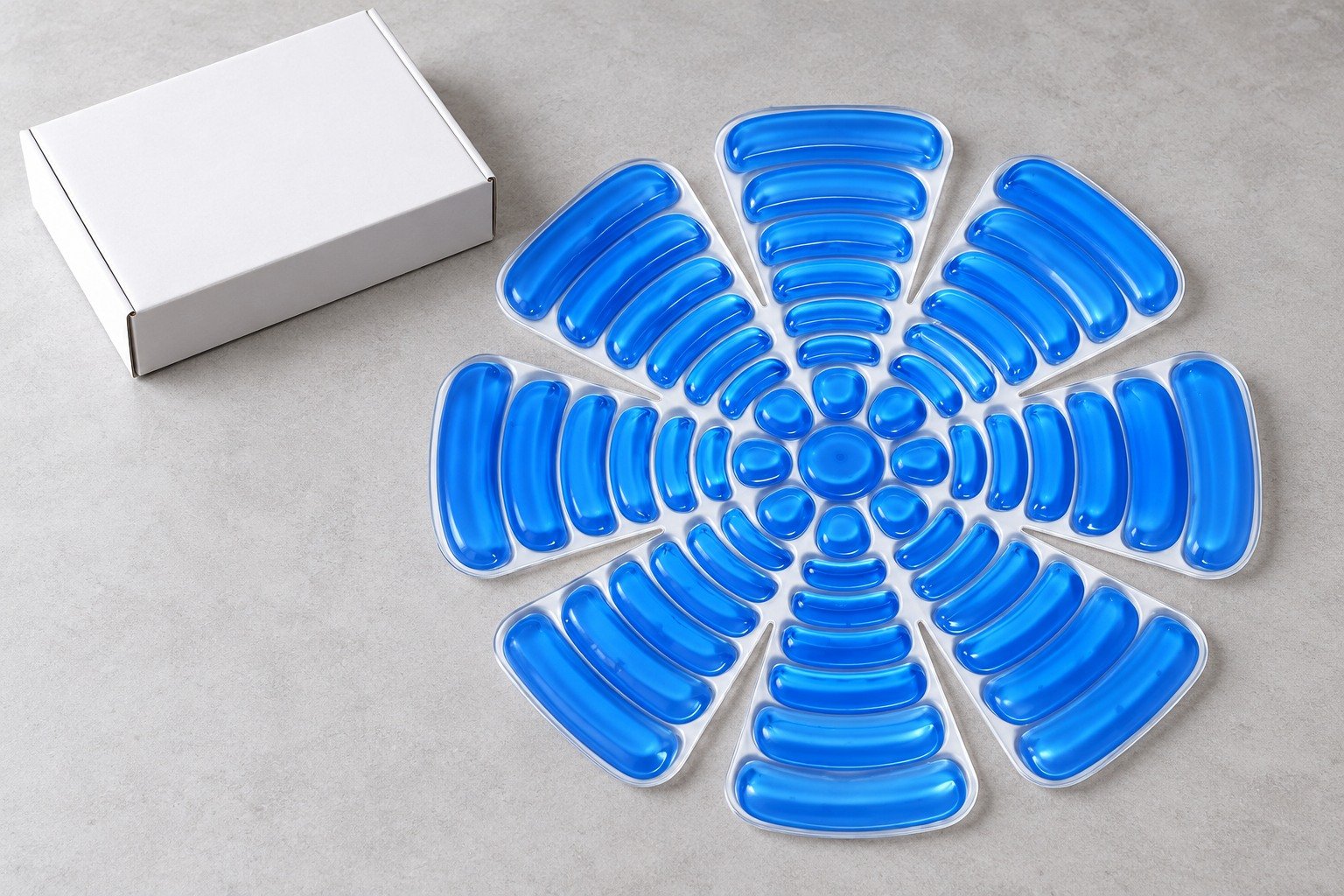
Cryozin currently lists a segmented PCM helmet liner and a separate blue PCM liner with a box. Their product records should be reviewed individually; this article does not establish compatibility with a particular helmet or a shared performance specification.
Send the intended helmet system, the manufacturer’s accessory requirements, required liner geometry, preparation facilities, target market, and complete packaging brief. Request a configuration review from Cryozin before treating a catalog example as an approved accessory.
Does a matching diameter establish compatibility?
No. It does not settle suspension clearance, attachment, the prepared shape, or the helmet manufacturer’s accessory restrictions. Review the permitted complete assembly.
Is a water-activated pad the same as a PCM liner?
No. Confirm the exact cooling mechanism and product instructions. Similar placement inside a helmet does not make the materials or preparation methods interchangeable.
Can a buyer choose from cooling duration alone?
A duration without conditions is insufficient for comparison. First establish accessory permission, operational suitability, and the measurement behind the claimed result. Then decide which sample merits further evaluation.
Sources and scope
- MSA — V-Gard H1 accessories: restrictions for that helmet system; no endorsement of a Cryozin insert.
- NIOSH — Workplace recommendations: workplace prevention context, updated July 16, 2026; not a cooling-liner approval.
- Allegro — Model 8407 technical sheet: revision E, January 24, 2023; its own cotton/polymer construction and preparation route only.
- Cryozin product records linked above: catalog configurations only; specific helmet approvals and performance results remain project questions.
