
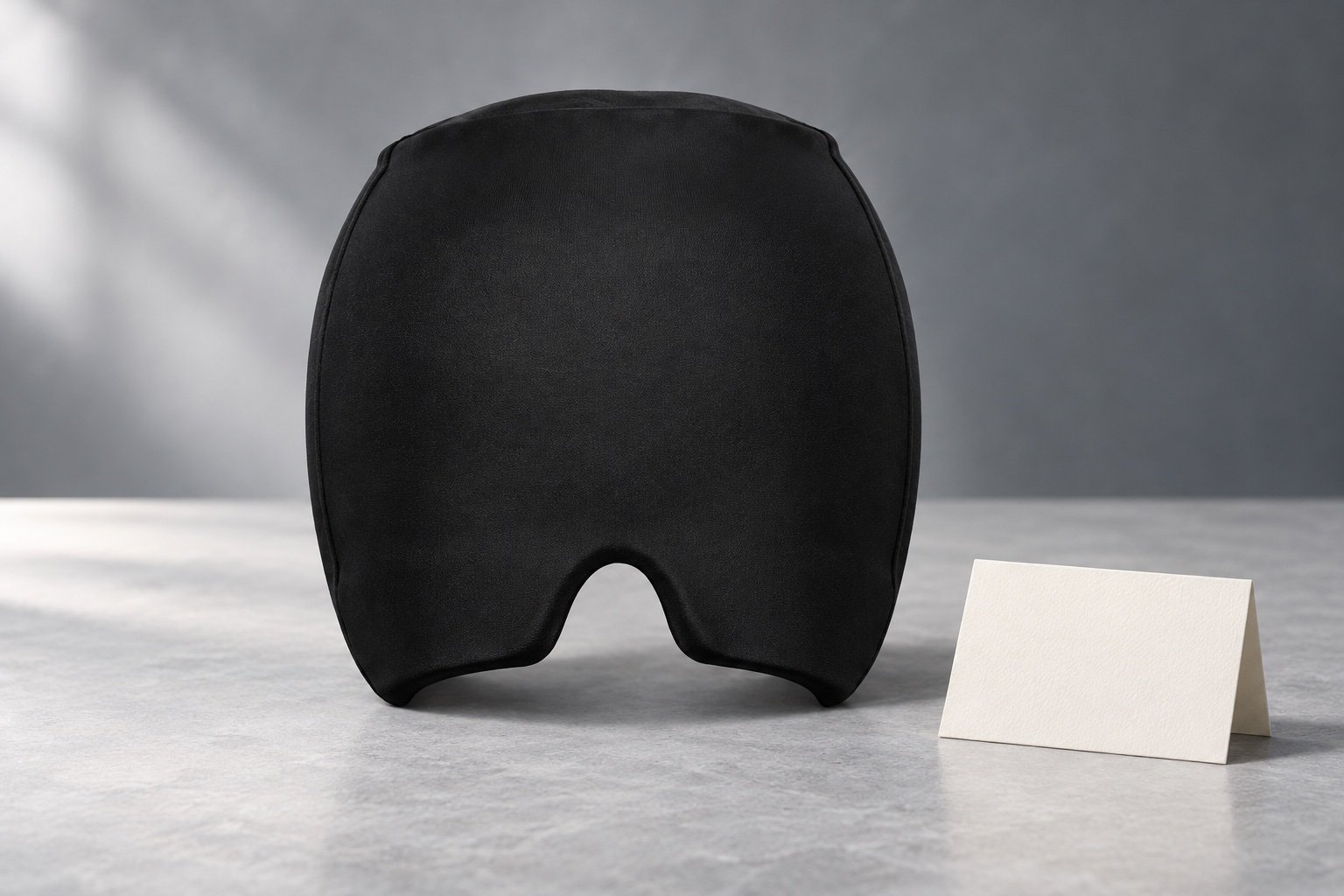
Migraine cooling cap product design starts with a coverage and fit brief, not a “one size fits all” label. Brand owners and purchasing teams should define where the cap sits, how the filled product stretches, what the wearer can adjust, and how the complete sample will be prepared, cleaned, and inspected.
For buyers developing a reusable gel cap, the useful question is: can this construction deliver the intended fit and handling consistently across the target users? This guide turns that question into a specification card and sample review. It is not a migraine-treatment guide and does not establish clinical effectiveness for any cap.
On this page
Choose the coverage pattern before the size range
A cap that covers the forehead and eyes is a different product from an open-eye headband or a crown-covering design. Draw the intended position from the front, side, and rear. Mark the zones that need an insert and the areas that need clearance. Do not use “360-degree coverage” as a substitute for this drawing.
- Forehead-and-eye format: define the lower edge, nose clearance, and whether the eyes are intentionally covered. Review how the wearer locates and removes the product when vision is obscured.
- Open-eye format: define the gap above the eyes and whether the edge stays there when the filled cap moves.
- Crown-covering format: inspect the top seam, crown depth, hair accommodation, and how the loaded construction sits when the user changes position.
These are development options, not claims that every configuration is available or suitable. Cryozin’s full-head gel cap with a lower face opening is a catalog-format reference. Confirm its actual bill of materials, fit range, instructions, and approved claims before treating it as a production specification.
Decide between an integrated cap and removable inserts
An integrated gel construction can reduce the number of loose components. Its filled sections, textile surface, seam layout, and care method must work together. Ask what is permanently enclosed and what can actually be separated; an exterior that looks like a washable hat does not establish that the complete assembly is washable.
A pocket-and-insert design gives buyers a separate textile and pouch specification. It also creates extra checks: pocket opening, insert identification, retention, correct orientation, and whether a replacement insert fits. If several inserts are used, define their positions rather than expecting the user to guess.
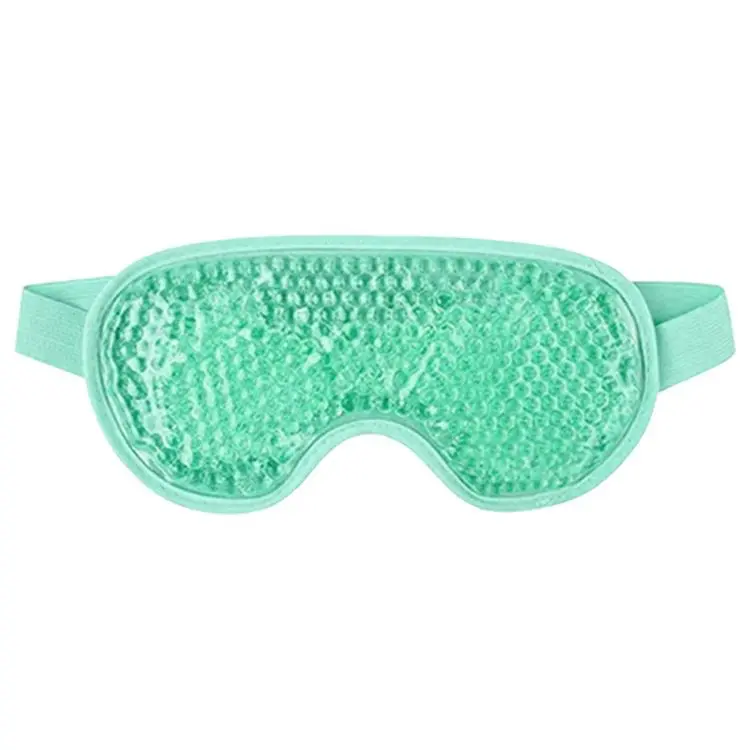
Neither route is automatically better. Choose the simpler route that meets the program’s coverage, preparation, care, and replacement needs. If the product brief changes from an integrated cap to removable inserts, obtain a new paired sample; the old fit approval should not automatically carry over.
Specify fit in the filled and prepared states
Record the finished opening, crown depth, key seam positions, filled weight, and how each dimension is measured. An empty textile shell and a filled cap may not fit alike. Use the custom ice pack measurement guide to keep measurement states explicit.
Define the intended head-size range and a representative fit-review group. Record relevant hair and clothing conditions rather than relying on a single model photograph. Review the sample unprepared and under its proposed preparation conditions. A room-temperature fit check alone cannot establish cold-state handling.
During a supervised, approved sample evaluation, record placement, edge migration, ease of putting on and removing, seam contact, and adjustment access. Stop a fit check if the participant reports discomfort; it is not a clinical trial. A snug fit is a design observation, not a measured compression level or a therapeutic outcome.
A “one size fits most” statement needs a defined range and actual fit evidence. If one construction does not cover that range acceptably, discuss size options or an adjustable route instead of stretching the claim.
Close the gel, textile, and seam specification together
List each filled section, the nominal fill amount, pouch or enclosed-layer construction, textile composition, stretch direction, and seam map. Where the supplier uses a trade description such as “ice silk” or “soft gel,” request the underlying material specification. A familiar marketing name is not a complete bill of materials.
Define how fill distribution and cold-state pliability will be compared. The guide to gel pack flexibility after freezing explains why preparation conditions belong in the acceptance plan. Do not infer flexibility, cooling duration, or skin-contact suitability from color or appearance.
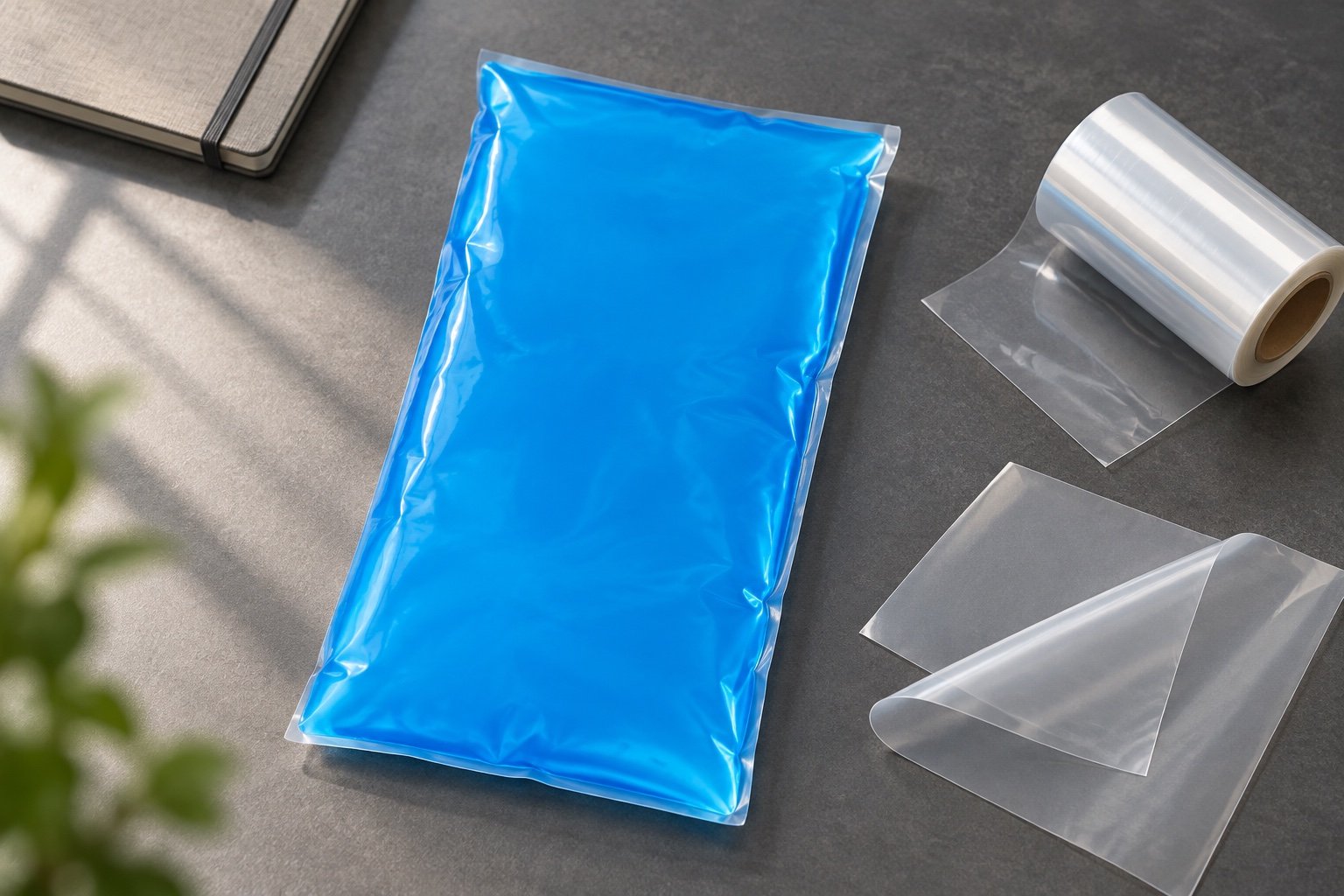
Review the finished seams and any pocket edges against the intended placement. Keep bulky intersections away from sensitive contact locations where practicable, and verify the actual sample rather than assuming a drawing predicts comfort. If a separate barrier or liner is included, approve it as part of the assembly.
Keep preparation, care, and claims product-specific
The cap, insert, cover, storage bag, and instructions must agree. Confirm which components may be chilled, whether any warming route is authorized, how the textile is cleaned, and when the user should replace a damaged product. Do not transfer heating times or temperatures from another gel pack.
For U.S. projects, the FDA’s device-determination guidance begins with intended use and indications. Have a qualified reviewer establish the route for the exact product and wording. This article does not classify a cap or claim FDA approval.
The FTC’s Health Products Compliance Guidance also addresses express and implied health claims. A product name, image, testimonial, or packaging headline can communicate a treatment promise. Claims such as “relieves migraine,” “clinically proven,” or “works for everyone” require applicable support; a design sample cannot supply that evidence.
Do not equate a reusable comfort cap with a chemotherapy scalp-cooling system. They have different intended-use and evidence questions. Keep unsupported medical uses out of the project’s artwork and sales copy.
Cooling cap development card
Use this editorial worksheet to prepare a supplier discussion. It is not a certification checklist or an approved product standard.
- Program and market: target user, distribution channel, country, intended use, and proposed claims for review.
- Coverage drawing: front/side/rear views, eye coverage, nose and ear clearance, crown depth, and edge positions.
- Construction: integrated or removable-insert route; number and location of filled sections; complete component list.
- Fit: target range, measurement state, adjustment method, hair considerations, and representative review group.
- Materials: textile composition and stretch direction; fill, enclosure, seam, liner, and closure specifications.
- Preparation and care: exact approved instructions, component separation, storage, inspection, and replacement rules.
- Approval evidence: sample revision, recorded conditions, fit observations, leak/seam checks, and agreed acceptance criteria.
- Commercial handoff: quantity, color split, branding area, packaging, documentation needs, and requested delivery window.
Approve, revise, or hold the sample
Approve only when the agreed fit, construction, handling, instructions, artwork, and evidence gates are closed. Retain the approved sample and revision record.
Revise when a defined defect can be corrected, such as edge migration, a difficult pocket opening, or inconsistent insert orientation. Change one factor where possible and compare the revised sample under the same recorded conditions.
Hold when the intended use, claims, preparation instructions, material identity, or a safety-critical acceptance criterion remains unresolved. Do not use a visually attractive sample to override a missing evidence gate.
Questions buyers often ask
Does more gel automatically make a better cap?
No. Fill amount changes the loaded product and must be considered alongside coverage, weight, handling, fit, and the required thermal evaluation. Compare complete samples; do not turn extra weight into an unsupported cooling-duration claim.
Can the textile cap and gel insert be cleaned together?
Only if the approved instructions for that exact assembly permit it. A removable textile component may have a different care route from the sealed insert. Validate the proposed care method before printing it.
What should a brand send for an initial discussion?
Send the coverage drawing, target fit range, preferred construction, intended use, market, quantity, and packaging requirements. These inputs make it easier to identify what can use an existing format and what needs development.
Turn the coverage brief into the next sample
A useful cooling cap brief connects the filled construction to real fit, clear instructions, and an evidence-based approval decision. Explore Cryozin’s custom ice pack design options, then send your cooling cap development card for a requirements review. Ask the team to confirm the proposed configuration and documentation before committing to a production specification.
Sources and further reading
- FDA: How to Determine if Your Product is a Medical Device — intended-use review, not a product approval.
- FTC: Health Products Compliance Guidance — advertising substantiation, not proof of cap effectiveness.
Scene images are editorial concepts based on catalog references, not evidence of a factory, customer project, test or approved configuration. Catalog images illustrate visible product form only.
