
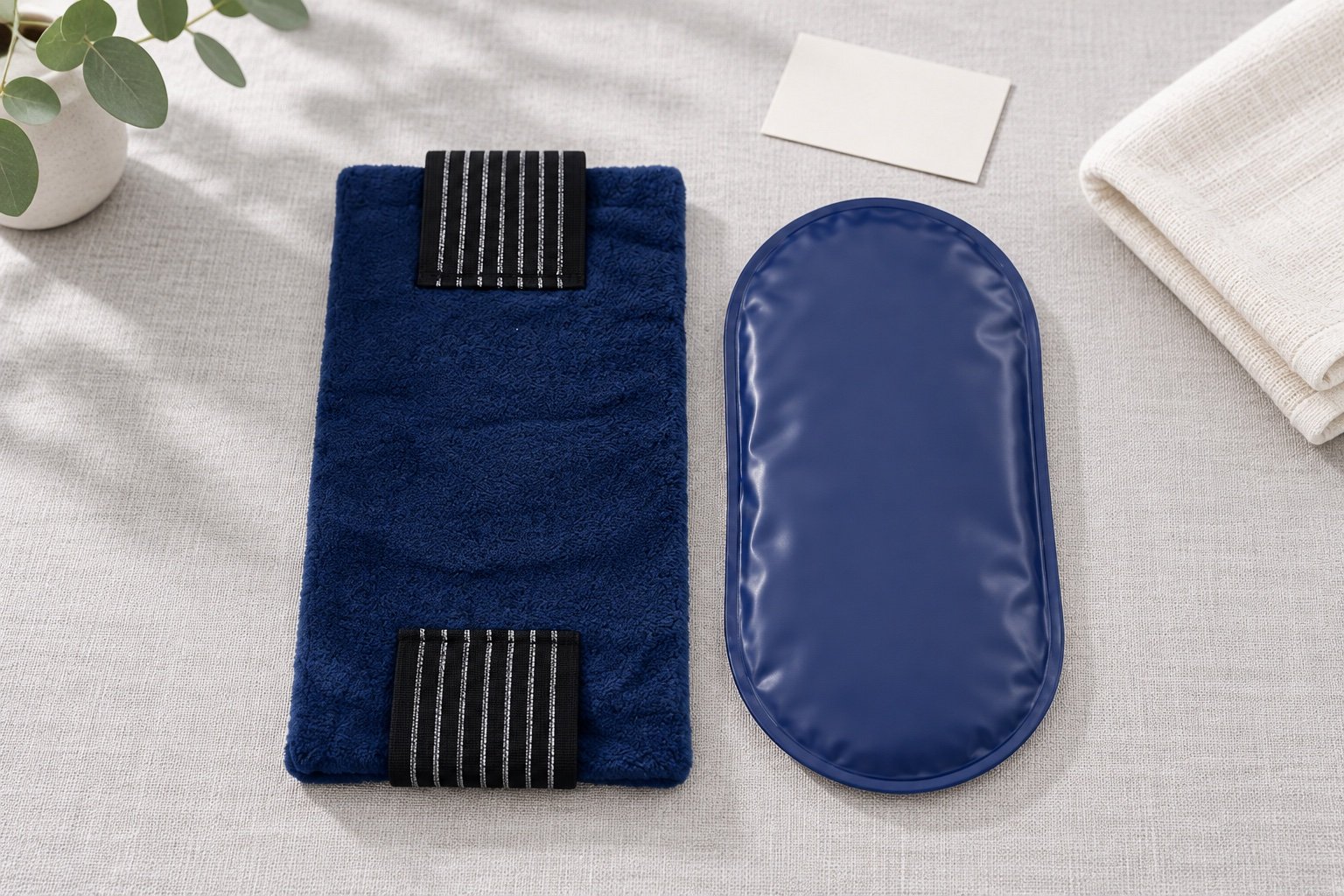
A back ice pack wrap is more than a cold insert with a belt attached. For a brand or procurement team, the hard questions are where the insert should sit, how the carrier behaves when the wearer sits or moves, and which sample will be the production reference. This guide turns those questions into a practical design and approval brief for a reusable lower-back wrap. It is about product development, not treatment advice or a promise of therapeutic results.
On this page
Start with the intended fit, not a catalog size
“Back wrap” may mean a narrow lumbar band, a broader hip-and-lower-back carrier, or a modular wrap that accepts a removable gel pouch. Those formats do not share one ideal outline. Define the intended coverage area, wearer size range, clothing layer, posture, and whether the insert must be removable before requesting a pattern. A product photograph alone cannot answer these questions.
For example, a retail brand planning one adjustable format may prioritize a generous fastening range and straightforward insert replacement. A distributor supplying several private-label sizes may instead need tighter size bands, controlled part numbers, and clear instructions for matching the insert to the carrier. Neither route is inherently superior; the intended users and order mix determine the specification.

Five decisions that make the wrap usable
1. Coverage and insert position
Specify the target area on a simple body outline and state whether the insert should cover the central lower back, one side, or a wider hip-and-back region. Then record the usable pocket dimensions and the allowed movement of the insert within it. A wider cold pack is not automatically a better fit if it folds at the waist or shifts when seated. The custom ice pack dimension guide explains how to turn a coverage requirement into measurable pack dimensions.
2. Strap route and adjustment range
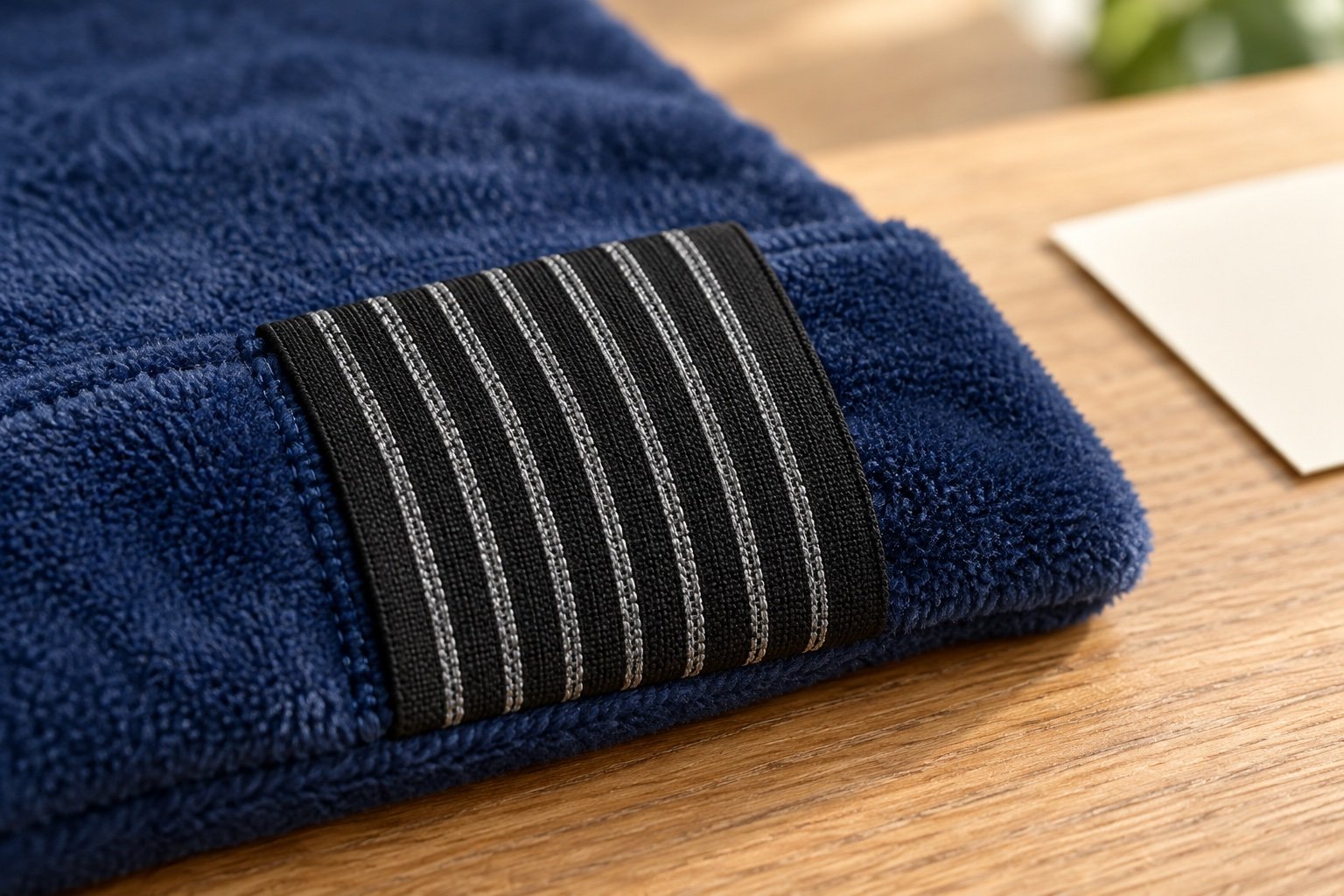
Ask for the minimum and maximum fastening circumference measured on the complete wrap, not just the nominal textile length. Define overlap at both ends of the size range and note whether the closure can be reached and adjusted without twisting the carrier. A single centered strap may behave differently from two independently tensioned straps; test the chosen construction on the intended range of bodies and clothing layers.
3. Pocket access and insert retention
State how the gel pouch enters and leaves the pocket, which edge carries the opening, and what prevents it from sliding out in normal handling. A permanently sewn-in insert changes cleaning and replacement options; a removable insert creates a separate part that needs labeling and pack-out control. The guide to straps, covers and fasteners covers those component-level choices in more detail.
4. Body-facing layer and care
The textile layer is a design component, not proof of a particular skin temperature or safety outcome. Specify the fabric construction, seam placement, edge binding, and intended cleaning method. General NHS guidance for cold packs describes using a cloth barrier rather than placing frozen packs directly against skin; a finished commercial wrap still needs its own evaluated instructions and intended-use review. Do not turn a generic cloth recommendation into a claim that a particular Cryozin configuration is clinically safe. See the NHS patient guidance.
If a removable textile carrier is sold with washing instructions, check them on the actual fabric, fastening and print combination. ISO 6330:2021 defines domestic washing and drying procedures for textile testing; it does not itself certify a finished wrap or prescribe a universal wash cycle. Choose the procedure and acceptance limits for the project.
5. Insert and closure as a matched system
Approve the intended gel pouch, pocket and closure together. An insert with different fill, thickness, chamber layout or cold-state stiffness can change pocket fit and strap behavior even when the flat dimensions look similar. Keep the sample configuration and revision number visible in the approval record. For a concrete format to discuss with your team, see Cryozin’s modular hip-and-lower-back wrap product page; the listed product is an example, not a guarantee that every requested variation has identical materials or performance.
What to put in the RFQ
A useful RFQ describes the complete system in measurable terms:
- Use case: intended buyer, body area, wear conditions and target market.
- Fit: coverage drawing, size range, overlap and adjustment method.
- Insert: dimensions, fill and film specification, chamber layout, removability and matching part number.
- Carrier: fabric construction, stretch direction, pocket opening, seam and edge details.
- Closure: type, position, usable fastening range and replacement expectations.
- Approval: required sample states, named decision-maker, care instructions, packaging and acceptance criteria.
Where a target is still unknown, mark it “to be confirmed” rather than filling a template with an invented number. The product specification template can hold the approved values once the first sample has been evaluated.
How to approve a production-intent sample
Evaluate the actual configuration in three states: laid flat, worn while seated, and worn during ordinary movement. Check whether the pocket holds the insert in the intended location, the edge remains comfortable, and the closure can be adjusted throughout the specified range. Inspect the insert after the intended conditioning procedure; do not infer cold-state handling from a room-temperature mockup. Record photographs, measurements and any deviations against the numbered drawing.
If the product will be marketed for heat as well as cold, test the complete intended configuration and instructions for each mode separately. Do not assume a film, textile or fastener is suitable for microwave heating because another product is. Likewise, a fabric cover should not be described as preventing injury without product-specific evidence and appropriate review.
Frequently asked buyer questions
Should one size fit everyone?
Only if the specified size range, overlap and in-use checks support it. An adjustable closure increases range but does not eliminate differences in torso shape, clothing or intended insert placement.
Is a removable gel insert better than a sewn-in pack?
It depends on cleaning, replacement, assembly and labeling needs. Compare both architectures using the same intended use and evaluate the complete product, not just the pouch.
Can the same wrap be sold for both hot and cold use?
That is a product-specific design and instruction decision. Confirm the exact pouch, carrier, closure, preparation method and target-market claims before making dual-use statements.
Buyer takeaway
Good back wrap design starts with controlled coverage, fit and component interfaces. A production-intent sample should prove that the selected insert, pocket and fastener work together across the declared range—not merely look attractive on a table.
Planning a custom lower-back wrap? Share your target body area, size range, desired insert format, material preferences, packaging and sample-approval criteria with Cryozin through the RFQ/contact page. The team can review which specifications still need to be confirmed before a project is quoted.
Sources and further reading
- Barnsley Hospital NHS Foundation Trust: applying ice packs — general cold-pack skin-barrier guidance, not a claim about this wrap.
- ISO 6330:2021 — defined domestic washing/drying procedures for textile testing, not finished-product certification.
Scene images are editorial concepts based on catalog references, not evidence of a factory, customer project, test or approved configuration. Catalog images illustrate visible product form only.
