
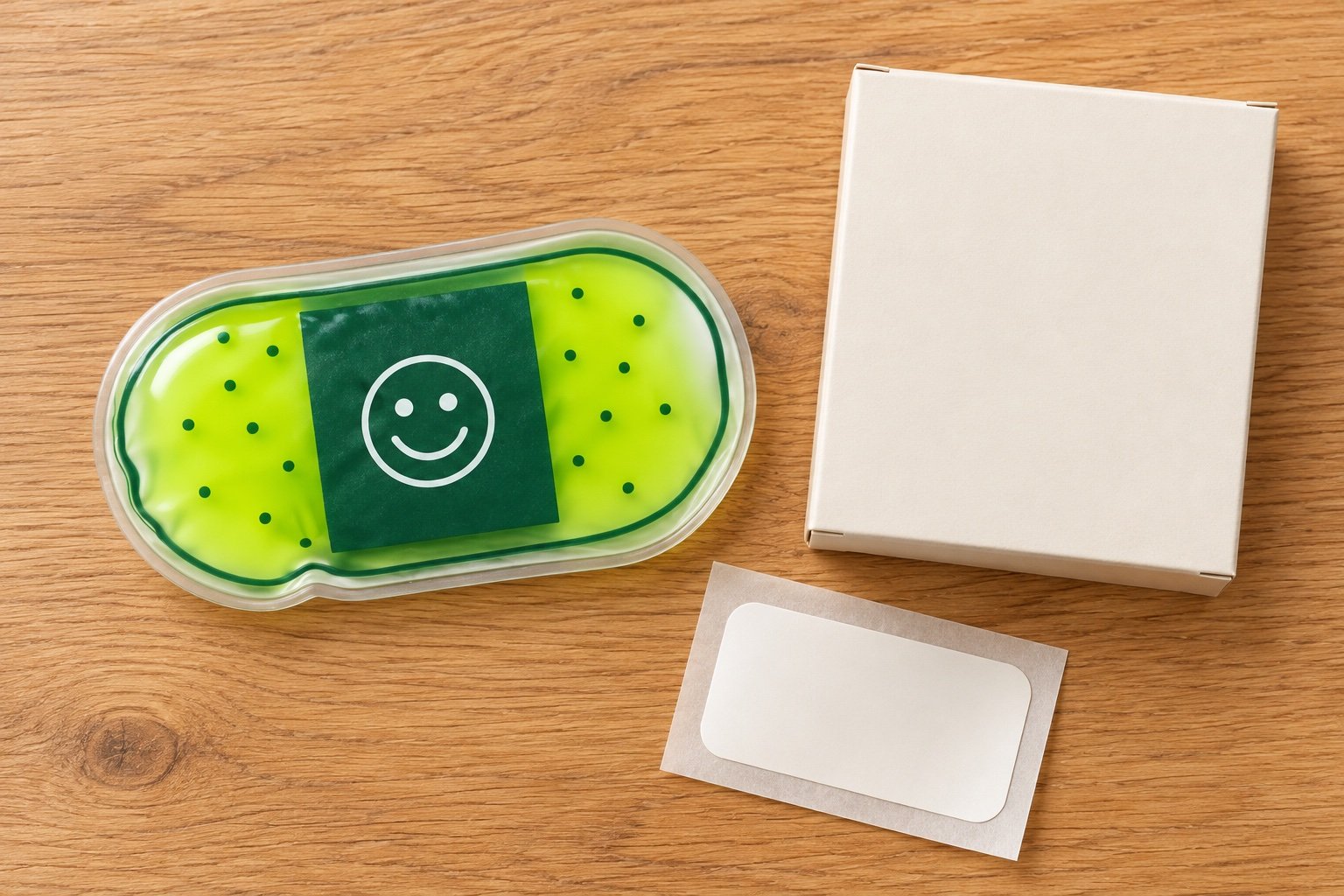
A barcode is only one part of a private-label ice pack launch. The buyer also needs to decide which sellable unit each identifier describes, who controls the product data, and how the final printed pack will be checked. If these decisions are left until the artwork is approved, a visually finished package can still fail a retailer’s receiving or checkout workflow.
This guide focuses on the barcode and label handoff for U.S.-bound private-label reusable ice packs. It is not a universal legal-label checklist: the required wording, markings, and records depend on the product, claims, sales channel, and destination. For the broader pack design, see our private-label ice pack packaging guide.
On this page
Quick answer: what should the buyer send before print approval?
Send a controlled SKU list that ties each intended selling unit to its product description and assigned GTIN, plus the final barcode artwork, packaging-level map, approved dieline, and the retailer or distributor’s label specifications. Name the person who can approve changes. Then request a proof on the actual proposed package construction and a scan or verification check against the approved number before the run is released.
Do not use the illustration in this article as printable barcode art: it is a visual example, not an encoded or verified symbol. Obtain production art and identifier rules from the relevant GS1 organization and your trading partner.
1. Identify the unit that is being sold and scanned
A single cold pack, a two-pack in a retail sleeve, and a carton of multiple sleeves are different commercial configurations. The first question is not “Where do we put the bars?” but “Which item is the customer ordering, receiving, or scanning?” GS1 US explains that packaging levels represent how a product is packed, sold, shipped, and scanned, and that the correct GTIN should be associated with each relevant level. Review GS1 US packaging-level definitions when building the hierarchy.
- Consumer or individual unit: define the exact product, brand, size or configuration, and count that will be sold.
- Inner pack: specify whether it is a fixed multiple of the same unit or an assortment, and how a warehouse will identify it.
- Outer case: record the contained units, case quantity, and the label or barcode information required by the receiving partner.
Do not assume that one barcode belongs on every level, or that a warehouse label is interchangeable with a checkout barcode. The brand owner and trading partner should agree on which levels need identifiers and which symbol format is accepted. A change in brand, contents, or pack quantity may trigger a new GTIN under GS1 management rules; check the GS1 US change guidance before reusing an existing number.
2. Keep identifier ownership separate from package production
For a private-label program, the brand or retailer should confirm who obtains and administers its identifiers and product records. A manufacturer can place supplied, approved artwork on a pack, but a print-ready image alone does not establish that the number is licensed to the correct party or mapped to the right SKU. GS1 US describes the GTIN as the product identifier encoded in a UPC symbol and discusses brand-owner-supplied product data in its Data Hub guidance.
Make a small release register with columns for the sellable unit, brand, product description, size or fill variant, pack count, GTIN, barcode file name, artwork revision, and approver. This is particularly helpful when one reusable gel pack is sold under several brands or with different multipack counts. It prevents a supplier from guessing which code belongs to a packaging version.
Copy-ready SKU and barcode handoff worksheet
Copy one record for each packaging level that your brand and trading partner require. Leave a field open until its owner confirms it; this blank worksheet is not an approved identifier list or a Cryozin verification record.
- Project and release: Buyer/project ____; register revision ____; release date ____.
- Packaging level: Consumer unit / inner pack / case / other ____; quantity contained at this level ____; selling or receiving channel ____.
- Product identity: Brand ____; buyer SKU ____; exact product and pack description ____; product/artwork revision ____.
- Identifier owner: Party responsible for assigning and maintaining the GTIN ____; assigned GTIN for this level, if required ____; product-data record owner ____.
- Artwork and placement: Barcode symbol/art file name and revision ____; approved panel or label position ____; dieline revision ____; print substrate ____.
- Review and evidence: Trading-partner scan or verification requirement ____; production-representative proof/sample ID ____; recorded check and result ____.
- Approval: Identifier/SKU approver ____; artwork approver ____; qualified label-copy reviewer, where applicable ____; final release decision and date ____.
Do not invent a GTIN to fill a blank. Confirm which packaging levels need distinct identifiers, then reconcile this record with the approved physical sample before releasing artwork or reusing a code on a revised pack.
3. Give the printer a controlled artwork package
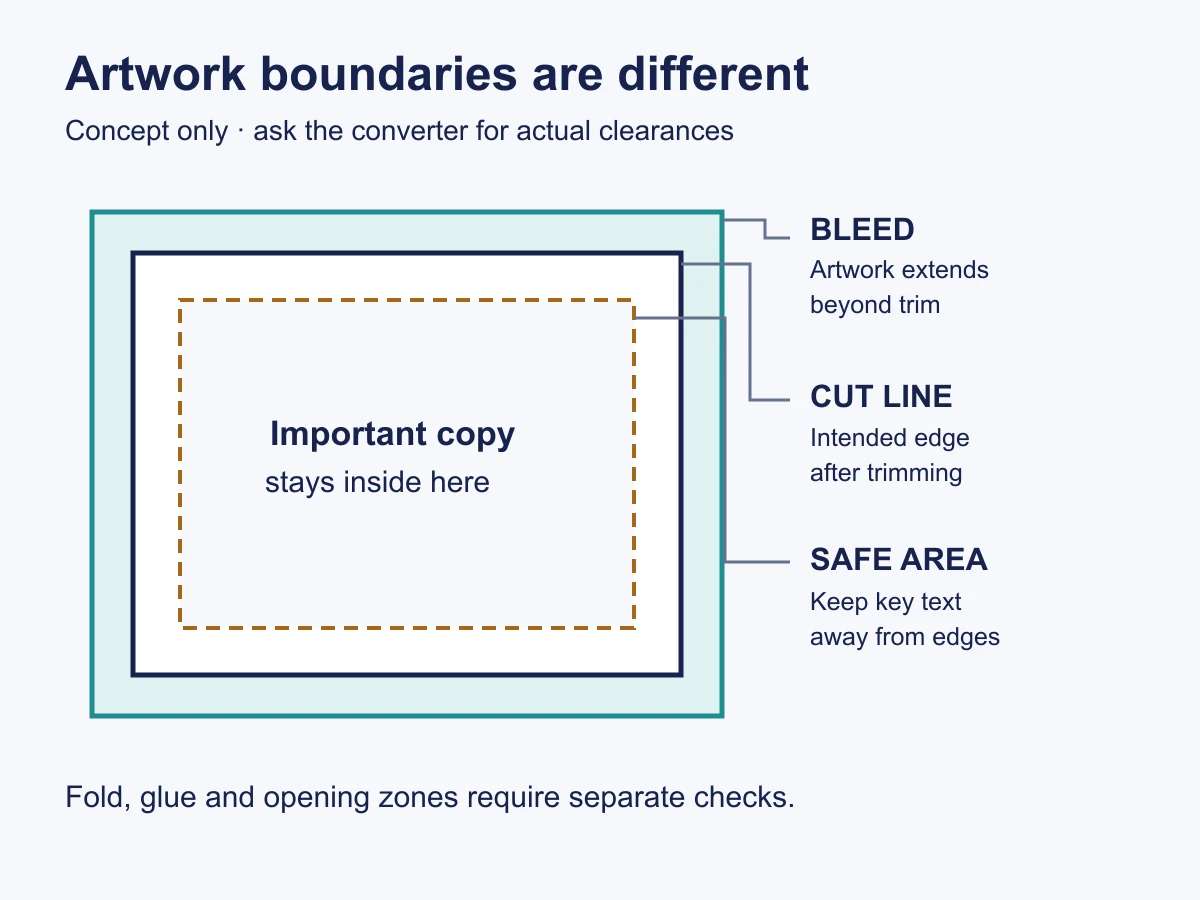
The handoff should contain more than a screenshot of a barcode. Supply the approved symbol file in the format requested by the packaging converter, the corresponding human-readable number, the print-size requirement, and the final dieline revision. Include which panel receives the symbol and which areas must remain free of graphics, seams, folds, or adhesive. For carton construction and proof stages, use our separate packaging dieline checklist.
GS1 US advises preserving the barcode’s quiet zones, using an appropriate dark-bar/light-background combination, avoiding curved or obstructed locations where possible, and not truncating a symbol merely to fit the design. These are general print-readability principles, not a substitute for the specification of your chosen symbology, retailer, substrate, or print process. See the GS1 US placement and printing guidelines.
On a flexible ice pack or clear sleeve, filled shape, glare, creases, and backing color can change how a printed label presents to a scanner. Decide whether the barcode belongs on a flat card, sleeve, carton, or applied label after looking at the actual filled product. Do not assume that a code which scans on a PDF proof will scan on every finished unit.
4. Separate barcode approval from claim and regulatory review
GTIN and barcode checks answer identification and scan questions. They do not approve country-of-origin wording, medical claims, care instructions, warnings, or any other mandatory labeling. Route those statements through the brand’s qualified regulatory or legal reviewer for the exact product and market. A textile wrap, for example, may raise different labeling questions from a plain gel pouch; the FTC’s textile-labeling guidance describes rules for products within its scope, not for every ice pack.
Keep a separate approval line for product claims and required label copy. Cryozin should not be presented as having verified a particular U.S. regulatory classification, medical indication, or retail compliance merely because the package carries a barcode.

5. Approve a production-representative sample
Before mass printing, compare the physical sample with the released register and artwork. The simplest review is a two-person check: one person reads the approved SKU/GTIN record while another checks the physical package, printed digits, case count, and scan result. Record the sample or batch reference and the decision. If a retailer requires a formal barcode verification grade or a prescribed label layout, obtain its current specification and document who will perform that verification.
- Does the barcode on the consumer unit resolve to the intended SKU and pack count?
- Is the printed number identical to the approved register and artwork file?
- Does the code scan on the final material, at its final size and position?
- Are case markings and quantities consistent with the purchase order and warehouse instructions?
- Are there any folds, seals, glare, or overprinted graphics within the symbol or quiet zone?
- Are claim, origin, warning, and care-copy approvals recorded separately where applicable?
This is a buyer-side acceptance framework, not a statement that every Cryozin SKU follows one universal inspection plan. Our sample approval checklist covers the wider product, construction, and packaging decision before production.
What to include in a private-label ice pack RFQ
Give the supplier the target pack format, sellable-unit definition, units per inner and outer case, approved dieline, identifier owner, barcode art or art provider, label-copy approver, trading-partner specifications, and the expected proof and inspection records. State whether barcodes are printed on the sleeve or carton, or applied as labels. If a detail is undecided, mark it as an open item rather than filling it with a placeholder number.
For product and packaging options, start with Cryozin’s OEM ice pack program and custom ice pack options. Send the approved SKU list and pack hierarchy to discuss a project-specific sample and print route. Any material, print method, label position, and production timing must be confirmed against the selected configuration.
Discuss a private-label packaging brief
Sources and further reading
- GS1 US: Packaging level definitions
- GS1 US: Barcode placement and printing
- GS1 US: Product-data changes and GTIN guidance
- FTC: Textile and wool labeling scope
Scene images are editorial concepts based on catalog references, not evidence of a factory, customer project, test or approved configuration. Catalog images illustrate visible product form only.
