
To plan a reusable sports ice pack product line, give each proposed product a distinct job, compare its complete pack-and-wrap construction, and approve each intended fit before expanding the range. A brand can start with one priority format and add an extension when it answers a different customer need. More shapes or colors do not, by themselves, create a more useful assortment.
This guide is for U.S. brand owners, importers and procurement teams selecting reusable products before requesting OEM samples. OEM means a supplier manufactures the agreed product for your brand. The focus here is deciding what belongs in the range; consumer treatment advice and disposable chemical instant cold packs are outside its scope.
On this page
Which formats deserve a place in the range?
Write the intended channel, body area and handling need before choosing the product. For example, a dedicated knee wrap and a removable flat pack may serve different briefs. Two wraps with the same intended fit, components and channel may be better treated as alternatives until sample review establishes a useful difference.
Cryozin’s catalog provides three concrete starting points. The observations below concern visible construction. Final materials, dimensions, preparation instructions and performance require confirmation for the selected version.
A dedicated contoured wrap
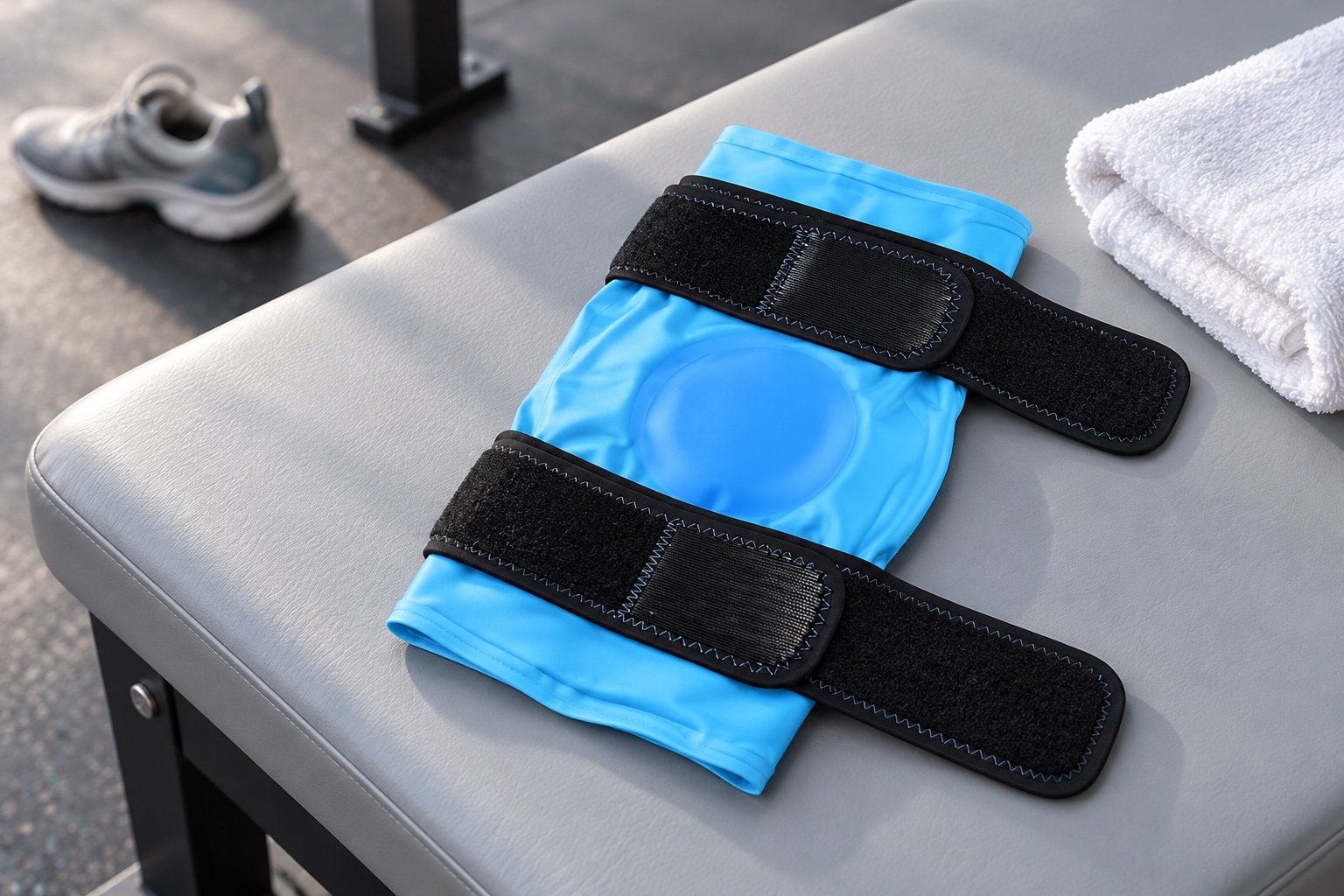
The knee gel-wrap format with two adjustable straps is a candidate for a range with a specific knee-focused brief. Shortlist it when shape and strap placement are central to the product’s role.
The trade-off is that a body-specific design needs its own fit review. Ask whether the filled pack covers the intended area, whether both closures retain adequate overlap, and whether the wrap shifts during the proposed movements. A knee approval does not establish an ankle or shoulder fit.
A contoured gel-bead joint wrap
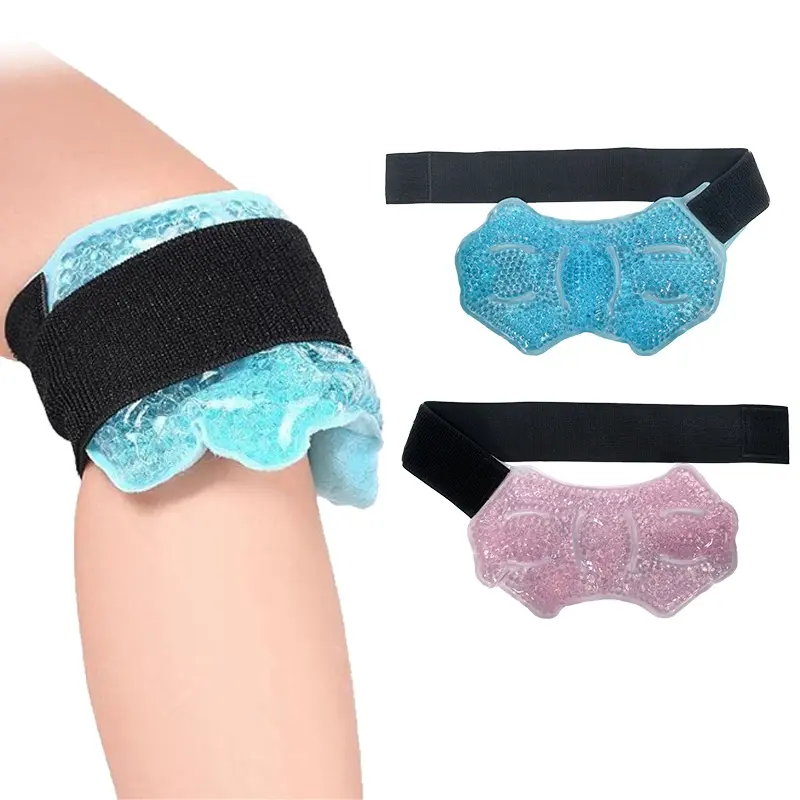
The single-strap gel-bead joint wrap shows a shaped, chambered pad and one fastening strap. It is worth comparing when a brand is considering several small-joint placements within one product concept.
That flexibility creates a verification task: record the fit range, alignment and strap route for every placement named on the package. A photograph showing several body areas is a shortlist aid, not evidence of universal fit.
A removable pack-and-sleeve set
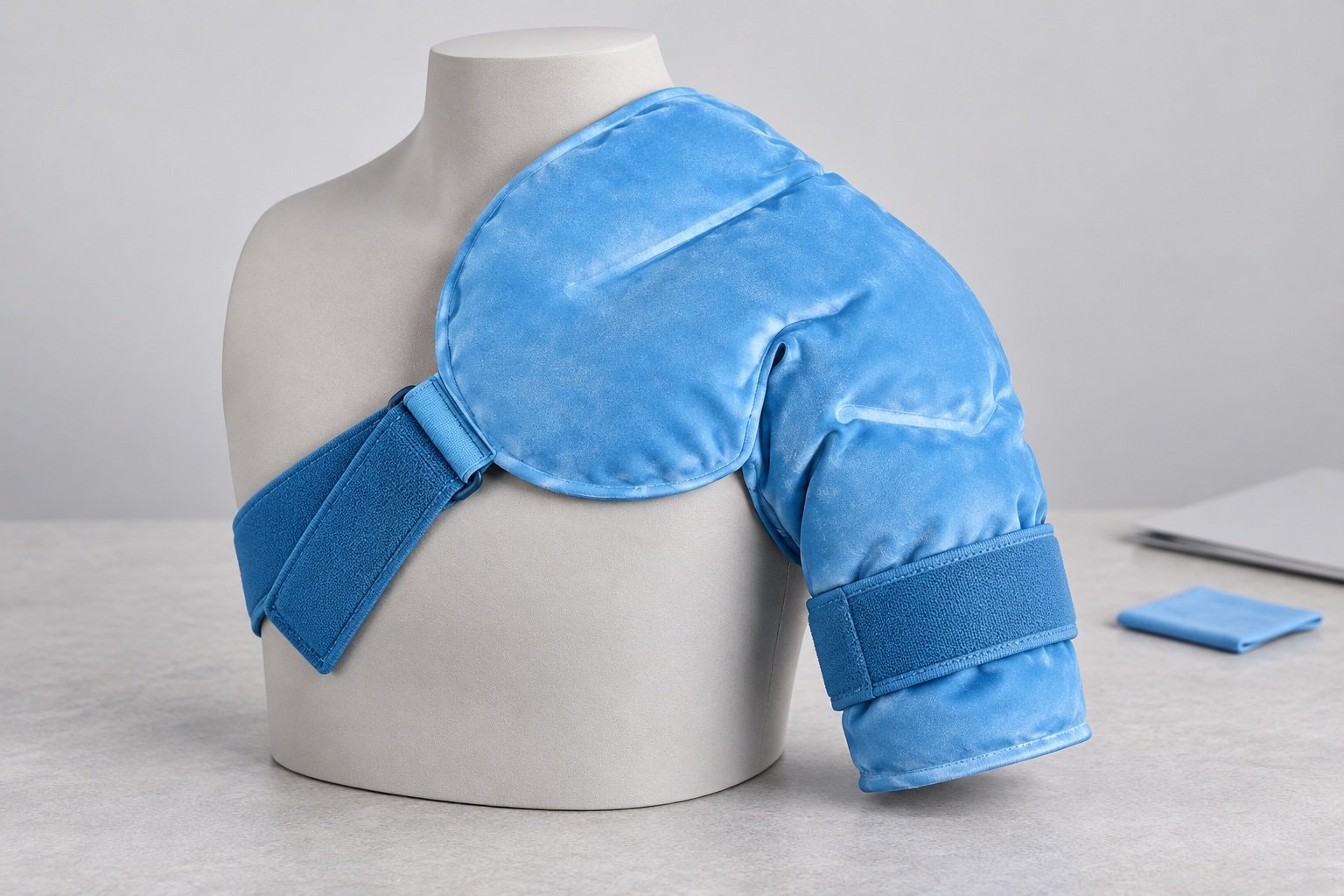
The rectangular pack with a separate sleeve and strap is a different construction. Consider it when separating the pack from its carrier is part of the intended product experience.
The trade-off is more components to specify and check. Review insertion, pocket retention, orientation, component count and separate care instructions. Replacement inserts are a question for the supplier; their availability or compatibility should not be assumed.
What can be shared across the product line?
Common components can reduce the number of different items a team has to manage, but only if the same approved part works in every proposed assembly. Keep a list of shared candidates and a separate list of items that need individual approval.
- One insert in several carriers: compare the actual insert drawing and revision, pocket fit, retention and preparation instructions in each carrier. Similar dimensions alone do not establish compatibility.
- One textile specification: check the fabric construction and required behavior. A woven pocket and a stretch wrap may need different evaluation methods.
- One package layout: check each complete pack-out, component count and product identity. A shared visual design must still identify the correct SKU.
- One instruction sheet: use it only where all stated preparation, placement and care steps apply to every named configuration. Otherwise separate the instructions or clearly identify the differences.
Test names also need the right scope. For example, the public scope of ASTM D5034 covers fabric breaking strength and elongation using grab-test procedures, but does not recommend the method for knitted or other highly stretchable fabrics. Ask the technical reviewer to select a suitable method for the actual fabric. A test on one textile does not approve a complete sports wrap or every product using a similar-looking cover.
Apply the same discipline to claims. The FTC’s health-products guidance calls for substantiation relevant to the advertised product and claim. Do not extend a heating, duration or recovery claim across the range because the products share a brand or color.
How should buyers compare the shortlisted samples?
Compare alternatives against the same intended job. Use the same target fit range, preparation method under review and observation sheet. Ask qualified reviewers to define suitable conditions before a fit or handling assessment; this article supplies no skin-contact time, heating instruction or performance threshold.
- Inspect the complete set. Count the pouch, carrier, strap and instructions. Identify the sample version so observations cannot be assigned to a different design later.
- Check both ends of the proposed fit range. Record coverage, closure overlap, edge bunching and movement of the filled assembly. Photograph comparable views and note the fit form or wearer conditions used, with appropriate consent.
- Try the intended handling sequence. Where applicable, remove and reinstall the insert, follow the proposed care sequence, and check that component identity and orientation remain clear.
- Compare the packed product. Check whether the complete set fits the proposed unit package and whether buyers can distinguish similar variants. Confirm quantity and packaging assumptions separately for each SKU in the quotation.
- Make a range decision. Keep a candidate with a distinct role and satisfactory evidence; request another sample where a specific issue can be corrected; defer a candidate that duplicates another or has unresolved suitability questions.
A useful outcome is a smaller set of clear decisions. A sample that needs a longer strap should return with that change identified; a new color alone does not answer a fit problem. These are Cryozin’s suggested planning steps, not a published testing standard or a report of completed product trials.
Copy this product-line decision card
Use one card for each proposed stock-keeping unit (SKU). Copy the fields into your range spreadsheet or supplier email and fill them with actual project information. The card records assortment decisions; detailed drawings and test records remain separate.
Candidate name / SKU / revision: [enter]
Distinct customer job: [channel, body area and handling need]
Reason to keep it alongside the other candidates: [specific difference]
Complete set: [pack, carrier, strap and other included parts]
Proposed shared parts: [part/revision and every assembly to check]
Individual checks: [fit range, preparation/care instructions and pack-out]
Evidence still needed: [drawing, sample observation or applicable report]
Decision: [keep / resample / defer] · Reason: [enter]
Next action / owner / due date: [enter]
For example, if a proposed ankle variant uses the same insert as a shortlisted knee set, the shared-part field should name that insert. The individual-check field should still require ankle fit and retention review. This is a hypothetical planning example, not a claim that those Cryozin products already share an approved insert.
Once the assortment is chosen, use the broader private-label cold pack launch checklist for specifications, artwork, production release and delivery. Keeping those later gates in one existing resource avoids turning a range-selection decision into an entire launch project.
Prepare a focused sample inquiry
Send your proposed product-line cards with the target market, sales channel, preferred formats, intended fit ranges and quantity by candidate. Highlight which components you hope to share and which decisions the samples need to settle. Mark unknown values as open so they can be discussed.
Cryozin’s OEM and private-label program is the commercial route for reviewing the proposed configurations. A useful first discussion establishes which formats to sample and which specifications or evidence are still needed.
Send your sports ice pack range brief to Cryozin
Sources and further reading
- ASTM D5034-21(2025) — public scope and fabric-method limitations; not a finished-product certification.
- FTC: Health Products Compliance Guidance — relevance of evidence to health and safety advertising claims.
Scene images are editorial concepts based on catalog references, not evidence of a factory, customer project, test or approved configuration. Catalog images illustrate visible product form only.
