

A manufacturer makes products; a trading company buys from producers and sells to buyers. When comparing a manufacturer vs trading company for reusable ice packs, choose according to the work your order needs: close control of a defined product, coordination across several suppliers, or a combination of both.
Factory status alone does not prove quality or a lower total price. A useful comparison identifies who will make your product, who you will contract with, and who will solve problems after approval.
On this page
Manufacturer vs trading company: the sourcing trade-offs
Scroll horizontally on smaller screens to compare all columns.
| Buyer priority | Manufacturer | Trading company |
|---|---|---|
| Product development | May provide direct access to people controlling the production process | May coordinate development with an external factory; confirm technical access |
| Assortment | Often focused on its production capabilities | Can combine products from different producers |
| Order coordination | You may manage additional suppliers for unrelated items | Can offer one commercial contact for several product groups |
| Price | Compare the actual scope, quantity, and delivered cost | Compare included coordination and other services as well as the product price |
| Visibility | Confirm the actual site and any outsourced steps | Confirm the producer, site access, and disclosure of factory changes |
| Accountability | Record the contracting entity and responsibility for defects | Record the trader’s responsibility and its process for resolving factory problems |
A sourcing agent is a third arrangement: someone engaged to find or manage suppliers for you. Ask whether the party acts as your agent or buys and resells goods as the seller, and how its fees and responsibilities are documented.
When does a manufacturer make more sense?
A direct manufacturing relationship is worth evaluating when one product family is central to your range and you expect repeated technical decisions. For an ice pack, those might involve pouch dimensions, seal design, material changes, fill specification, or the fit between an insert and a textile wrap.
Ask for access to the people who can approve those changes. A sales response saying “customization available” does not establish that engineering, production, and inspection will work from the same specification.
When can a trading company be a practical choice?
Consider a trader when your order spans several unrelated product categories and coordination is a substantial part of the job. One seller may arrange purchasing, communication, and consolidation across producers. Confirm that those services are included, rather than assuming they are.
For example, a distributor assembling a retail bundle with an ice pack and separately sourced accessories may value coordinated pack-out. This is a hypothetical buying scenario, not a Cryozin case. Check who approves each component and what happens if one producer changes.

Is buying directly from a factory always cheaper?
No. Removing a resale step does not establish the final cost of your order. Quotes can differ in quantity, construction, packaging, inspection, export handling, and freight assumptions. A lower product price may leave more work with your team.
Send both candidates the same specification and ask them to separate goods, development charges, inspection, packing, coordination fees, and shipping terms. Use the quote comparison checklist for the detailed calculation. No standard trader markup or factory discount applies to every project.
Verify the relationship, not just the label
A company can operate production and still use a separate sales or export entity. A manufacturer can outsource part of the order. A trader can have a close factory relationship. Treat these as relationships to document, not automatic signs of dishonesty.
The U.S. International Trade Administration’s due-diligence guidance stresses checking potential business partners and provides company-background resources. Its services are described in an export context; this article’s sourcing checklist is a separate purchasing aid, not a government factory-approval procedure.
Map the parties in your actual order
- Seller: Record the exact legal name on the quotation and purchase agreement.
- Payment recipient: Confirm the beneficiary and obtain an explanation for any difference from the seller. Independently verify unexpected payment changes through a known contact.
- Producer: Identify the site that will make the approved SKU and which production steps happen elsewhere.
- Shipment: Identify who prepares shipment documents and how names and responsibilities connect to the seller.
- Problem owner: Name the party responsible for nonconforming goods, corrective action, and any agreed replacement or credit.
A company name, office address, catalog breadth, or factory video is a lead for further checking, not conclusive proof. Request documents tied to the parties and arrange a live site review or an independent visit when the order risk warrants it.
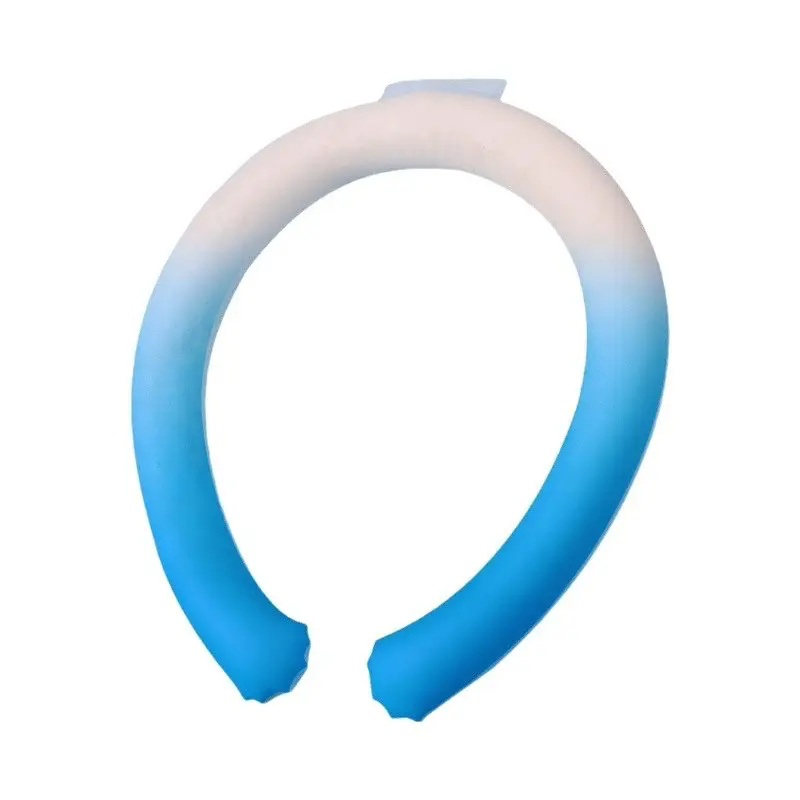
Match evidence to the claimed role
If a supplier presents a quality-system certificate, verify its holder, site, scope, issuer, and current status. ISO’s explanation of ISO 9001 identifies it as a quality-management-system standard. A certificate should not be used as a shortcut for checking the production relationship or finished-product requirements.
For a full evaluation of product fit, samples, quality, and delivery, continue with the B2B ice-pack supplier evaluation guide. This page focuses on choosing and verifying the type of counterparty.
A supplier-role confirmation card
Ask each candidate to complete:
- Our role for this order—producer, reseller, agent, or combination: ___
- Contracting seller and payment beneficiary: ___
- Production site and outsourced steps: ___
- Technical contact and approval authority: ___
- Access for sample review, inspection, or site verification: ___
- Process for notifying us of a producer or site change: ___
- Party responsible for defects and agreed remedy process: ___
- Services included in the quotation and separately charged services: ___
An unanswered role question is a reason to clarify before committing. A documented answer is more useful than choosing solely from “factory direct” wording.
Frequently asked questions
Is a trading company automatically a bad supplier?
No. It can perform useful purchasing and coordination work. Assess transparency, product evidence, commercial terms, and accountability for your order.
Does a factory address prove the seller manufactures the goods?
No. Verify the relationship between the named seller and the actual production site. Cross-check documents and, where appropriate, arrange an independent visit.
Should a manufacturer produce every component itself?
Not necessarily. The important questions are which steps are outsourced, who controls the approved specification, and how changes are communicated and accepted.
Choose the working relationship your order needs
For one technically defined ice-pack program, evaluate access to manufacturing decisions. For a mixed assortment, evaluate coordination as well. In either case, approve the product and document the responsibility chain.
To discuss reusable ice packs with Cryozin, review the OEM and private-label program and send your product brief and supplier-role questions. Confirm the specific production site, configuration, documents, and commercial scope during the project discussion.
Images are concept illustrations for purchasing discussions, not factory, test, or customer evidence.
