
To dispose of gel ice packs, start with the label on the exact pack. Do not pour unidentified gel into a sink or toilet, and do not put a filled pouch in the recycling bin. Some ordinary gel packs are directed to household trash; others have product-specific instructions. The filling and the outer pouch need separate decisions.
If an intact pack is designed for reuse, keeping it may be more useful than opening it for disposal. This guide explains the common routes, the exceptions, and the questions a brand or distributor should resolve before printing disposal instructions.
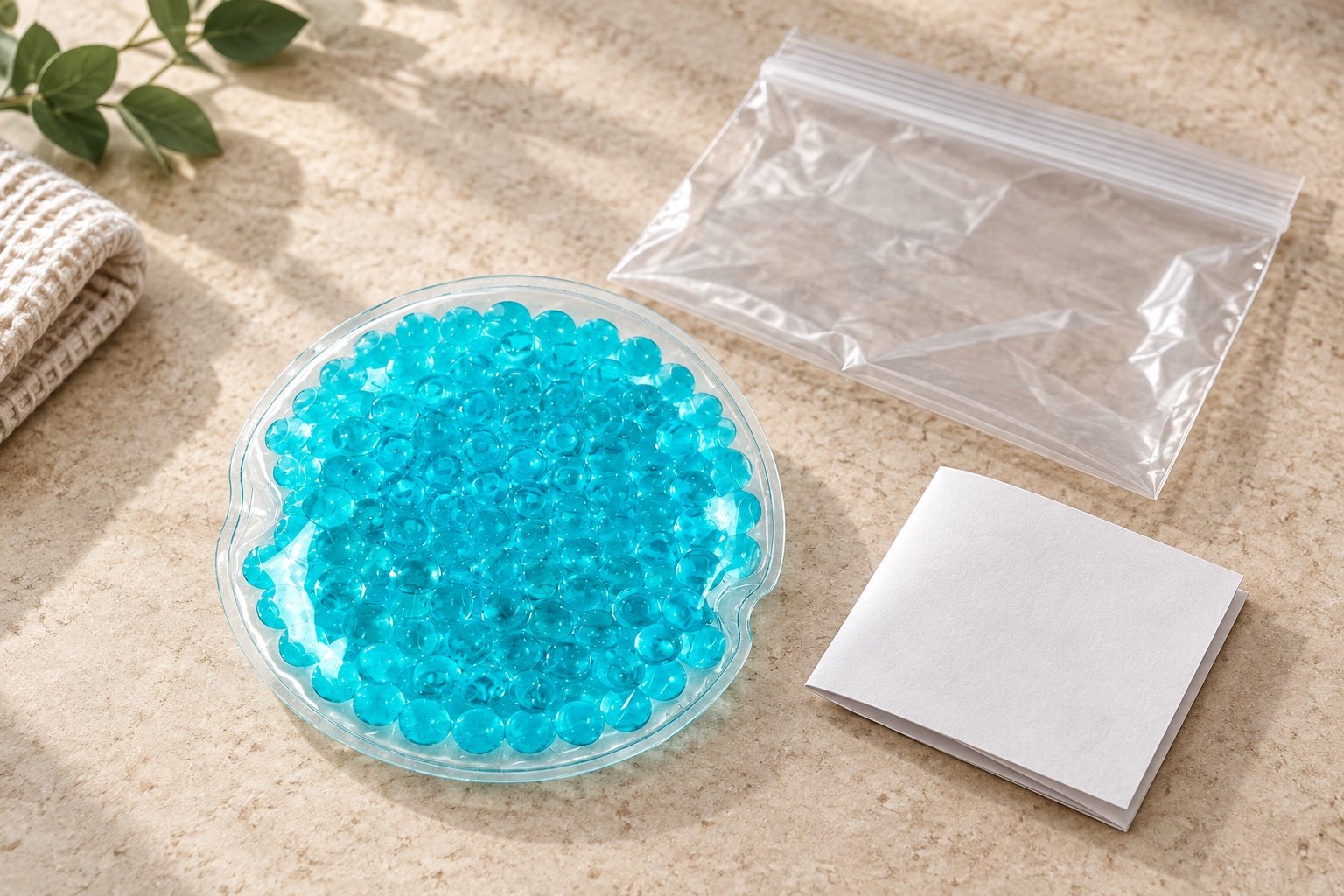
Cover image: illustration of a sealed gel pouch beside a removable textile sleeve. It shows separate components, not a disposal procedure or an identified Cryozin product.
On this page
Check what kind of pack you have
A reusable gel pouch, a water-filled block, a PCM pack, and a chemical instant cold pack are not interchangeable. The blue color, soft texture, or word “non-toxic” cannot tell you the correct disposal route. Our guide to ice-pack ingredients explains the differences in filling systems.
- Find the manufacturer, product name, and disposal instructions.
- Check whether the pack is intact and intended for reuse.
- If the label is missing or the contents are unknown, keep the contents contained and ask the manufacturer or local waste authority.
- For bulk business waste, use your facility’s waste process rather than assuming household instructions apply.
Can ice-pack gel go down the drain?
Do not assume it can. A December 2020 memo published by the Bay Area Clean Water Agencies identifies drain clogging as a concern with typical gel packs. It also distinguishes a specific drain-safe formulation from ordinary gel. That exception is not permission to drain an unmarked pack.
As a current manufacturer example, EFP directs its gel packs to trash and warns against drain disposal. Those instructions apply to EFP’s products, not every reusable pack or a Cryozin formula.
Even if a product says “drain-safe,” read the complete instructions for that product and check local wastewater guidance. Do not try to turn unknown gel into a drain-safe material by adding water, salt, or cleaning chemicals.
Should the whole pack go in the trash?
When the manufacturer and local waste rules direct an ordinary gel pack to regular trash, follow that route. Leaving it contained avoids an unnecessary gel spill. Do not treat this as a blanket rule for chemical instant packs, unusual formulations, contaminated clinical waste, or commercial quantities.
If instructions explicitly call for separating the filling and film, follow the stated method only after confirming both the product and the receiving waste or recycling route. “Cut it open and recycle the bag” is incomplete advice when the local program will not accept that pouch.
For a pack that is already leaking, stop using it and keep the spilled material away from children and pets. See our gel-pack cleanup and cover-care guide. The National Capital Poison Center advises discarding broken or leaking packs; if someone may have swallowed the contents, contact a poison center for product-specific advice. In the U.S., call 1-800-222-1222.
Can you recycle the outer pouch?
Check the actual pouch material and your local program. A plastic appearance or resin symbol does not establish local acceptance. The EPA’s recycling guidance explains that plastic bags and films generally need a different route from curbside recycling and that accepted materials vary locally.
A store collection point for shopping bags does not necessarily accept a printed or multilayer ice-pack pouch. Ask about that exact material and the required empty, clean condition. Keep unaccepted or gel-contaminated packaging out of the recycling stream.
Can the gel go in a garden or compost bin?
Do not use an unidentified filling as a soil additive. An instruction for one named fertilizer-type refrigerant does not apply to a blue therapy pack, gel beads, or PCM. Ask for the product-specific disposal instruction and supporting information before using a special route.

A disposal-label handoff for brands and distributors
Before approving retail artwork, complete this editorial worksheet for the actual configuration. It is a planning aid, not a regulatory approval or a Cryozin disposal specification.
- Product identity: item name, filling reference, pouch structure, and revision.
- Reuse decision: permitted reuse, inspection points, and replacement instructions.
- Contents route: manufacturer’s instruction and any conditions or exclusions.
- Packaging route: material identity and acceptance in the intended market.
- Customer support: where users can obtain the instructions when the label is unreadable.
- Review record: who checked the evidence, locality, wording, and date.
Keep these details tied to the released product. Changing the filling or pouch may require another review of the instructions. Cryozin’s OEM and private-label program is the relevant next step for discussing a reusable-pack project; it does not establish a drain-safe or compostable product.
Keep the decision simple
Reuse only when the pack and instructions allow it. At the end of its useful life, identify the product, keep unknown gel out of drains, and confirm where both filling and packaging belong. Brands should give customers a clear route rather than a broad “eco-friendly” promise.
For a new project, send Cryozin your product and labeling brief, including the filling, pouch format, target market, and disposal claims you want reviewed.
Sources and scope: BACWA disposal memo; EFP product instructions; U.S. EPA recycling guidance; National Capital Poison Center. Linked beside the relevant statements and checked October 12, 2026. This guide does not identify an unknown formula or replace local waste requirements.
