
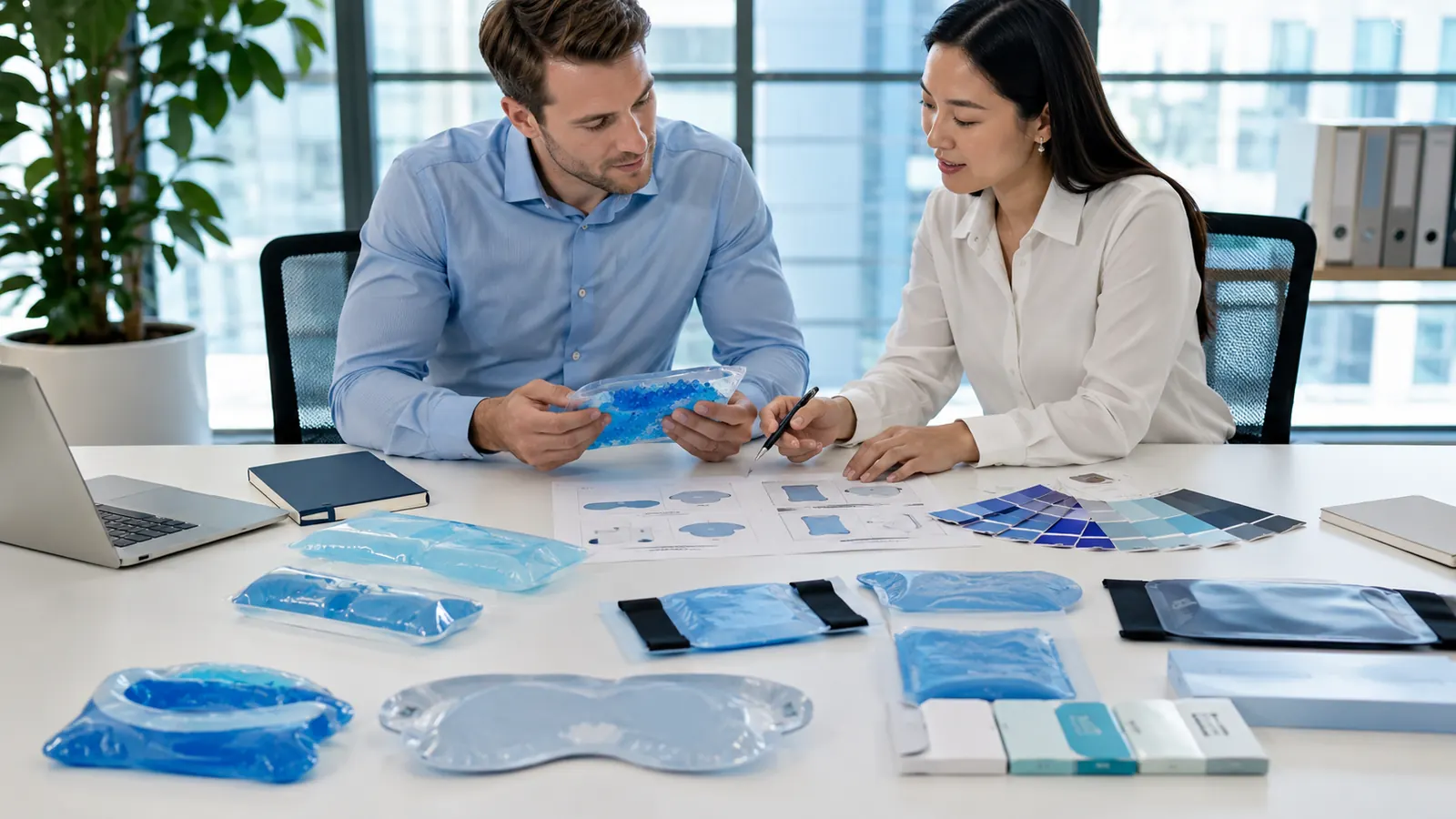
A stock reference sample and a branded development sample have different cost scopes. At Cryozin, existing product samples are free with freight paid by the buyer. New development requires a tooling fee and can include 2–3 free samples; custom printing and other work must be itemized separately.
Start with the decision the sample must answer: product format, artwork, construction, or production approval. Then compare the sample build, setup fees, included units, freight, and charges that remain when the project moves into production.
On this page
Why Custom Ice Pack Sample Costs Vary
A catalog sample is usually taken from existing inventory. A custom sample may require a small version of the production-development process. The supplier may need to source a specific film, adjust gel fill weight, prepare a print screen or digital file, cut a non-standard shape, sew a cover, or build retail packaging.
Cost also depends on the purpose of the sample. A visual mockup can confirm color and branding, but it may not prove production-equivalent sealing or thermal performance. A functional sample is intended to represent construction and use more closely. A pre-production sample should be made from the approved specification and is normally reviewed as the last reference before mass production.
What a Custom Sample Quote May Include
Ask the supplier to separate one-time development work from repeatable sample-unit costs. The table below shows common cost buckets and the questions a buyer should ask.
| Cost bucket | What it may cover | Question to clarify |
|---|---|---|
| Base sample | Film, gel, filling, sealing, and basic assembly | Is the construction production-equivalent or only a visual prototype? |
| Artwork and printing setup | File review, color preparation, screen or plate setup, and print trial | How many colors and artwork revisions are included? |
| Shape or tooling | Cutting dies, molds, fixtures, or special sealing setup | Is this a reusable production tool or a prototype-only tool? |
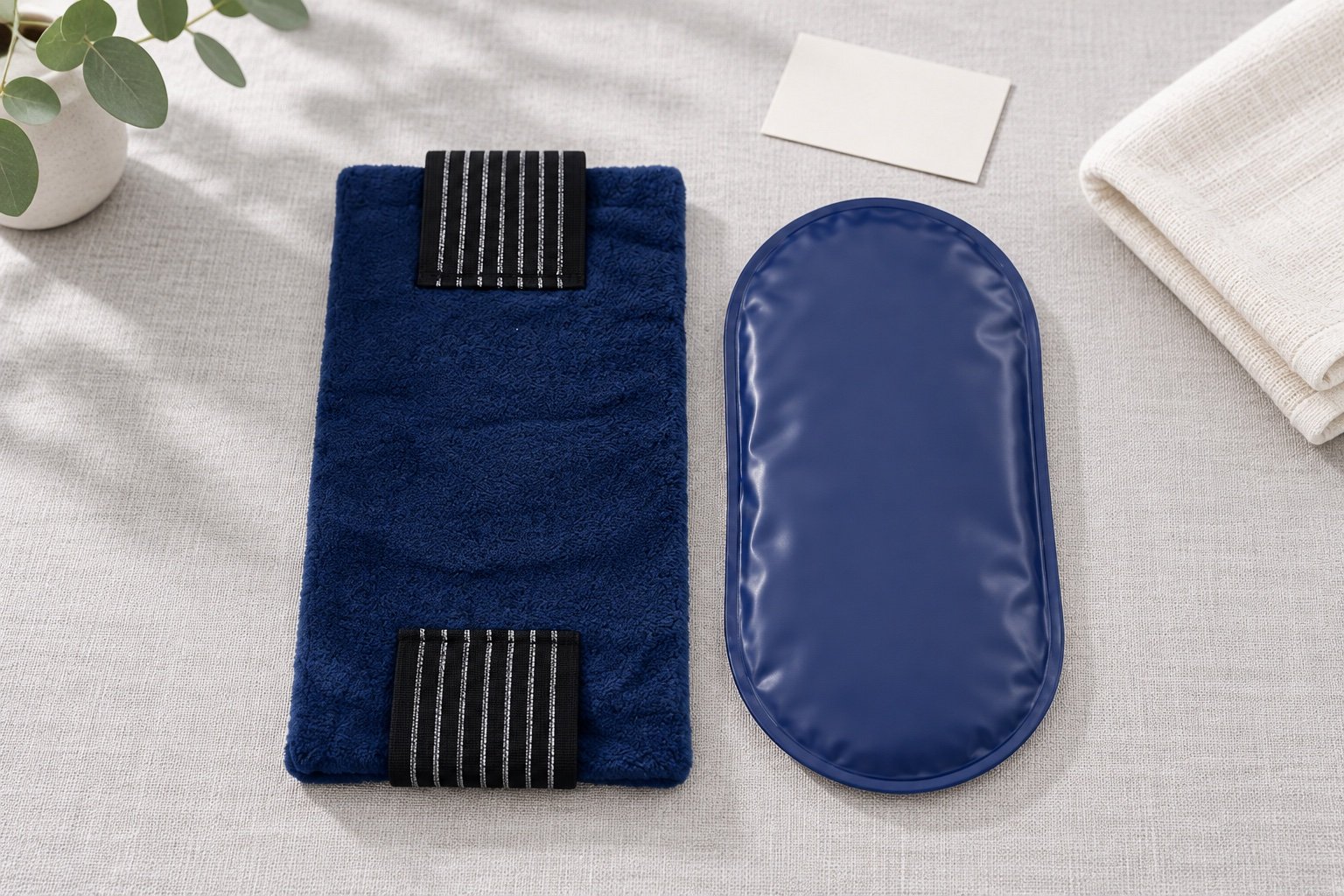
| Cover and accessories | Fabric, stitching, straps, fasteners, labels, or inserts | Are accessory colors and materials the final approved versions? |
| Packaging mockup | Printed pouch, box, insert, barcode label, or carton sample | Is the mockup digitally printed, or does it represent the production process? |
| Testing and documentation | Agreed dimensional, leak, seal, thermal, or material checks | Which method, sample quantity, acceptance criterion, and report format apply? |
| Freight | Courier, export handling, and delivery | Is freight included, and who is responsible for import charges? |
Sample Type Has a Major Effect on Cost
1. Stock or reference sample
This is the lowest-development option because it uses an existing size, material, and construction. It is useful for reviewing workmanship, hand feel, or a supplier’s general capability. It does not approve your custom product.
2. Appearance sample
An appearance sample focuses on dimensions, color, logo placement, and packaging presentation. Some elements may be simulated. Buyers should record which features are representative and which will change in production.
3. Functional engineering sample
This version is built to evaluate construction, gel distribution, flexibility, fit, or another defined performance requirement. It often requires closer control of materials and process settings, which can increase setup work.
4. Pre-production sample
A pre-production sample should match the approved product specification as closely as agreed. It becomes part of the approval record and should be reviewed together with artwork, packaging, test criteria, and the change-control process.

Cryozin sampling arrangements · confirmed October 28, 2026
| Sample route | Sample and tooling | Printing and other charges | What to confirm |
|---|---|---|---|
| Existing product reference | Existing samples are free; the buyer pays freight. | Logo printing, revisions, packaging mockups, and additional testing are not automatically included in the free reference sample. | Identify the catalog format and what the reference can help you review. It does not approve your custom design. |
| New development | The buyer pays the new tooling fee. Cryozin can provide 2–3 free samples; freight remains the buyer’s responsibility. | Separate printing setup, artwork changes, packaging, and any additional agreed testing. | List the tool and drawing revision, included units, known substitutions, and the approval purpose. New-tool development timing is quoted separately. |
| Logo or printed sample | For the branded build, Cryozin uses the same printing method for the sample and production. | Offset samples incur USD 300 setup per artwork. A subsequent offset print run also incurs setup. Screen samples incur a screen fee; that sample screen can be reused for subsequent production in the same project without charging it twice. | State the selected print surface, method, artwork revision, and what is reused. Do not treat a sample setup payment as a blanket waiver for future orders. |
Existing-product samples normally take 3–7 business days. Have the applicable sample fee, artwork, and project information ready, then confirm the agreed start date. This window does not automatically cover a new mold or an unresolved construction.
For small multicolor or gradient artwork, digital printing on polyester, Lycra, or nylon may reduce sampling setup cost. Its unit cost can remain relatively high in production, so compare both the sample and production quotations before choosing it.
Seven Factors That Commonly Increase Sample Cost
- Non-standard shape or size. A new outline may require cutting or sealing tooling and more setup time.
- Multiple artwork versions. Each colorway, logo position, or language version creates another item to prepare and inspect.
- Specialized materials. TPU, laminated films, textiles, insulation, and custom colors may have different sourcing and minimum-quantity constraints. Our comparison of reusable gel ice pack materials explains why film choice should be confirmed early.
- Custom gel or fill weight. Formula, viscosity, phase behavior, and target weight affect preparation and evaluation.
- Accessories and sewing. Covers, straps, hook-and-loop fasteners, elastic, buckles, and labels add components and operations.
- Retail packaging. A digitally printed mockup may be economical for review, while production-equivalent printing or a new box structure can require more setup.
- Defined testing. Testing is only meaningful when the method and acceptance criteria are stated. For example, ASTM F88/F88M covers seal-strength measurement for flexible barrier materials, while ASTM F2096 addresses gross-leak detection by internal pressurization. These standards are references, not automatic requirements for every ice pack.
What Should Be Included in the Sample Approval Package?
A physical sample without a written record is easy to misinterpret. Ask for a sample package that identifies:
- sample version and date;
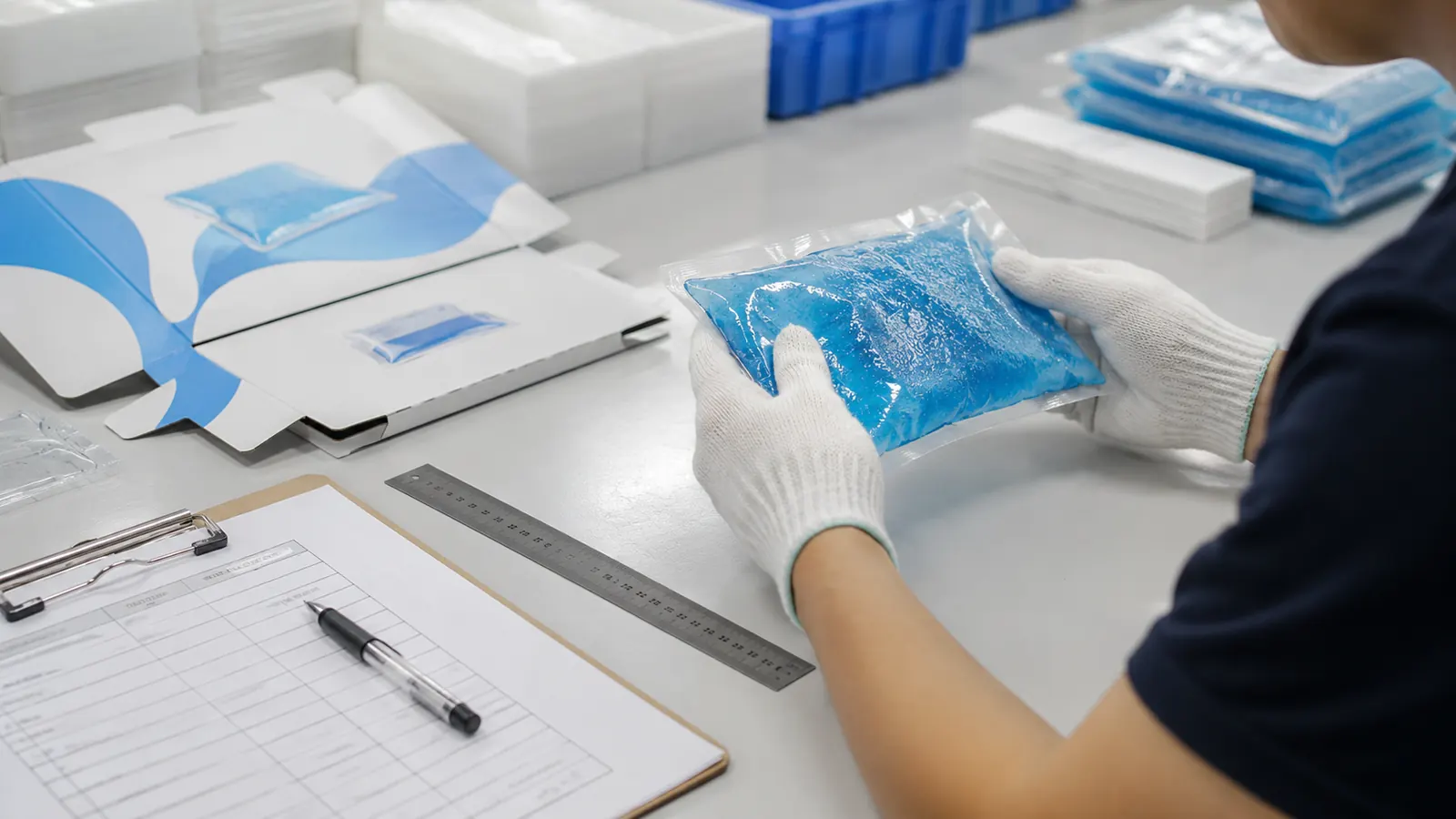
- outer dimensions, seal width, and fill weight;
- film, gel, cover, accessory, and packaging specifications;
- artwork revision and color reference;
- features that are production-equivalent;
- temporary substitutions or known deviations;
- tests performed and the stated acceptance criteria;
- buyer comments, disposition, and required corrections.
This record makes later changes visible. It also reduces the risk that an approved visual sample is treated as approval of a performance feature that was never tested.
How to Reduce Sample Cost Without Weakening the Review
First, freeze the product brief before requesting a fully customized sample. Confirm intended use, dimensions, fill weight, materials, logo method, accessory layout, and packaging concept. Our custom ice pack RFQ checklist can help organize these inputs.
Second, use review stages. Start with a stock or material reference when a fundamental choice is still open. Move to custom printing or tooling only after size and construction are reasonably stable. Third, consolidate feedback from purchasing, design, quality, and marketing into one marked-up approval document. Repeated, conflicting revisions are a common source of avoidable cost and delay.
Finally, distinguish three arrangements in writing. A screen prepared for the sample may be reused for the same project’s production; offset setup remains chargeable each time; a product tooling fee may be credited against later goods payments once the project-specific cumulative-order condition is met. These are different arrangements, so the quotation should name the charge and condition rather than promise a general sample-fee refund.
Questions to Ask Before Paying a Sample Fee
- What exact sample type will we receive?
- Which materials and processes match planned production?
- How many units, revisions, and artwork versions are included?
- Are tooling, printing setup, packaging, testing, and freight itemized?
- What is excluded from the quoted fee?
- What information must the buyer approve before work starts?
- Which changes will trigger a new sample charge?
- Will any fee be credited after a production order, and under what terms?
Plan the Sample Around the Buying Decision
A good sample is not the cheapest object a supplier can ship. It is the minimum representative build needed to answer the next purchasing question. Define that question first, then pay for the materials, setup, and evidence needed to answer it.
Cryozin provides OEM and ODM product-development support for brands, distributors, and professional buyers. To request a project-specific sample quotation, share the intended application, dimensions, materials, artwork, packaging, target quantity, and approval requirements. The project team can then clarify what can be evaluated at each sample stage.
Request a Custom Ice Pack Sample Quote
Reference note: ASTM F88/F88M and ASTM F2096 are examples of packaging test methods that may be relevant when agreed for a specific construction. They do not by themselves establish that a product is compliant or suitable for a particular medical use. Buyers and suppliers should define applicable requirements in the product specification.
Plan the sample stage within the complete custom ice pack development brief so the build method, approval purpose, artwork, packaging, and production differences are explicit.
Scene images are editorial concepts based on catalog references, not evidence of a factory, customer project, test or approved configuration. Catalog images illustrate visible product form only.
