
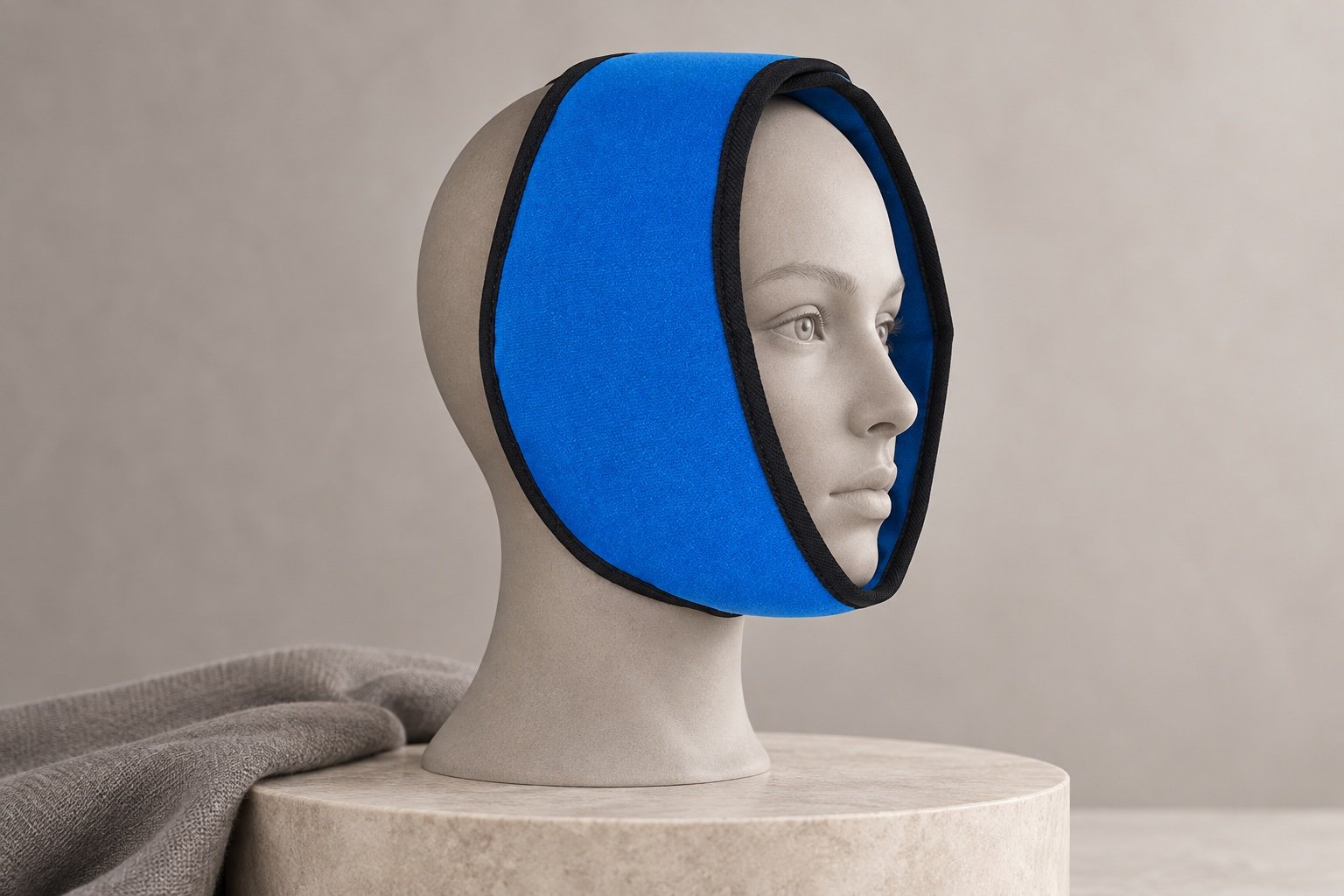
Cold packs for dental recovery programs should be selected as a complete product-and-instructions system, not as a promotional shape alone. Dental practices, distributors, and private-label brands need to define the intended use, face or jaw coverage, cold-state handling, barrier or sleeve, labeling, packaging, and sample checks before comparing quotes.
The best format depends on the program. A compact take-home pack, a tooth-shaped promotional pack, and a curved jaw wrap solve different handling and branding needs. This guide helps B2B buyers build a specification and approval plan without assuming that one size, cooling time, claim, or regulatory route fits every product. It does not provide treatment instructions or promise clinical outcomes.
On this page
Choose the product format before choosing the artwork
| Format | Best-fit program question | Sample focus |
|---|---|---|
| Compact reusable gel pack | Does the practice need a simple take-home format that fits a defined cheek or jaw area? | Filled dimensions, flexibility after conditioning, edge feel, sleeve/barrier, and instruction clarity |
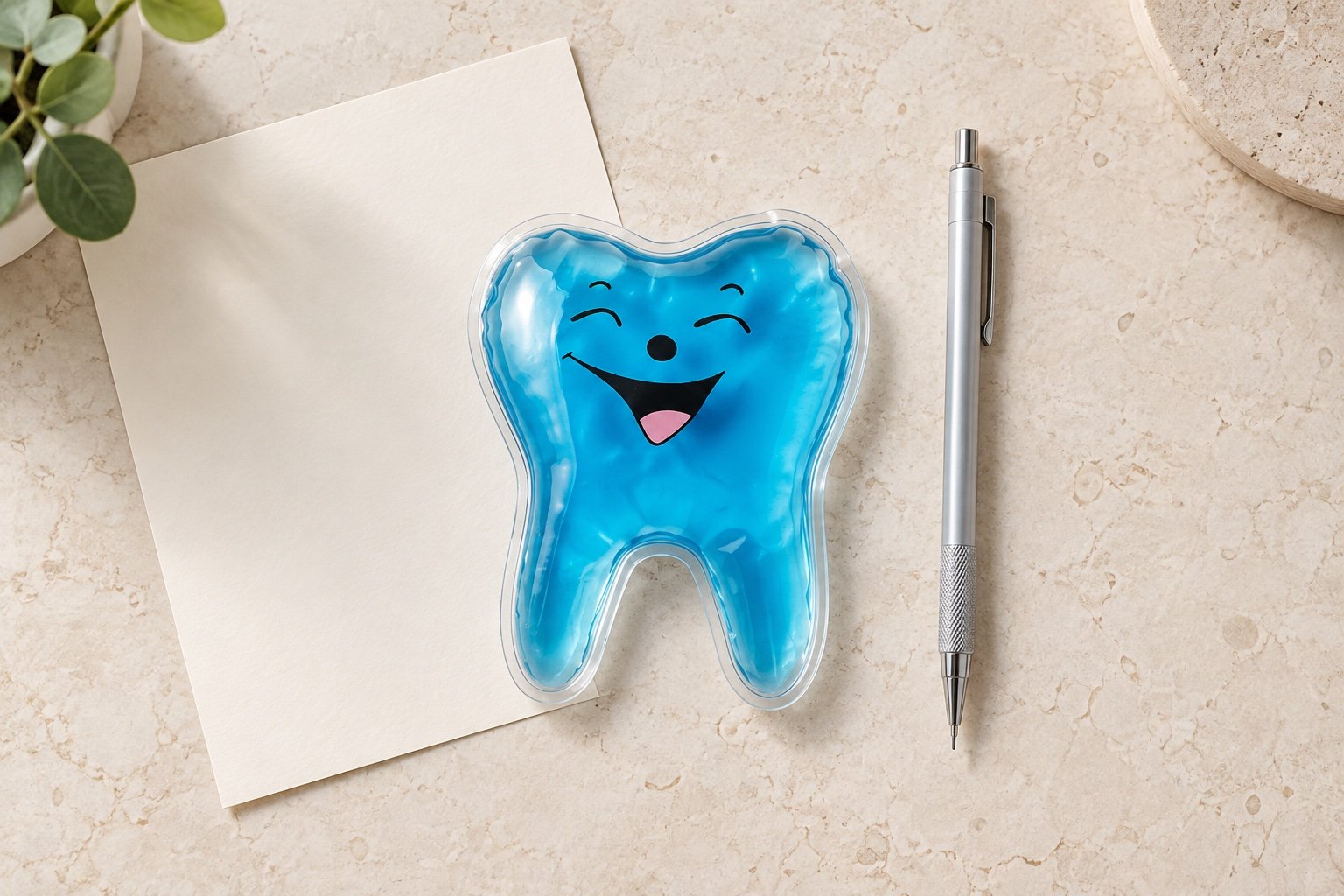
| Tooth-shaped promotional pack | Is brand visibility more important than broad coverage or hands-free retention? | Shape recognition, print area, narrow-point seal geometry, package fit, and user handling |
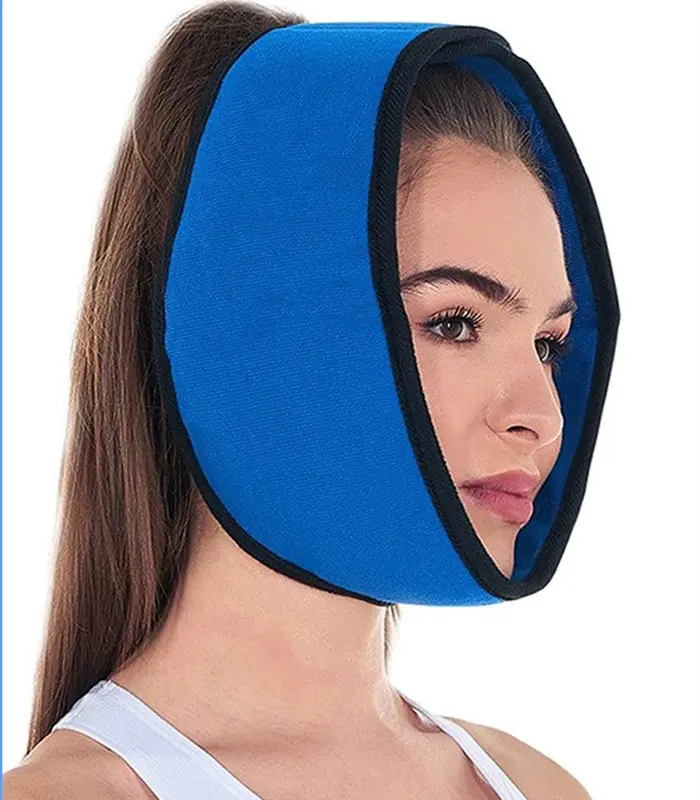
| Curved or wrap-style jaw pack | Does the product need coverage around a jaw contour or a hands-free fastening route? | Coverage map, strap path, insert retention, adjustability, and left/right symmetry |
Use a standard format when it already matches the required coverage and instructions. Develop a custom outline only when the added shape solves a documented product problem. A tooth silhouette may be useful for branding, but it is not evidence of therapeutic performance.
Compare the jaw wrap with four removable gel packs with a tooth-shaped gel-bead pack when choosing between a wearable assembly and a small branded pack. These catalog examples describe construction, not treatment outcomes.
Define the intended use and claims first
For U.S. projects, the FDA guidance for heating and cooling devices asks manufacturers to identify intended use, configurations, materials, temperature-related information, and labeling. The FDA’s general device-labeling guidance also notes that a packer, distributor, or seller who introduces a new intended use must provide adequate labeling for that use.
Buyers should therefore align the product brief, printed pack, instructions, carton, website, and clinic handout. Do not add claims such as “reduces swelling,” “accelerates healing,” or “safe after every procedure” unless the exact product, intended use, regulatory route, and supporting evidence have been reviewed. A shape associated with dentistry does not establish the product’s legal status or permitted claims.
Record whether the item is supplied as a general reusable cooling product, a branded take-home item under professional direction, or a medical device with a defined indication. Ask a qualified regulatory reviewer to confirm the route for the target market.
Seven specifications dental buyers should close
1. Coverage and measurement state
Mark the target face or jaw region on a simple coverage drawing. Specify width, height, curve, and clearance in the filled state—not only the flat empty pouch. If a textile sleeve or wrap is included, define its finished dimensions and how the pack sits inside it. The custom ice pack sizing guide explains why empty, filled, and conditioned measurements should not be mixed.
2. Fill amount and cold-state handling
Specify the filling system, nominal fill amount, distribution expectation, preparation condition, and how pliability will be judged. A pack can feel flexible at one temperature and stiff at another. Avoid using “soft freeze” as the only acceptance criterion; define a repeatable conditioning and handling check.
3. Pouch, cover, and skin-contact boundary
List the pouch film or laminate, seal construction, surface finish, and whether a removable fabric sleeve or other barrier is supplied. The outer pouch, a textile cover, and direct skin contact are different design questions. Cleaning, reuse, and replacement instructions must match the approved construction and intended user.
4. Edge and seal geometry
Review seal width, corners, narrow points, fill opening, and any chamber intersections. Curved or tooth-shaped designs can introduce tight radii that deserve specific sample inspection. Define leak or seal checks that are appropriate to the finished liquid-filled pack, and do not adopt a universal pass value from an unrelated construction.
5. Branding and readable instructions
Reserve a print area that stays legible after the pouch is filled and flexed. Keep the clinic logo separate from mandatory product information, warnings, lot or traceability fields, and instructions. Ask for an artwork proof and a physical production-representative sample. The logo file guide helps prepare vector and raster artwork for review.
6. Individual and bulk packaging
Define whether the pack is individually bagged, placed in a printed sleeve or carton, bundled into a clinic kit, or shipped in bulk. Verify that the approved pack, cover, instructions, and carton fit together without forcing the pouch into a fold or pinch point. Separate retail-facing claims from shipping labels and case identification.
7. Traceability and change control
Link the approved sample to a product code, artwork revision, material list, instructions, and packaging master. Ask which changes require buyer notification or a fresh sample. A different film, fill amount, cover thickness, seal path, or instruction set can change more than appearance.
Run a sample review that answers real clinic questions
Compare candidates under the same documented conditions. Use the same preparation method, conditioning time, measurement state, and review sequence. Record observations rather than relying on a single “approved” photo.
- Identity: product code, drawing revision, sample date, and material/fill reference.
- Geometry: filled dimensions, curve, edge clearance, print position, and package fit.
- Handling: flexibility after the defined conditioning step, fill migration, grip, and sleeve insertion/removal.
- Integrity: visual seal continuity, narrow-point inspection, agreed leak checks, and post-handling condition.
- Instructions: preparation, barrier, warnings, reuse/cleaning, storage, and disposal statements matched to the exact product.
- Clinic workflow: individual distribution, patient handoff, storage space, lot identification, and reorder reference.
Do not infer a universal cooling duration from one bench check. Pack size, fill, starting temperature, cover, contact conditions, room environment, and the test endpoint all affect the result. If duration matters to the claim or use case, define a product-specific protocol and acceptance criterion.
Keep clinic branding useful but restrained
A branded take-home pack can carry a practice logo, contact details, a product identifier, and approved instructions. It should not turn a general product into a treatment claim through artwork alone. Keep marketing copy within the reviewed intended-purpose boundary and give warnings and directions enough space to remain readable.
For a custom shape, confirm the actual printable area after filling and sealing. For a wrap, verify that branding does not cover stretch zones, hook-and-loop engagement, seams, or care information. Use the artwork approval workflow to connect digital proof, physical sample, and production release.
Copyable dental cold-pack approval card
- Program: clinic handout, private-label retail, promotional take-home, or distributor kit.
- Intended use and market: approved wording, target user, target country, and regulatory reviewer.
- Format: compact pouch, tooth shape, curved jaw pack, or wrap; filled dimensions and coverage drawing.
- Construction: pouch material, fill, nominal fill amount, chambers, cover, strap, edge, and seal path.
- Instructions: preparation, barrier, warnings, cleaning/reuse, storage, and disposal.
- Branding: logo file, print method, color reference, imprint area, and approved proof revision.
- Evidence: sample ID, measurements, integrity checks, handling observations, photos, and reviewer sign-off.
- Packaging: individual pack, insert, carton/sleeve, case quantity, labels, and shipping configuration.
Hold production if the intended-use wording differs between the brief and artwork, the sample does not match the controlled drawing, instructions are generic rather than product-specific, or a claim lacks applicable evidence.
Frequently asked questions
Is a tooth-shaped pack always the best format for dental practices?
No. It can be a memorable promotional format, but coverage, handling, instructions, and clinic workflow should decide the product route. A compact rectangle or curved wrap may fit a different program better.
Can one sample approval cover every size and fill?
Not automatically. Size, fill amount, shape, cover, and seal geometry can affect handling and packaging. Define which SKUs the approval covers and what changes need a new review.
Should the clinic logo replace the product label?
No. Branding and required product information serve different purposes. The final layout should preserve legible identity, instructions, warnings, and traceability fields applicable to the product and market.
What should a buyer send for a useful quotation?
Send the program type, intended use, target market, format, filled dimensions, construction preference, quantity, logo/artwork, packaging route, evidence needs, and target approval schedule.
Move from a dental concept to an approvable sample
Start with the clinic or distributor workflow, then turn coverage, construction, instructions, claims, branding, and packaging into one controlled brief. Explore existing formats in the Jaw & Dental Packs category, or use the custom ice pack program for a buyer-defined shape and presentation. To request a feasibility review, send Cryozin the intended use, drawing or reference sample, target market, quantity, and packaging requirements.
Sources and further reading
- U.S. FDA — Guidance for 510(k) applications for heating and cooling devices (intended use, device description, materials, temperature information, and labeling scope).
- U.S. FDA — General device labeling requirements (manufacturer/distributor identification and intended-use considerations).
- U.S. FDA — OTC medical-device labeling requirements (information architecture for applicable OTC devices).
Scene images are editorial concepts based on catalog references, not evidence of a factory, customer project, test or approved configuration. Catalog images illustrate visible product form only.
