

For a buyer, an RFQ is more than a request for a price. It is the document that turns a product idea into a quote a supplier can actually evaluate. A clear custom ice pack RFQ helps manufacturers compare the same requirements, flags missing decisions early, and gives your team a stronger basis for reviewing samples.
This checklist is for private-label brands, distributors, healthcare-product buyers, and therapy-product teams sourcing custom ice packs. It focuses on the information a supplier needs before preparing a useful quotation—without assuming that one pack format, material, or production route suits every use case. If the user problem has not yet been translated into measurable requirements, first use the framework for turning buyer pain points into a custom ice pack design.

On this page
What a custom ice pack RFQ should accomplish
The best RFQs make the commercial and technical requirements easy to understand. Instead of simply asking for “a custom gel pack,” explain who will use the product, how it will be sold, and what decisions are already fixed. That context allows a custom ice pack manufacturer to recommend practical options and identify questions before sampling begins.
Start by reviewing the relevant cold and hot therapy product options and deciding whether your project is a new design, a branded version of an existing format, or part of a broader product line. If the pack is tied to a particular market or application, add that context rather than relying on a product name alone.
Seven inputs to include before you request a quote
1. Intended user and application
Describe the intended use in plain language: recovery, physical therapy, retail wellness, personal care, or another defined application. Note whether the pack is designed to be held, worn, wrapped around a body area, or placed inside another product. This information helps the supplier assess shape, flexibility, surface material, and packaging options.
2. Product format and dimensions
State the preferred format—flat pack, wrap, contoured pack, or another form—and include target dimensions, approximate fill weight, and tolerance where available. A sketch, reference photo, or dieline is useful, but label it as a reference if changes are still expected. For a new project, it is often better to list the “must-have” dimensions and the “nice-to-have” features separately.
3. Thermal and usability requirements
Explain how the product is expected to be cooled or heated, how it will be handled, and what user experience matters most. Avoid making unverified performance or safety claims in the RFQ. Instead, ask the supplier what testing, instructions, and product configuration would be appropriate for the intended market and use case.
4. Materials, finish, and durability expectations
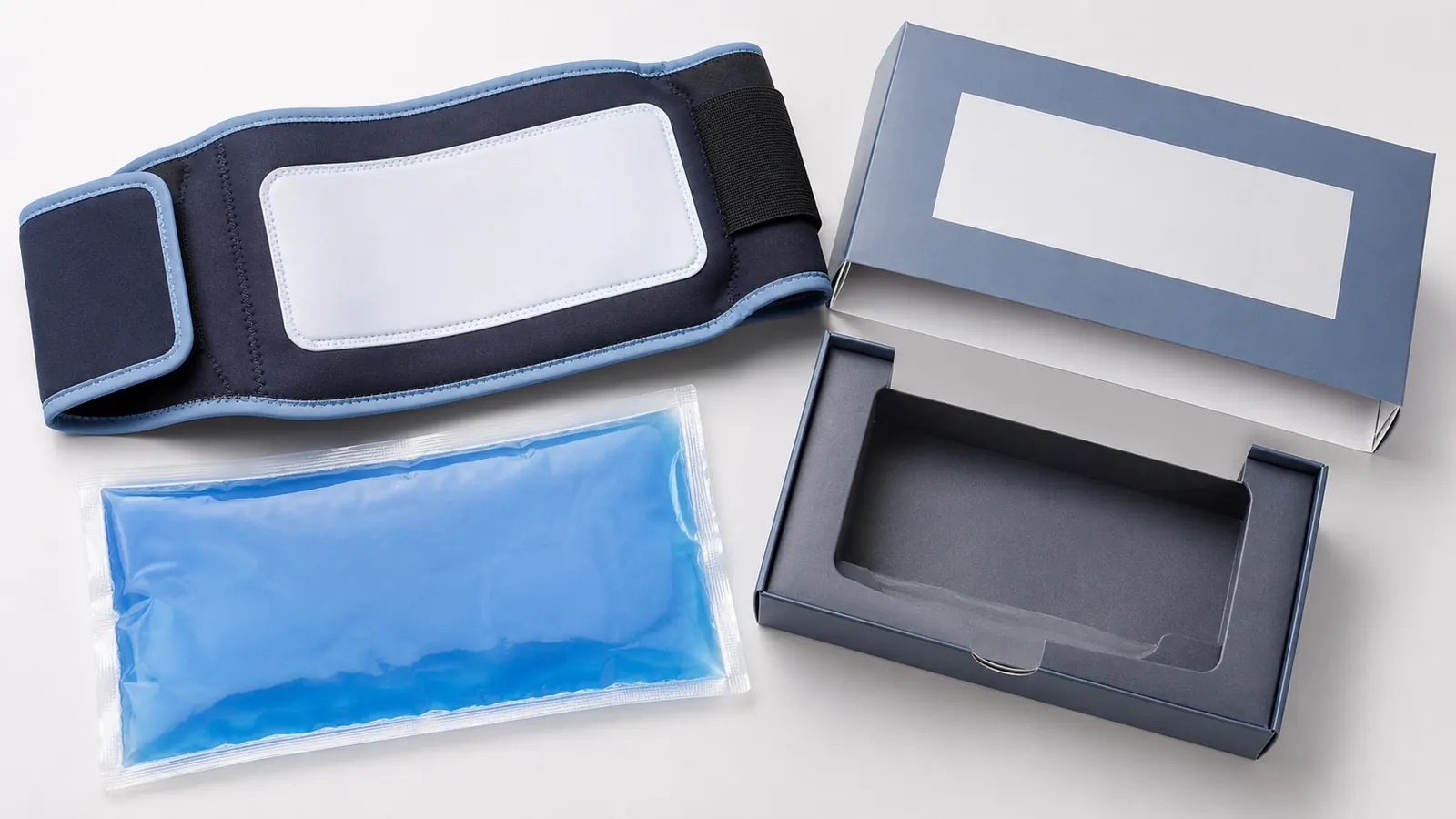
Specify what you know about film, fabric cover, closure, seams, printing area, and cleaning expectations. If you are comparing reusable gel ice packs with other options, say so directly. A supplier can then explain which material choices may affect flexibility, appearance, production method, and pack durability.
5. Branding and packaging
For private label ice packs, include your logo files, print colors, brand guidelines, packaging format, barcode requirements, and any copy you expect to appear on the unit or carton. Separate what is confirmed from what still needs design support. This keeps branding questions from delaying the core product quote.
6. Quantity, launch timing, and delivery destination
Give an initial quantity range rather than one optimistic number. Include your desired sample date, target order date, destination country or region, and whether you need retail-ready packing. Buyers sourcing for the U.S. market can also review custom hot and cold packs for U.S. brands to frame the project around their market requirements.
7. Quality, documentation, and review process
List the documents, product information, inspections, or approvals your team requires. Be precise about what is mandatory and what is preferred. If you work with regulated channels, obtain the appropriate professional and market-specific guidance before making product claims or setting compliance requirements.
A copy-and-paste custom ice pack RFQ template
Use the following structure when contacting suppliers:
- Project: Product name and intended application
- Customer / market: Sales channel and destination market
- Format: Preferred shape, size, target weight, and reference files
- Use requirements: How the pack will be used, stored, handled, and packaged
- Materials and finish: Known preferences, covers, closures, printing, or color requirements
- Branding: Logo, artwork status, retail packaging, barcode, and instruction requirements
- Quantity: Sample quantity, first-order range, and forecast if available
- Timing: Requested sample date, target launch date, and shipping destination
- Questions: What you need the supplier to confirm, recommend, price, or test
If you need support matching a product concept to an end market, explore Cryozin’s industry-specific cold therapy solutions before finalizing your brief.
Questions to ask a custom ice pack manufacturer
A quotation is most useful when it also explains the choices behind it. Ask each supplier:
- Which aspects of the brief can be produced as specified, and which require adjustment?
- What information is still needed before a sample or production quotation can be confirmed?
- What sample stages are recommended before approving a production version?
- Which packaging and branding details affect production planning?
- What quality checks and documentation can be discussed for this project?
- What assumptions are included in the quote, and what could change the final price or timing?
These questions keep a custom project focused on evidence and decisions rather than a single headline price. They are also useful when comparing OEM ice packs or a wholesale-ready version of an existing product.
How to review a sample before moving forward
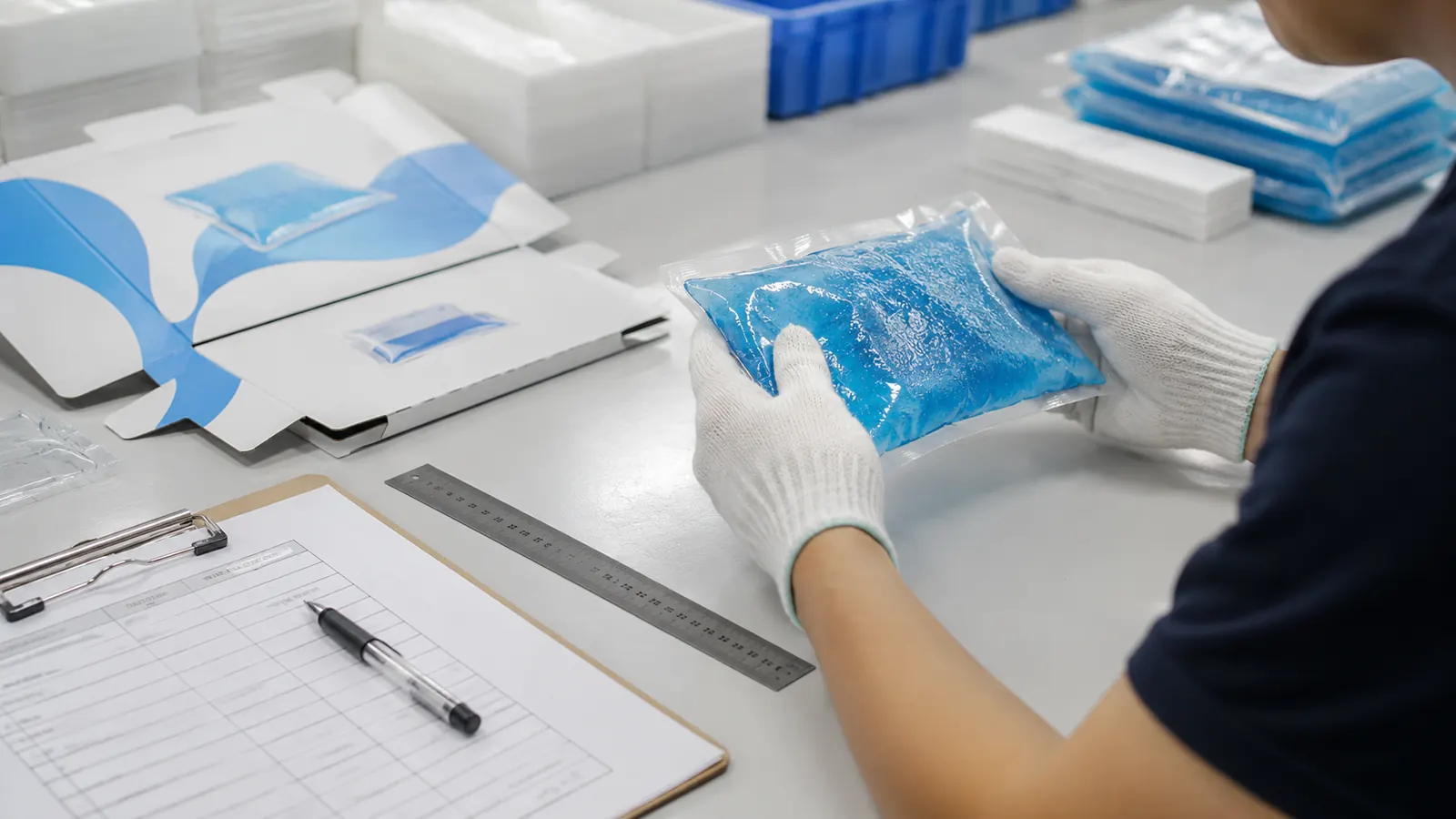
Use a written sample-review checklist. Confirm physical dimensions, print accuracy, feel, seal appearance, labeling, packaging fit, and the specific use conditions relevant to your project. Record changes in one consolidated feedback file so the next sample is based on a clear version of the brief.
For a new supplier relationship, it is also reasonable to understand the company’s background and manufacturing approach. See Cryozin’s company and manufacturing background for context before discussing a project in detail.
Authoritative references to include in an RFQ review
A strong RFQ identifies the intended use, quality evidence and commercial delivery terms without assuming that one certificate or trade term answers every requirement.
- FDA device-determination guidance asks manufacturers to define intended use and indications for use before deciding whether a product is regulated as a medical device in the United States.
- ISO’s explanation of ISO 9001 describes the standard as a quality-management-system framework; certification is evidence about a system, not automatic approval of a particular ice pack.
- ICC Incoterms® 2020 guidance explains commonly used B2B trade terms that allocate delivery tasks, costs and risks between seller and buyer.
Scope note: In the RFQ, name the required evidence and the exact Incoterms® rule with a named place. Regulatory applicability, test methods and acceptance criteria should be confirmed for the destination market and actual product claims.
Turn your brief into a better quotation
A focused RFQ saves time on both sides: the buyer receives a quote built around real requirements, and the supplier can identify practical options before production decisions are locked. Begin with the seven inputs above, attach the files you already have, and mark every open decision clearly.
When your brief is ready, request a custom ice pack quotation with your application, target quantity, artwork status, and delivery market.
Frequently asked questions
What is the minimum information needed for a custom ice pack RFQ?
At minimum, provide the intended application, target format or dimensions, estimated quantity, branding status, delivery market, and the decisions you need the supplier to help evaluate.
Should I request a sample before placing a bulk order?
For a new design or a new supplier relationship, a sample-review stage is a practical way to confirm the product details that matter to your project before production planning is finalized.
Can an RFQ include open questions?
Yes. Clearly label open items and ask the supplier to recommend options. This is better than presenting an assumption as a confirmed specification.
